Anger is one of the most familiar human emotions, yet it is also one of the emotions that can be difficult to understand psychologically. People may experience anger in response to frustration, injustice, rejection, humiliation, loss of control, interpersonal conflict, or perceived threat. Sometimes anger is immediate and intense; at other times, it develops gradually and remains present for hours, days, or even longer. It may be expressed openly through shouting and confrontation, or it may remain largely internal, appearing as persistent irritation, resentment, withdrawal, or repetitive thoughts about an upsetting event.
From a psychological perspective, anger should not automatically be regarded as a pathological emotion. Like fear, sadness, and anxiety, anger can serve an adaptive function. It can communicate that an individual perceives something as unfair, threatening, frustrating, or inconsistent with an important need or value. The psychological difficulty generally concerns what happens before, during, and after the emotional response. The intensity, duration, frequency, context, interpretation, and behavioral expression of anger can determine whether it becomes helpful or disruptive.
Anger can therefore be understood as both an emotional experience and a behavioral tendency. Feeling angry does not necessarily mean that a person will behave aggressively. Similarly, aggressive behavior does not always arise from anger. Aggression can have different functions, including obtaining something, controlling another person, defending oneself, or responding to social expectations. Distinguishing anger from aggression is consequently important in psychological assessment.
One of the central questions concerning anger is what produces it. There is no single cause. Emotional responses emerge through interactions between physiological processes, cognitive interpretations, personal history, environmental circumstances, and interpersonal relationships. The same event may produce intense anger in one person and relatively little emotional reaction in another because people do not respond only to events themselves; they respond to the meanings they assign to those events.
Consider a person who sends an important message and receives no response. One individual may think, “They are probably busy.” Another may think, “They are deliberately ignoring me.” The external event is similar, but the interpretation differs. The second interpretation may generate feelings of rejection and anger. This illustrates the importance of appraisal in emotional experience.
Cognitive theories of emotion have emphasized this relationship between interpretation and emotional response. Anger may become particularly intense when an individual interprets an event as intentional, unjust, controllable, or personally significant. If someone believes that another person deliberately caused harm, anger may be stronger than when the same outcome is interpreted as accidental.
Perceived injustice is therefore a common context for anger. People may become angry when they believe that they have been treated unfairly, deprived of something, disrespected, or subjected to unequal standards. In some circumstances, anger can motivate individuals to communicate boundaries or challenge unfair treatment. However, perceptions of injustice can also become distorted when a person repeatedly interprets ambiguous situations through a framework of hostility or mistrust.
Frustration represents another common trigger. Human beings develop expectations about how situations should unfold. When reality repeatedly conflicts with these expectations, emotional tension can increase. A person may become frustrated when a task does not work, when another person behaves differently from expected, or when circumstances prevent an important goal from being achieved.
The relationship between frustration and anger is not automatic. Some people respond to frustration with sadness, anxiety, avoidance, or self-criticism rather than anger. Individual differences in temperament, previous experiences, coping strategies, and social learning can influence how frustration is expressed.
Anger may also develop when a person experiences a loss of control. The perception that one’s choices, environment, or relationships are being controlled by others can be psychologically distressing. In such circumstances, anger may function as an attempt to restore agency. A person may become argumentative, resistant, or oppositional because these behaviors create a temporary feeling of control.
This mechanism can be particularly relevant in interpersonal relationships. If an individual repeatedly feels that their opinions are ignored, they may eventually express anger after a period of silence. From the outside, the final angry reaction may appear disproportionate to the immediate event. Psychologically, however, the response may represent accumulated frustration rather than a reaction to one isolated incident.
Suppressed anger is another important phenomenon. Some people learn that expressing anger is unacceptable. They may have grown up in environments where emotional expression was criticized, punished, or ignored. As adults, they may suppress anger even when their boundaries are violated. Suppression does not necessarily eliminate the emotional experience. Instead, anger may be expressed indirectly through withdrawal, sarcasm, irritability, passive resistance, or persistent rumination.
It is important, however, to distinguish emotional suppression from emotional regulation. Regulation does not mean refusing to experience anger. It involves recognizing the emotion, understanding its function, and deciding how to respond. A person may feel extremely angry and still choose not to insult another person or engage in physical aggression.
The ability to pause between emotional activation and behavior is psychologically significant. During intense anger, physiological arousal may increase. Heart rate and muscle tension can change, attention may become narrowly focused on the perceived problem, and the individual may become more inclined toward immediate action. In such moments, complex reflection may become more difficult.
This is one reason why responding immediately during intense anger can sometimes produce consequences that the person later regrets. The problem is not that anger automatically makes rational thought impossible, but that high emotional arousal can alter attention and decision-making. The individual may focus heavily on the perceived offense and pay less attention to alternative explanations or long-term consequences.
Rumination can further maintain anger. Rumination involves repeatedly thinking about an upsetting event, replaying conversations, imagining alternative responses, or focusing on how unfair the situation was. Unlike constructive reflection, rumination often returns to the same emotional material without producing a meaningful solution.
For example, a person may repeatedly think, “Why did they say that? I should have answered differently. They always treat me this way.” Such thoughts may strengthen emotional activation because the event is psychologically re-experienced rather than processed and concluded.
Anger and rumination can therefore form a reinforcing cycle. An upsetting event produces anger; anger increases attention to the event; repeated attention strengthens anger; stronger anger makes the event appear increasingly significant. Eventually, the emotional response may continue even after the original situation has ended.
Interpersonal relationships can be particularly vulnerable to this cycle. Anger may influence how people interpret subsequent behavior from the same person. Once someone is perceived as disrespectful or hostile, ambiguous behavior may increasingly be interpreted negatively. This can produce escalating conflict even when the original disagreement was relatively limited.
At the same time, anger can communicate important information within relationships. Saying, “I felt hurt when that happened,” or “I do not want to be spoken to in that way” can communicate a boundary without attacking the other person. In this sense, emotional awareness can transform anger from an impulsive reaction into information about personal needs and limits.
The distinction between anger and hostility is also important. Anger is an emotional state, whereas hostility refers more broadly to a negative orientation toward another person or group. Someone may experience temporary anger without developing a stable hostile attitude. Conversely, hostility may persist even when the individual is not acutely angry.
Aggression represents another related but distinct concept. Physical aggression, verbal aggression, threats, or destructive behavior can occur in response to anger, but anger itself does not require aggression. Many people experience strong anger without harming anyone. Effective psychological approaches therefore focus not simply on eliminating anger but on reducing harmful behavioral responses.
The developmental history of anger can provide useful information. Children have limited capacities for emotional regulation and often express frustration behaviorally. As children develop language and social understanding, they gradually learn to communicate needs more effectively. However, these abilities develop unevenly. A child who lacks the vocabulary to describe disappointment may express it through crying, shouting, or oppositional behavior.
Caregivers play an important role in helping children learn emotional regulation. Responding to anger does not require permitting harmful behavior. A child can be told that anger is acceptable while aggression is not. Such a distinction communicates two messages simultaneously: the emotion is recognized, and behavioral boundaries remain intact.
Teachers also encounter anger in educational environments. Children may become angry because of academic frustration, peer conflict, perceived unfairness, embarrassment, or difficulties at home. A teacher who interprets every angry behavior simply as disobedience may overlook the underlying emotional process. At the same time, understanding the emotional background does not mean that all behavior should be accepted without limits.
This balance between empathy and structure is particularly important in child development. Children need opportunities to express emotions, but they also need predictable boundaries. Emotional regulation develops partly through repeated experiences in which strong feelings are acknowledged without allowing destructive behavior to determine the entire environment.
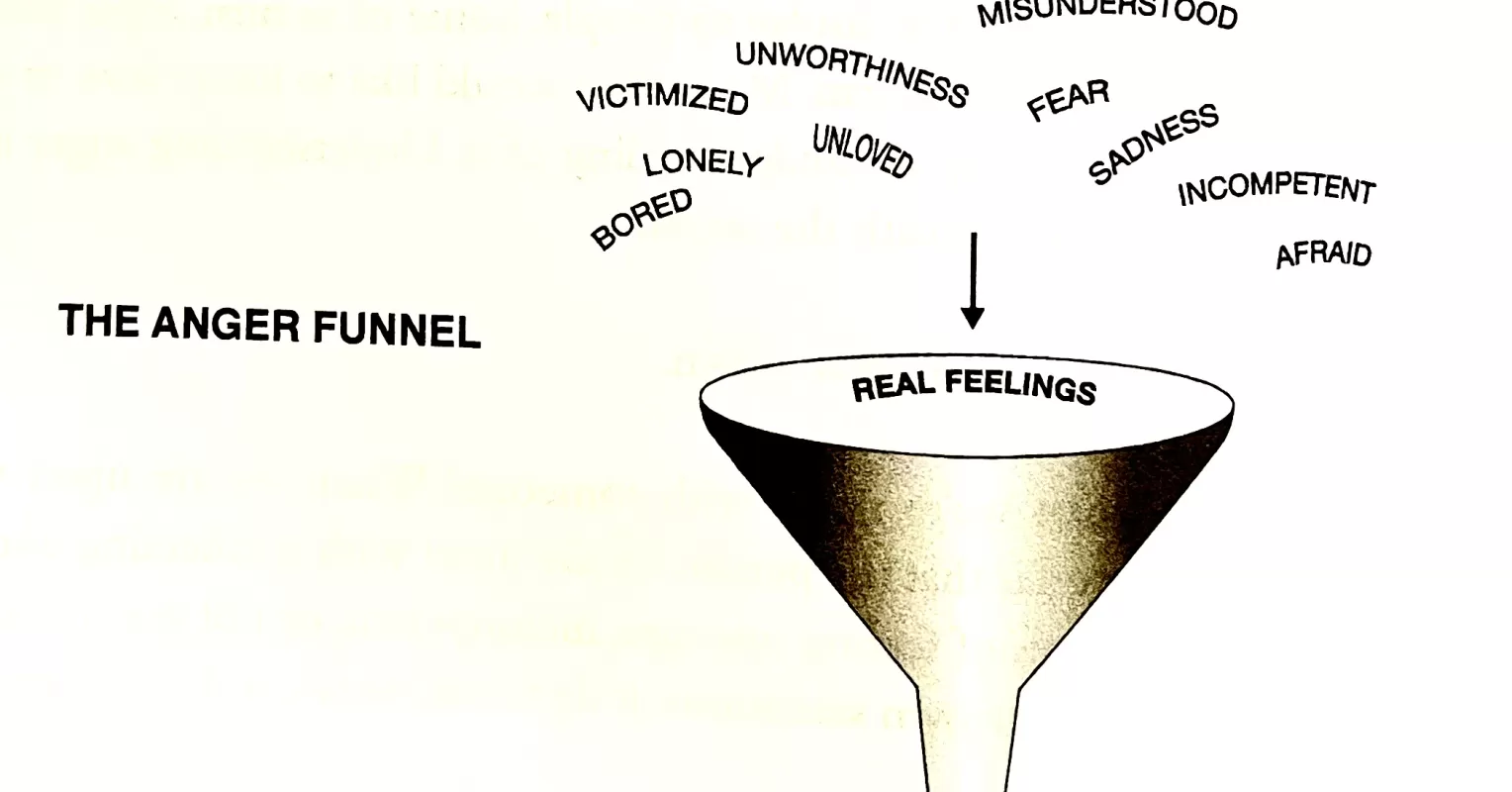
Adults may have more sophisticated language for emotions, yet many still struggle to identify what lies beneath anger. Anger can sometimes function as a secondary emotion. A person may feel anger after experiencing fear, shame, sadness, rejection, or helplessness. Anger can feel psychologically easier to tolerate than vulnerability because it creates a sense of strength and action.
For example, a person who feels deeply rejected may express anger toward the person who rejected them. The visible emotion is anger, but the underlying experience may involve sadness or insecurity. Similarly, embarrassment can sometimes be followed by anger because the person experiences humiliation as a threat to self-esteem.
This does not mean that every angry person is secretly sad or afraid. Emotional experiences are individual and context-dependent. Nevertheless, exploring what accompanies anger can sometimes reveal needs that are difficult to express directly.
The relationship between anger and self-esteem is complex. Repeated experiences of disrespect can threaten a person’s sense of worth, while anger may function as an attempt to defend that sense of worth. On the other hand, fragile self-esteem can sometimes make ordinary criticism feel more threatening, increasing defensive anger. Again, neither explanation applies universally.
Anger can also be associated with perfectionistic expectations. A person who expects themselves or others to behave according to rigid standards may experience frequent frustration when reality falls short. Statements such as “People should always respect me,” “I should never make mistakes,” or “Things must happen exactly as planned” can increase emotional vulnerability when circumstances inevitably differ from expectations.
Psychological flexibility may therefore be relevant to anger regulation. Flexibility involves recognizing that situations can be interpreted in multiple ways and that not every unwanted event requires an immediate response. This does not mean accepting injustice or abandoning personal boundaries. Rather, it allows a person to distinguish between situations that require action and situations that can be tolerated without prolonged emotional engagement.
Physiological factors can also influence irritability and emotional regulation. Sleep deprivation, chronic stress, physical discomfort, hunger, and exhaustion may lower the threshold for emotional reactivity. This does not mean that physiological states cause all anger, but they can make regulation more difficult. A person may react more intensely to a minor frustration when already physically or emotionally depleted.
Chronic stress deserves particular attention. When individuals remain under prolonged pressure, their psychological resources for coping may become limited. Small problems may then produce reactions that seem unusually intense. In such cases, anger may partly reflect accumulated stress rather than the immediate event alone.
Mental health conditions can sometimes involve increased irritability or anger, but anger by itself does not establish a psychiatric diagnosis. Irritability can occur in many contexts, including ordinary stress, sleep problems, anxiety, depression, trauma-related difficulties, substance use, and various medical conditions. A clinical interpretation therefore requires consideration of the broader pattern.
Traumatic experiences may also influence perceptions of threat and safety. Some individuals who have experienced chronic interpersonal threat may become highly attentive to signs of danger or disrespect. In certain circumstances, rapid defensive reactions may have developed in response to earlier environments. Understanding such patterns requires careful attention to personal history rather than assuming that current reactions are simply irrational.
Nevertheless, past experiences do not necessarily determine future behavior. Psychological patterns can change through new experiences, increased self-awareness, supportive relationships, and appropriate treatment when needed.
Several psychological approaches have been used to address problematic anger. Cognitive-behavioral approaches often examine the relationship among situations, interpretations, emotions, physiological responses, and behaviors. A person may learn to identify automatic thoughts that intensify anger and consider alternative interpretations. Behavioral strategies can also focus on communication, problem-solving, and reducing avoidance.
Emotion-focused approaches may emphasize understanding the emotional meaning of anger rather than simply reducing its intensity. The goal can involve identifying unmet needs, vulnerability, attachment concerns, or other emotions associated with anger. Different therapeutic models conceptualize these processes differently, and treatment should be adapted to the individual’s circumstances.
Mindfulness-based approaches may help individuals notice emotional activation without immediately acting on it. The central principle is not to eliminate anger but to create greater awareness of thoughts, bodily sensations, and impulses. This can provide additional psychological space between feeling and action.
Relaxation techniques can also be useful when physiological arousal is prominent. Slow breathing, temporary withdrawal from an escalating argument, physical movement, and other calming strategies may reduce immediate activation. Such techniques are not substitutes for addressing chronic interpersonal or psychological problems, but they can support short-term regulation.
Communication is particularly important in interpersonal anger. Statements that describe personal experience rather than attack another person’s character may reduce escalation. For example, explaining what happened, how it affected the speaker, and what boundary or change is needed can be more constructive than making global accusations.
However, communication strategies should not be interpreted as a requirement to remain calm in every circumstance. Some environments genuinely involve abuse, intimidation, or serious violations of boundaries. In such situations, psychological support may involve safety planning, external assistance, or creating distance rather than simply improving communication with the person causing harm.
The social consequences of chronic uncontrolled anger can be substantial. Repeated verbal aggression may damage trust, while physical aggression can create serious harm. Over time, other people may become cautious or fearful around someone whose anger is unpredictable. This can contribute to relationship breakdown and social isolation, which may then reinforce the person’s frustration and resentment.
The opposite pattern can also be problematic. A person who never expresses anger may appear calm while experiencing substantial internal distress. If boundaries are repeatedly violated without communication, resentment may accumulate. Psychological health therefore does not necessarily involve either complete emotional expression or complete emotional restraint. It involves finding ways to experience and communicate emotion without unnecessary harm.
Understanding anger requires moving beyond the simple question, “How can anger be stopped?” A more psychologically useful question may be, “What is this anger communicating, and what response would be consistent with the person’s values and circumstances?”
Sometimes the answer may involve setting a boundary. Sometimes it may involve accepting that another person’s behavior cannot be controlled. Sometimes it may require grieving an unmet expectation. In other situations, it may involve recognizing that the current reaction is connected to accumulated stress or an earlier experience.
Anger can therefore be regarded as a signal rather than a final instruction. An emotional signal can provide information, but it does not automatically determine what a person should do. The experience of anger can be acknowledged without allowing it to dictate behavior.
This distinction is particularly important because emotional validity and behavioral justification are not identical. A person may have a legitimate reason to feel angry while still choosing an ineffective or harmful response. Conversely, someone may later recognize that their interpretation of an event was inaccurate even though the anger they experienced at the time was genuine.
Ultimately, psychological work with anger involves increasing awareness of this distinction. The goal is not necessarily to become a person who never becomes angry. Such a goal would be unrealistic and potentially undesirable. Anger is part of ordinary human emotional life. A more realistic objective is to recognize anger earlier, understand its possible sources, evaluate the situation more flexibly, communicate appropriately, and reduce harmful reactions.
The healthiest relationship with anger may therefore involve neither complete suppression nor unrestricted expression. It lies somewhere between these extremes: the emotion can be noticed, understood, and given appropriate meaning while behavior remains guided by reflection, personal values, boundaries, and consideration for others.
Anger tells us that something matters. What matters may be justice, respect, autonomy, safety, recognition, connection, or an important personal expectation. Understanding that underlying significance can transform the psychological role of anger. Instead of becoming a force that automatically controls behavior, anger can become information that helps an individual understand what they need, what they value, and what may need to change.