Anticipation is often regarded as a cognitive act—a projection of possible future events based on prior experience and current inference. Yet within psychosomatic frameworks, anticipation is not merely mental; it is embodied. The expectation of future states can initiate present physiological changes that resemble responses to actual stimuli. This phenomenon raises a critical question: can anticipation itself generate real symptoms, independent of immediate external conditions?
To address this, anticipation must be understood as part of a broader predictive system. The organism does not operate solely in reaction to stimuli but continuously generates expectations about what is likely to occur. These expectations guide perception, attention, and physiological readiness. In this sense, anticipation is not an optional cognitive overlay but a fundamental aspect of how the organism regulates itself in relation to its environment.
Predictive processes rely on the integration of memory, context, and learned associations. When a situation resembles past experiences, the organism activates patterns that were previously adaptive. This activation occurs before the full emergence of sensory input, effectively preparing the system for anticipated demands. While this preparation enhances efficiency, it also creates the possibility that anticipated states may be experienced as present realities.
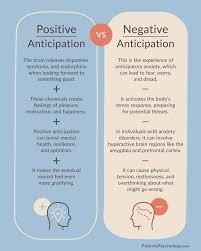
Physiological activation is central to this process. When a future event is anticipated as threatening or demanding, regulatory systems initiate changes that resemble those triggered by actual exposure. These changes may include alterations in cardiovascular activity, muscle tone, respiratory patterns, and internal signaling. The organism begins to prepare as though the anticipated condition were already occurring.
In many cases, this preparatory activation is adaptive. It allows for rapid and coordinated responses when the anticipated event unfolds. However, when anticipation becomes excessive or decoupled from actual conditions, it can produce symptoms that persist in the absence of immediate triggers. The organism responds not to what is happening, but to what is expected to happen.
This phenomenon is closely related to expectancy effects. Expectations influence not only subjective experience but also physiological processes. When individuals anticipate discomfort, they may experience heightened sensitivity to internal signals, amplifying minor sensations into significant symptoms. Conversely, expectations of safety or relief can attenuate responses, reducing the intensity of physiological activation.
The amplification of sensation through anticipation is mediated by interoceptive processes. Internal signals are continuously monitored and interpreted, but their salience depends on attentional and predictive factors. When anticipation directs attention toward specific sensations, those sensations become more prominent. This increased salience can lead to a perception of intensity that exceeds the underlying physiological input.
Cognitive appraisal further shapes this process. Anticipated events are evaluated in terms of their potential impact, controllability, and significance. When anticipation is associated with threat or uncertainty, it activates emotional responses that reinforce physiological activation. These emotional responses contribute to the persistence of symptoms, even in the absence of actual stressors.
Memory plays a foundational role in shaping anticipation. Past experiences provide templates that inform expectations about future events. When previous encounters with similar situations involved discomfort or distress, anticipation may activate the same patterns of response. This activation occurs automatically, often without conscious deliberation.
Over time, these patterns can become generalized. The organism may begin to anticipate discomfort in a wide range of contexts that share certain features with past experiences. This generalization increases the likelihood of symptom production, as more situations become associated with anticipatory activation.
The distinction between anticipation and perception becomes blurred in such cases. When anticipatory activation is strong, it can dominate sensory processing, leading to experiences that feel immediate and real. The organism does not simply imagine the anticipated state; it begins to embody it.
This embodiment is evident in psychosomatic conditions where symptoms appear in predictable contexts. For example, an individual may experience discomfort consistently before engaging in certain activities, even when those activities do not inherently produce such effects. The anticipation of discomfort becomes sufficient to generate the experience itself.
Emotional processes are deeply intertwined with anticipation. Emotions such as anxiety are inherently future-oriented, involving concern about potential outcomes. This orientation aligns closely with anticipatory mechanisms, reinforcing their activation. As emotional intensity increases, so does the degree of physiological preparation.
Importantly, anticipation does not require conscious awareness to exert its effects. Implicit expectations, shaped by prior learning, can influence physiological responses without entering conscious thought. These implicit processes contribute to the persistence of symptoms that individuals may find difficult to explain.
Behavioral responses further reinforce anticipatory patterns. When symptoms are anticipated, individuals may adopt strategies aimed at preventing or minimizing them. These strategies can include avoidance, increased monitoring, or attempts at control. While they may provide short-term relief, they often sustain the underlying anticipatory mechanisms.
Avoidance, in particular, prevents exposure to experiences that might disconfirm expectations. Without such exposure, anticipatory patterns remain unchallenged and continue to guide responses. The absence of corrective experience allows anticipation to maintain its influence over time.
Social and contextual factors also shape anticipatory processes. Interpersonal feedback can reinforce expectations about how situations will unfold. Cultural narratives about health and vulnerability contribute additional layers of meaning, influencing how anticipation is constructed and experienced.
At the neurobiological level, anticipation involves networks that integrate prediction, valuation, and regulation. These networks coordinate responses across multiple systems, ensuring that expectations are translated into physiological readiness. When these networks become biased toward certain patterns, anticipatory activation may become chronic.
Hormonal pathways are particularly sensitive to anticipatory processes. The expectation of challenge or threat can initiate hormonal responses that prepare the organism for action. When such expectations are persistent, these responses may become prolonged, contributing to sustained physiological changes.
The immune system may also be influenced by anticipation. Perceived threat can alter immune activity, affecting the organism’s capacity to respond to actual challenges. This interaction underscores the extent to which anticipation extends beyond immediate experience to influence broader aspects of functioning.
The persistence of symptoms generated through anticipation reflects the stability of predictive patterns. Once established, these patterns can operate independently of the conditions that originally gave rise to them. The organism continues to prepare for expected states, even when they are unlikely to occur.
Intervention strategies often focus on modifying these predictive patterns. By introducing experiences that contradict expectations, it becomes possible to weaken anticipatory activation. This process requires exposure to previously anticipated situations in a manner that allows for new learning.
Attention training can reduce the amplification of internal signals. By shifting focus away from constant monitoring, individuals can decrease the salience of sensations and reduce their capacity to trigger anticipatory responses. Over time, this can diminish the intensity of symptoms.
Cognitive approaches aim to alter the appraisal of anticipated events. By reframing expectations and reducing perceived threat, it becomes possible to attenuate physiological preparation. This change in appraisal affects both emotional and physiological components of anticipation.
Emotional regulation plays a central role in this process. Enhancing the capacity to tolerate uncertainty and manage affective responses reduces the intensity of anticipatory activation. As emotional responses become more regulated, their influence on physiological systems diminishes.
Behavioral interventions often emphasize gradual exposure rather than avoidance. By engaging with situations that have been associated with anticipated symptoms, individuals can recalibrate their predictive systems. This recalibration allows the organism to update its expectations based on new evidence.
The question of whether anticipation can produce real symptoms ultimately reveals the constructive nature of physiological experience. Symptoms are not solely the result of external conditions but can emerge from internally generated expectations. These expectations, grounded in learning and prediction, have the capacity to shape present experience.
Anticipation produces symptoms not because it is mistaken for reality, but because it is part of the system that constructs reality. The organism responds to what it expects as well as to what it perceives. When expectations are strong and persistent, they can generate experiences that are indistinguishable from those produced by external stimuli.
In this sense, anticipation is both a source of adaptation and a potential source of dysfunction. It allows for efficient preparation but can also sustain patterns that are no longer appropriate. Understanding this dual role provides a framework for addressing psychosomatic symptoms that arise from predictive processes.
Thus, anticipation can indeed produce real symptoms—not as illusions, but as manifestations of the organism’s regulatory systems responding to expected conditions. By modifying the patterns that underlie anticipation, it becomes possible to transform these responses and reduce their impact on experience.