


Can time exist in the absence of change, or is change the very condition that makes time intelligible? This question stands at the intersection of physics, metaphysics, and phenomenology. It challenges both scientific description and intuitive experience. On one hand, modern physics often treats time as a dimension woven into the fabric of spacetime, seemingly independent of particular events. On the other hand, human experience suggests that time is inseparable from motion, transformation, and succession. If nothing changed—no movement of particles, no fluctuation of energy, no alteration of thought—would time still pass, or would it lose all meaning? The classical philosophical tradition frequently linked time to change. Aristotle famously defined time as the number of motion with respect to before and after. In this view, time is not identical to motion, yet it depends upon motion for its measurement and intelligibility. Without change, there would be no “before” and “after” to count. Time would not merely be unmeasured; it would be conceptually empty. This relational understanding contrasts sharply with Newtonian physics, which posited absolute time flowing uniformly regardless of events. For Newton, time was a container within which change occurred, not something constituted by change itself. The advent of Einstein’s theory of relativity profoundly transformed this debate. In the relativistic framework, time is not absolute but interwoven with space into a four-dimensional continuum. Events are located within spacetime, and temporal intervals depend on relative motion and gravitational fields. Yet relativity does not straightforwardly resolve the question of change. The so-called “block universe” interpretation suggests that past, present, and future coexist within a static spacetime manifold. From this perspective, the universe as a whole does not “change”; rather, change is a feature internal to the block. If the entire history of the cosmos is equally real, then temporal passage may be an emergent or even illusory aspect of consciousness. This leads to a deeper metaphysical issue: is time fundamental or emergent? Some contemporary physicists argue that time may not exist at the most basic level of reality. In certain approaches to quantum gravity, the fundamental equations lack an explicit time parameter. Instead, time appears as a relational construct emerging from correlations between physical systems. If time arises from relations among changing entities, then in the absence of change, there would be no time. A perfectly static universe would not merely be timeless in experience but timeless in ontology. Yet imagining a universe without change is itself problematic. Physical laws as currently understood describe dynamic processes. Even in a hypothetical state of maximum entropy—where no macroscopic change is observable—microscopic fluctuations would persist. Complete stasis seems incompatible with quantum mechanics, which entails probabilistic transitions at the smallest scales. Thus, a world utterly devoid of change may be physically impossible. Nevertheless, as a thought experiment, it illuminates the conceptual dependence between time and transformation. The thermodynamic arrow of time further complicates the issue. Entropy, a measure of disorder, tends to increase in closed systems. This irreversible progression underlies our perception of temporal direction. We remember the past but not the future because physical processes, including those in the brain, are constrained by entropic asymmetry. If entropy were constant—if no gradients existed to drive processes—would time have direction? Without direction, would it retain meaning? Some argue that without the arrow provided by thermodynamics, time would reduce to a symmetrical parameter lacking experiential significance. Psychological experience reinforces the association between time and change. Human perception of duration depends on variation in sensory input and cognitive states. In monotonous environments with minimal stimuli, time seems to slow or even blur. Conversely, rapid sequences of novel events create the impression of accelerated time. If consciousness were frozen in an unchanging state, there would be no awareness of temporal passage. This suggests that at least phenomenologically, time requires change in mental content. A mind devoid of succession would not experience time at all. However, phenomenology does not settle ontology. One might argue that time could exist objectively even if no being perceived it. Just as space exists whether or not it is observed, time might persist independently of experience. Yet space can be meaningfully described even if empty, whereas time without events resists description. To specify a temporal interval is to reference events marking its boundaries. In the absence of events, temporal metrics lose operational meaning. This operational dependence hints at a deeper conceptual linkage. Philosophers distinguish between relational and substantival theories of time. Relationalists maintain that time consists solely in relations among events; remove the events, and time disappears. Substantivalists contend that time is an entity in its own right, capable of existing without content. The debate parallels discussions of space in early modern philosophy. While substantivalism preserves intuitive notions of temporal flow, relationalism aligns more closely with empirical practice, where time is always measured through change. Quantum mechanics introduces additional nuance. At the quantum level, systems can exist in superpositions, and temporal ordering becomes subtle. Some interpretations treat time as an emergent parameter derived from entanglement between subsystems. If entanglement patterns define temporal structure, then without interactions generating such correlations, time would not manifest. This supports the view that change—conceived as variation in relational states—is constitutive of temporality. Another perspective arises from cosmology. In the early universe, near the Big Bang, conventional notions of time break down. As one extrapolates backward toward singularity, spacetime curvature increases, and physical laws lose predictive power. Some models suggest that time itself may have originated with the universe. Asking what occurred “before” the Big Bang may be meaningless because time did not yet exist. If time has a beginning, then it is not an eternal container but a feature emerging with cosmic change. Conversely, certain speculative models propose cyclic universes or timeless fundamental states from which temporal sequences emerge. In these frameworks, change gives rise to time rather than occurring within preexisting time. The priority of change over time challenges ordinary intuition but offers conceptual coherence: temporality becomes a derivative feature of dynamic relations. Mathematics provides further insight. In dynamical
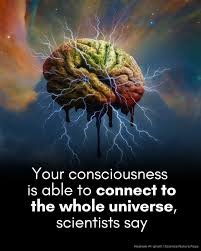
Is Consciousness a Neural Illusion?
Is consciousness merely an emergent property of neural computation, or does it represent something fundamentally irreducible within biological systems? This question has occupied philosophers, neuroscientists, and cognitive theorists for centuries, yet recent advances in neuroimaging, computational modeling, and systems neuroscience have intensified rather than resolved the debate. As empirical tools increasingly allow us to map the correlates of subjective experience onto measurable neural activity, a deeper paradox emerges: if every conscious state corresponds to a specific pattern of neuronal firing, is subjective awareness simply an epiphenomenal byproduct of electrochemical processes? Or does consciousness exert causal influence within the brain’s dynamic architecture? The hypothesis that consciousness may be, in some sense, a neural illusion forces us to reconsider foundational assumptions about perception, agency, and the self. At the most fundamental level, the nervous system operates through electrochemical signaling. Neurons communicate via action potentials and synaptic transmission, forming vast networks of excitatory and inhibitory interactions. These interactions give rise to complex oscillatory patterns measurable through electroencephalography (EEG), magnetoencephalography (MEG), and functional magnetic resonance imaging (fMRI). From a strictly reductionist perspective, conscious experience should be fully explainable in terms of these interactions. Yet the “hard problem” of consciousness, as articulated in contemporary philosophy of mind, highlights a persistent explanatory gap: how do objective neural processes generate subjective phenomenology—the qualitative “what it is like” aspect of experience? One approach to this question emerges from the Global Workspace Theory (GWT), which proposes that consciousness arises when information becomes globally available across distributed neural networks. According to this framework, numerous unconscious processes operate in parallel, but only a subset of information enters a “global workspace,” allowing integration, reporting, and flexible decision-making. Neuroimaging studies support this model by demonstrating widespread frontoparietal activation during conscious perception, particularly under conditions of attentional amplification. However, critics argue that global availability does not explain phenomenality itself; it merely describes functional accessibility. The neural broadcasting of information may correlate with consciousness without constituting it. Integrated Information Theory (IIT) offers a different perspective, positing that consciousness corresponds to the degree of integrated information—quantified as phi (Φ)—within a system. According to IIT, any system with sufficiently high integration possesses some level of experience. This theory reframes consciousness not as a binary property but as a graded phenomenon. The human brain, with its densely interconnected thalamocortical networks, achieves high levels of integration, whereas simpler systems achieve lower levels. Yet IIT has faced methodological challenges, particularly regarding the practical calculation of Φ in complex biological networks. Furthermore, critics question whether mathematical integration alone suffices to account for subjective quality. The illusion hypothesis gains traction when examining predictive processing frameworks. Contemporary neuroscience increasingly conceptualizes the brain as a prediction engine. Rather than passively receiving sensory input, the brain actively constructs models of the external world, continuously generating hypotheses and minimizing prediction error through feedback loops. Perception, under this model, is a controlled hallucination constrained by sensory data. If perception itself is fundamentally inferential, then the sense of a unified, stable self may likewise be a constructed narrative. The feeling of agency—the experience of initiating voluntary action—can be experimentally dissociated from actual motor causation, as demonstrated in Libet-style experiments and subsequent refinements. Neural readiness potentials often precede conscious awareness of intention, suggesting that conscious will may follow rather than initiate action. Such findings have profound implications. If conscious intention arises after neural processes are already underway, then the subjective experience of authorship may be a post hoc reconstruction. From this vantage point, consciousness appears less as a driver of behavior and more as a commentator—an interpretive overlay imposed upon unconscious computation. This aligns with modular models of cognition in which numerous specialized subsystems operate semi-independently, with consciousness serving to integrate or narrativize their outputs. Nevertheless, dismissing consciousness as mere illusion risks conceptual oversimplification. An illusion, by definition, is itself an experience. To claim that consciousness is illusory presupposes the existence of experiential content. Thus, the illusion hypothesis may be self-undermining. More plausibly, what is illusory is not consciousness per se but certain assumptions about its nature—particularly the notion of a centralized, immutable self. Neuropsychological evidence from pathological conditions further illuminates this issue. Patients with hemispatial neglect, resulting from parietal lobe damage, may fail to consciously perceive stimuli in one half of their visual field despite intact sensory pathways. Similarly, blindsight patients can respond behaviorally to visual stimuli without conscious awareness. These dissociations indicate that perception and consciousness are not identical processes. Conscious awareness appears to require additional integrative mechanisms beyond primary sensory processing. Split-brain research provides another compelling dimension. In patients who have undergone corpus callosotomy, the two hemispheres can function semi-independently, each capable of distinct perceptual and cognitive operations. Under certain conditions, conflicting responses from each hemisphere suggest the presence of parallel conscious streams. If unity of consciousness depends on interhemispheric integration, then the singular self may be contingent rather than fundamental. Neurochemical modulation further complicates the picture. Anesthetic agents such as propofol selectively disrupt thalamocortical connectivity, leading to loss of consciousness without necessarily abolishing all neural activity. Psychedelic compounds, in contrast, appear to decrease activity within the default mode network (DMN), correlating with ego dissolution and altered self-boundaries. These findings imply that consciousness is not merely about overall neural activation but about specific patterns of connectivity and network organization. From a developmental perspective, consciousness emerges gradually. Neonates exhibit primitive awareness, yet higher-order self-reflective capacities develop over time, paralleling cortical maturation. This ontogenetic trajectory supports the notion that consciousness is constructed through neural complexity rather than instantiated as a fixed entity. Computational neuroscience introduces additional considerations. Artificial neural networks can simulate aspects of perception, language, and decision-making with remarkable sophistication. However, whether such systems possess phenomenological awareness remains contested. If consciousness requires specific biological substrates—perhaps involving recurrent connectivity, temporal binding, or quantum-level dynamics—then computational replication alone may be insufficient. Conversely, if consciousness arises from information integration regardless of substrate, advanced artificial systems could theoretically achieve experiential states. The evolutionary dimension cannot be ignored. Consciousness likely conferred adaptive advantages, enhancing flexible behavior, social coordination, and long-term planning.

Hidden Shame
Why does shame linger long after the original event has passed? Why can a single memory, sometimes decades old, still carry the power to silence a voice, shrink a personality, or distort an identity? Shame is one of the most private and yet most universal human emotions. Unlike guilt, which says “I did something wrong,” shame whispers something far more corrosive: “There is something wrong with me.” This distinction may appear subtle, but psychologically it is profound. Shame does not target behavior; it targets the self. And when shame becomes hidden, chronic, and unexamined, it quietly shapes the architecture of an entire life. Shame begins early. A child reaches for expression—crying, laughing loudly, asking questions, exploring curiosity. If these expressions are met consistently with warmth and guidance, the child internalizes a sense of safety. But if expressions are met with ridicule, harsh punishment, emotional withdrawal, or comparison, the child absorbs a different message: “My natural self is too much, not enough, or unacceptable.” Because children are neurologically wired to depend on caregivers, they rarely conclude that the caregiver is flawed. Instead, they assume they themselves are defective. Shame becomes internalized as identity. Unlike fear, which activates a fight-or-flight response, shame triggers a collapse response. The body contracts. Shoulders curve inward. Eye contact decreases. The nervous system shifts toward withdrawal. This physiological pattern often becomes habitual. An adult who carries chronic shame may not consciously think, “I am unworthy,” yet their posture, tone, and relational style reflect this belief. Shame embeds itself not only in thought but in muscle memory. Hidden shame is particularly powerful because it avoids detection. Many individuals who carry deep shame appear highly functional. They may excel academically, professionally, or socially. Achievement becomes armor. Perfectionism becomes camouflage. Humor becomes distraction. By excelling, they attempt to outrun the original wound. But success cannot erase a core belief of defectiveness. It may temporarily quiet it, yet the shame resurfaces in moments of failure, criticism, or vulnerability. The relationship between shame and perfectionism is intricate. Perfectionism promises protection: “If I make no mistakes, I cannot be rejected.” But perfection is unattainable. When inevitable mistakes occur, shame intensifies. The internal critic becomes harsher. This critic often echoes early voices of judgment. Over time, the individual may struggle to differentiate between external evaluation and internalized shame. Even neutral feedback can feel like confirmation of unworthiness. Attachment theory offers additional insight. In securely attached individuals, mistakes do not threaten identity. They experience correction without collapsing into self-condemnation. In contrast, those with insecure attachment—particularly anxious or disorganized styles—may interpret relational tension as evidence of personal defect. A delayed text message becomes proof of being unlovable. A minor disagreement becomes confirmation of being fundamentally flawed. Shame distorts perception. Shame also thrives in secrecy. Because it targets identity, individuals rarely confess it openly. They may admit stress, anxiety, or frustration, but not shame. To reveal shame feels like exposing the very defect one fears. This secrecy isolates. Isolation reinforces the belief of being uniquely flawed. In reality, shame is universally human. Yet it convinces each person that they are alone in their inadequacy. Cultural factors influence shame’s expression. In some cultures, collective honor and reputation are central. Deviating from expectations can trigger intense shame, not only individually but intergenerationally. In other contexts, hyper-individualism produces a different form: failure to achieve personal success becomes shameful. Whether rooted in collectivism or individualism, the underlying mechanism remains similar—the self feels unacceptable relative to perceived standards. Trauma deepens shame’s roots. Especially in cases of emotional abuse, neglect, or humiliation, shame becomes intertwined with memory. The brain stores traumatic experiences in sensory fragments—images, tones, bodily sensations. When triggered, the body relives not only fear but humiliation. For survivors of abuse, shame often replaces anger. Instead of directing blame outward, they internalize it. “If something bad happened to me, it must be because I deserved it.” This belief provides a distorted sense of control; it is psychologically easier to believe in personal defect than in random cruelty. Neuroscience reveals that shame activates brain regions associated with social pain—the same regions activated by physical pain. Rejection, exclusion, and humiliation are processed as threats to survival. Historically, belonging to a group was essential for survival. Therefore, signals of exclusion carry intense emotional weight. Shame becomes the brain’s alarm system for potential social expulsion. The problem arises when this alarm becomes hypersensitive, reacting to minor cues as if they were life-threatening. In adult relationships, hidden shame can manifest in complex ways. Some individuals withdraw preemptively, ending relationships before deeper intimacy forms. Others become overly accommodating, fearing that expressing needs will reveal defectiveness. Still others oscillate between grandiosity and self-loathing. Grandiosity temporarily shields against shame by inflating self-image. When reality disrupts this inflation, collapse follows. These patterns often confuse partners, who may interpret them as inconsistency rather than protection against shame. Parenting can unintentionally transmit shame across generations. Caregivers who were shamed may unconsciously replicate similar dynamics. A parent who felt inadequate as a child may react strongly to a child’s mistakes, perceiving them as reflections of personal failure. Without awareness, shame becomes cyclical. Breaking this cycle requires emotional literacy and self-reflection. Educational systems can also reinforce shame. Public comparison, harsh grading without emotional support, or humiliation disguised as discipline can imprint lasting wounds. A single humiliating classroom experience may shape academic self-concept for years. The child who was laughed at while presenting may later avoid public speaking despite intellectual competence. Shame differs from healthy humility. Humility acknowledges imperfection while maintaining intrinsic worth. Shame denies intrinsic worth altogether. This distinction matters because growth requires acknowledgment of mistakes without self-annihilation. When shame dominates, self-improvement efforts become driven by fear rather than curiosity. Hidden shame often underlies addictive behaviors. Substances, compulsive work, excessive social media use, or disordered eating can function as temporary escapes from self-rejection. These behaviors numb the sting of shame but reinforce it afterward. The individual may feel additional shame for lacking control, creating a self-perpetuating cycle. The body carries shame somatically. Chronic tension

Why Do We Feel Empty Even When Life Looks Perfect?
Why does a person who has achieved everything they once dreamed of—career stability, financial comfort, a loving partner, social recognition—sometimes wake up with a quiet, persistent sense of emptiness? Why can a life that appears complete from the outside feel hollow on the inside? This emotional contradiction is one of the most confusing psychological experiences in modern adulthood. It challenges the assumption that happiness naturally follows achievement. When external success fails to produce internal fulfillment, individuals often feel guilt in addition to emptiness. They ask themselves: “What is wrong with me?” To explore this question deeply, we must examine identity formation, emotional suppression, existential anxiety, attachment patterns, and the subtle difference between pleasure and meaning. At the core of this experience lies a misunderstanding about the nature of satisfaction. Society often teaches that happiness is the result of accumulation—of accomplishments, possessions, admiration, or milestones. From childhood, many individuals internalize a formula: study hard, succeed professionally, build a family, acquire stability, and happiness will follow. This formula is not entirely false. Achievement can bring security, pride, and opportunity. However, it does not automatically address deeper psychological needs such as authenticity, belonging, purpose, and self-acceptance. When external structure is strong but internal connection is weak, emptiness emerges. One major contributor to this phenomenon is identity diffusion. Many people construct their identity around roles: the successful professional, the responsible parent, the supportive partner, the admired friend. Roles provide structure and social value, but they do not necessarily reflect the authentic self. If someone has spent years adapting to expectations—choosing careers to please family, behaving in ways that gain approval, suppressing unpopular opinions—they may reach external success while remaining internally disconnected. The emptiness is not a sign of ingratitude; it is a signal of misalignment. Emotional suppression plays a critical role as well. In environments where vulnerability was discouraged, individuals learn to minimize or ignore their feelings. They become highly functional and capable, yet emotionally distant from themselves. Over time, this distance creates numbness. Numbness can be mistaken for stability. A person may appear calm and composed while internally experiencing muted emotional life. Without access to genuine joy, sadness, anger, or excitement, life begins to feel flat. Emptiness is often the result of prolonged emotional avoidance. Another layer involves hedonic adaptation, a psychological process in which humans quickly adjust to improved circumstances. What once felt extraordinary becomes normal. The new job, the new house, the new relationship—all gradually integrate into daily routine. The nervous system recalibrates, and the initial surge of happiness fades. This does not mean the achievements lack value; it means the brain is designed to return to baseline. If individuals rely solely on external changes to sustain fulfillment, they may feel trapped in an endless cycle of seeking more without lasting satisfaction. Existential psychology offers deeper insight. Human beings possess an inherent awareness of mortality and meaning. Even when life is materially comfortable, existential questions remain: “Why am I here? Does my life matter? Am I living according to my values?” If these questions remain unaddressed, success can intensify emptiness rather than reduce it. Once survival needs are met, the absence of deeper purpose becomes more noticeable. External comfort removes distractions, exposing internal voids. Attachment patterns further shape this experience. Individuals with anxious or avoidant attachment styles may struggle to feel securely connected even in healthy relationships. An anxiously attached person may constantly fear abandonment despite reassurance. An avoidantly attached person may resist intimacy even when love is present. In both cases, the relationship may look stable externally, yet internal insecurity persists. Without secure attachment, emotional fulfillment remains fragile. Self-worth also influences emptiness. If someone’s sense of worth depends entirely on achievement, success becomes both necessary and insufficient. Necessary because it temporarily validates identity; insufficient because the validation is conditional and fleeting. The moment performance slows, anxiety returns. Living under constant evaluation prevents genuine contentment. True fulfillment requires intrinsic worth—an internal belief that one is valuable independent of productivity. Modern culture amplifies comparison. Social media platforms expose individuals to curated highlights of others’ lives. Even those who appear successful may compare themselves upward, focusing on what they still lack. This perpetual comparison fuels dissatisfaction. The mind shifts from gratitude to deficiency. Emptiness thrives in environments where self-measurement never ends. Childhood conditioning often shapes adult emptiness in subtle ways. If love was conditional—given primarily when the child achieved or behaved well—the adult may internalize the belief that they must constantly perform to deserve affection. Even after achieving external success, they may feel emotionally insecure because the underlying fear of losing love persists. The nervous system remains vigilant. Achievement becomes armor rather than expression. Trauma can also produce chronic emptiness. Particularly in cases of emotional neglect, individuals may grow up without consistent validation of their inner experiences. When emotions are ignored or dismissed during formative years, the child learns to disconnect from them. As adults, they may struggle to access internal depth. Life becomes functional but not felt. Emptiness is the echo of unmet developmental needs. There is also a psychological phenomenon known as “arrival fallacy”—the belief that reaching a certain milestone will permanently resolve dissatisfaction. “Once I get promoted, I’ll relax.” “Once I marry, I’ll feel secure.” “Once I buy a house, I’ll be complete.” When the milestone is achieved and dissatisfaction persists, disillusionment arises. The individual confronts the reality that fulfillment is not a destination but a process. Neuroscience suggests that meaning activates different neural pathways than pleasure. Pleasure is often short-lived and stimulus-driven, while meaning involves narrative coherence and contribution. People who feel empty despite comfort may lack a sense of narrative direction. They may not see how their daily actions connect to a larger story. Without narrative integration, life feels fragmented. Another contributing factor is fear of stillness. Many high-achieving individuals maintain constant busyness. Activity distracts from inner discomfort. When life stabilizes and busyness decreases, unresolved emotions surface. Emptiness may actually be grief, anger, or longing that was never processed. Slowing down reveals what achievement concealed. Perfectionism compounds
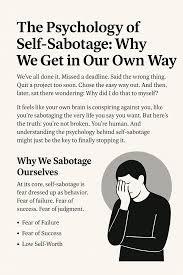
Why Do We Sabotage Ourselves When We Are Closest to Success?
Why does a person work tirelessly toward a goal, endure years of discipline and sacrifice, and then hesitate, delay, or even destroy their progress at the very moment success seems within reach? Why does someone who longs for love push it away when intimacy deepens? Why does an individual who desires stability create chaos just as life begins to feel secure? Self-sabotage is one of the most puzzling and painful psychological patterns. It appears irrational from the outside, yet internally it often follows a hidden logic shaped by fear, memory, identity, and unresolved emotional conflict. To understand why we sabotage ourselves when we are closest to success, we must explore the deeper layers of the human psyche—where survival mechanisms, attachment wounds, and unconscious beliefs quietly shape behavior. At the surface level, self-sabotage looks like procrastination, impulsive decisions, broken commitments, missed opportunities, or sudden withdrawal. A student studies diligently for months but fails to submit the final application. An employee performs exceptionally yet misses important deadlines before promotion. A person in a loving relationship begins arguments without clear cause. These behaviors may appear careless or irresponsible, but they often mask something deeper: an internal conflict between desire and fear. Part of the individual wants success. Another part fears what success represents. Success is rarely just about achievement. Psychologically, success brings visibility, responsibility, change, and vulnerability. It may disrupt familiar dynamics in relationships. It may trigger expectations from others. It may expose the individual to judgment or envy. For someone whose nervous system associates visibility with danger—perhaps due to early criticism or emotional invalidation—success can feel threatening rather than rewarding. The body reacts not to the rational meaning of success but to the emotional memory attached to being seen. Childhood experiences often lay the foundation for self-sabotage. If a child grows up in an environment where achievements are ignored, minimized, or criticized, they may internalize the belief that success is unsafe. A parent who responds to good grades with indifference, or who pressures perfection without offering warmth, can create an association between achievement and emotional disconnection. Later in life, when success approaches, the unconscious mind may attempt to protect the individual from anticipated rejection by preventing success altogether. In this way, self-sabotage becomes a misguided form of self-protection. Attachment theory provides further insight. Individuals with insecure attachment styles may struggle with consistency when life becomes stable. If love in childhood was unpredictable—sometimes available, sometimes withdrawn—the nervous system adapts to instability as normal. Calmness may feel unfamiliar and therefore uncomfortable. When success or healthy relationships create stability, anxiety may increase. To reduce this anxiety, the individual unconsciously recreates familiar chaos. It is not happiness they fear; it is unfamiliarity. The psyche often prefers known pain over unknown peace. Impostor syndrome is another psychological factor closely related to self-sabotage. When individuals achieve something that conflicts with their internal self-image, cognitive dissonance arises. If someone deep down believes they are inadequate, unworthy, or not intelligent enough, external success contradicts this belief. Instead of updating the belief, the psyche may attempt to restore consistency by undermining the success. Mistakes, delays, or withdrawal serve to confirm the negative self-concept. In this sense, self-sabotage protects identity coherence. The individual would rather remain consistent with their internal narrative than risk redefining who they are. Fear of responsibility also plays a significant role. Success expands choice and accountability. A promotion increases leadership expectations. A public platform increases influence. Financial stability increases decision-making power. These expansions can feel overwhelming. For individuals who grew up in environments where responsibility was burdensome or unsafe, added responsibility may trigger stress responses. Sabotage reduces pressure by shrinking opportunity. It returns life to a manageable scale. Another dimension involves fear of separation. Success can alter relational dynamics. If someone rises socially or professionally, they may outgrow certain friendships or family roles. For individuals who unconsciously fear abandonment, surpassing loved ones may feel like betrayal. To preserve belonging, they may limit their own growth. Loyalty conflicts are powerful. A child who observed a parent struggle financially may feel guilt about earning more money. A sibling who experienced rivalry may avoid standing out. Self-sabotage then becomes a strategy to maintain relational equilibrium. Neuroscience suggests that the brain is wired for familiarity. The basal ganglia, involved in habit formation, reinforces repeated behavioral patterns. Even dysfunctional behaviors can feel comfortable if they are predictable. Success introduces unpredictability. New routines, new environments, new expectations require cognitive adaptation. The brain may resist this change, especially if stress levels are already high. Sabotage can restore the comfort of the known. Emotional regulation capacity influences self-sabotage as well. Success often triggers intense emotions—excitement, anticipation, anxiety. Individuals with limited skills in managing emotional intensity may unconsciously dampen positive experiences to avoid overwhelm. This phenomenon is sometimes called “upper limit problems,” where people tolerate only a certain level of happiness before creating problems to return to a familiar baseline. The psyche may equate intense joy with potential loss, believing that if something feels too good, it will inevitably disappear. To avoid future disappointment, it reduces current joy. Perfectionism can paradoxically lead to self-sabotage. When standards are impossibly high, the fear of not meeting them becomes paralyzing. Rather than risk imperfect performance, individuals may delay action. Procrastination protects the fantasy of potential. If the project is never completed, it can never be judged. In this way, sabotage shields the ego from failure—but it also prevents success. Perfectionism often develops in response to conditional love, where approval was contingent on achievement. The individual internalizes relentless standards and fears falling short. Trauma adds another layer of complexity. Traumatic experiences, particularly those involving humiliation, betrayal, or sudden loss, can create associations between peak moments and danger. If a person once felt proud before experiencing public embarrassment, their nervous system may link pride with threat. As adults, moments of accomplishment may unconsciously activate trauma responses—racing heart, intrusive thoughts, or urges to withdraw. Sabotage becomes a means of reducing activation. Cultural influences should not be overlooked. Some societies emphasize modesty and

Why Do We Fear Silence?
Why does silence make so many people uncomfortable? Why do we instinctively reach for our phones when a room grows quiet, turn on music when we are alone, or fill pauses in conversation with unnecessary words? Silence, in its simplest definition, is the absence of sound. Yet emotionally and psychologically, it can feel much heavier. For some, silence is peaceful. For others, it is unsettling, even threatening. In a world overflowing with constant noise, notifications, conversations, and digital stimulation, silence has become rare. But perhaps our discomfort with silence reveals something deeper about modern life and the human mind. From early childhood, many of us are surrounded by sound. Homes are filled with televisions playing in the background, radios broadcasting news, family members talking, and devices buzzing. Schools are noisy environments. Cities rarely sleep. Even rural areas are no longer completely quiet due to technology and transportation. Sound becomes a constant companion. When silence suddenly appears, it feels unfamiliar. Human beings tend to fear what feels unfamiliar or uncontrollable. Silence strips away distraction, and in doing so, it forces us to confront our own thoughts. One of the primary reasons silence can feel uncomfortable is that it creates space for reflection. In noisy environments, our attention is directed outward. We respond to conversations, absorb information, and process external stimuli. Silence redirects attention inward. Thoughts that were previously suppressed by activity begin to surface. Unresolved emotions, anxieties about the future, regrets about the past, and hidden insecurities may become more noticeable. For individuals who are not accustomed to introspection, this internal exposure can feel overwhelming. Noise becomes a shield against self-confrontation. Modern technology intensifies this pattern. Smartphones provide immediate access to entertainment, communication, and information. Whenever boredom or silence appears, we can eliminate it instantly. Waiting in line, sitting in a car, or resting at home no longer requires stillness. We scroll, watch, listen, and type. This constant stimulation trains the brain to expect continuous input. Neuroscientists suggest that the brain adapts to frequent rewards from digital interactions. Notifications, likes, and new content trigger small bursts of dopamine, reinforcing the habit of seeking stimulation. In such a cycle, silence feels like deprivation. Social dynamics also contribute to our discomfort with silence. In conversation, pauses are often interpreted negatively. A silent moment can be perceived as awkward, as if something has gone wrong. Many people rush to fill these gaps to maintain social harmony. Yet silence in conversation can have positive functions. It allows time for thinking, demonstrates attentive listening, and creates emotional depth. In some cultures, silence is respected as a sign of wisdom or contemplation. In others, it is avoided. Cultural expectations shape how individuals interpret quiet moments. Fear of judgment plays another role. When we are silent in a group, we may worry about how others perceive us. Are we being seen as shy, disengaged, or unintelligent? To avoid misinterpretation, we speak even when we have little to say. Silence can feel vulnerable because it removes the protective layer of constant expression. Speaking allows us to control narratives about ourselves. Silence exposes us to uncertainty. There is also an existential dimension to silence. Philosophers have long connected silence with awareness of mortality and meaning. When distractions fade, fundamental questions emerge. What am I doing with my life? Am I satisfied with my choices? What truly matters? Such questions are not easy to answer. Noise offers temporary escape from them. Silence invites confrontation. For individuals who have not defined clear values or purposes, silence can amplify confusion. However, silence is not inherently negative. In fact, research suggests that periods of quiet can benefit mental clarity and emotional regulation. When the brain is not overloaded with sensory input, it can process information more efficiently. Creativity often flourishes in stillness. Many writers, artists, and thinkers intentionally seek quiet environments to generate ideas. Silence provides cognitive space for imagination to expand. Without interruption, the mind can wander productively, forming unexpected connections. Meditative traditions across cultures emphasize the value of silence. Practices such as mindfulness meditation encourage individuals to observe thoughts without judgment. Initially, this can feel uncomfortable. The mind may appear chaotic. Yet with practice, silence becomes less intimidating. It transforms from emptiness into presence. Individuals learn that thoughts come and go, and that silence does not equal loneliness. Instead, it can become a foundation for inner stability. The relationship between silence and loneliness is complex. Being alone in silence can either feel restorative or isolating, depending on context. When chosen voluntarily, solitude often promotes reflection and self-discovery. When imposed by circumstance, it may intensify feelings of exclusion. The emotional interpretation of silence matters more than the silence itself. Two people can experience identical quiet environments yet react differently based on mindset and personal history. Childhood experiences influence attitudes toward silence. If silence in a household was associated with tension, conflict, or emotional withdrawal, it may carry negative associations into adulthood. Conversely, if silence was linked to comfort — such as reading peacefully near a parent — it may feel safe. These early patterns shape subconscious reactions. Understanding personal associations with silence can help individuals reframe their responses. Work culture also affects our perception of quiet. In many professional environments, productivity is equated with visible activity. Open offices are filled with conversations, keyboard clicks, and phone calls. Being silent might be misinterpreted as disengagement. Yet deep work often requires uninterrupted focus. Companies that recognize the importance of quiet spaces may enhance employee performance and well-being. Structured silence, such as designated focus hours, can improve efficiency. In relationships, silence can signal different things. It may represent comfort, where two people feel secure enough not to fill every moment with words. It may also signal emotional distance or unresolved conflict. The meaning depends on context and communication patterns. Learning to differentiate between peaceful silence and avoidant silence is essential for healthy relationships. Honest dialogue about needs can prevent misunderstandings. Nature offers another perspective on silence. Although natural environments are not completely silent, their sounds
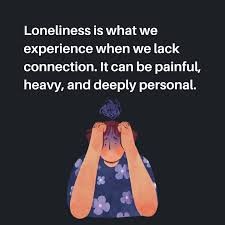
Does Modern Loneliness Mean We Have Forgotten How to Truly Connect?
How can a world that has never been more connected feel so deeply lonely? This question echoes quietly in the minds of millions of people who scroll endlessly through social media feeds, respond to dozens of messages each day, and yet still go to bed with a sense of emotional emptiness. The paradox of modern life lies in this contradiction: we are surrounded by communication tools, but meaningful connection often feels rare and fragile. Loneliness today is not merely the absence of people; it is the absence of understanding, presence, and shared depth. In exploring whether modern loneliness means we have forgotten how to truly connect, we must examine technology, social structures, personal fears, and the shifting nature of human relationships. The digital age has transformed communication into something immediate and constant. Messages travel across continents in seconds. Video calls allow families separated by oceans to see each other’s faces. Social media platforms promise connection with hundreds or even thousands of acquaintances. Yet quantity does not guarantee quality. When interactions are reduced to likes, short comments, and carefully edited photographs, relationships risk becoming performances rather than authentic exchanges. Many individuals present idealized versions of themselves online, hiding vulnerability behind filters and curated captions. In such an environment, comparison replaces empathy, and validation replaces genuine dialogue. We begin to measure our worth through external approval rather than internal understanding. At the same time, urbanization has altered traditional community structures. In earlier generations, people often lived near extended family members and lifelong neighbors. Shared routines, celebrations, and hardships created natural bonds. Today, mobility is common. Individuals move to different cities or countries for education and career opportunities. While this mobility offers growth and independence, it can also disrupt stable support systems. Building new friendships in unfamiliar environments requires time, emotional energy, and courage. Many adults struggle to form close friendships outside structured settings like school. Workplaces may foster collaboration, but professional relationships do not always translate into deep personal connections. Another contributing factor to modern loneliness is the culture of busyness. Productivity is frequently equated with value. Long working hours, side projects, and constant self-improvement efforts leave little space for unstructured social interaction. Genuine connection requires time — time to listen without distraction, time to share stories, time to sit in silence without feeling pressured. When schedules are overloaded, relationships can become secondary priorities. People may assume that quick texts are sufficient substitutes for long conversations. Over time, this pattern weakens emotional intimacy. Psychological factors also play a significant role. Fear of vulnerability often prevents authentic connection. To truly connect with someone means to reveal imperfections, insecurities, and doubts. In a competitive and image-conscious society, vulnerability can feel risky. Many individuals protect themselves by maintaining emotional distance. They share surface-level details while keeping deeper struggles private. However, connection thrives in honesty. When people dare to speak openly about their fears and experiences, they invite others to do the same. Without vulnerability, relationships remain polite but shallow. Social media algorithms further complicate the situation by encouraging echo chambers. People are shown content that aligns with their existing beliefs and preferences. While this creates comfort, it can reduce exposure to diverse perspectives. Dialogue becomes polarized rather than exploratory. True connection requires the ability to engage respectfully with differences. When communication spaces reward outrage and quick reactions, thoughtful conversation becomes less common. As a result, individuals may feel misunderstood or isolated within their own communities. Family dynamics have also evolved. Smaller family sizes and geographic dispersion can limit daily intergenerational interaction. Grandparents, parents, and children may live far apart, communicating primarily through digital means. Although technology bridges distance, physical presence carries unique emotional power. Simple gestures — sharing a meal, offering a hug, sitting together during difficult times — cannot be fully replicated on a screen. The absence of consistent physical closeness can subtly intensify feelings of isolation. Economic pressures add another layer to the problem. Financial instability, rising living costs, and job insecurity can create chronic stress. Stress narrows emotional bandwidth. When individuals are preoccupied with survival concerns, they may have limited capacity to invest in relationships. Social outings may feel like luxuries rather than necessities. Over time, isolation becomes normalized. People convince themselves they are simply independent or self-sufficient, even when they long for companionship. Despite these challenges, it would be inaccurate to conclude that humanity has entirely forgotten how to connect. Rather, the forms of connection are changing, and we are still learning how to navigate them. Online communities, for example, can provide support for individuals with rare interests or marginalized identities. Someone struggling with a specific health condition or niche passion may find understanding in digital spaces that would be impossible locally. These communities demonstrate that meaningful connection can exist online when honesty and shared experience are prioritized. However, intentionality becomes essential. Unlike traditional communities that formed through proximity, modern relationships often require deliberate effort. Scheduling regular meetings, initiating deeper conversations, and setting boundaries with technology are conscious choices. People who cultivate rituals — weekly dinners with friends, monthly family gatherings, shared hobbies — often report stronger social bonds. These practices create consistency, which nurtures trust. Education systems can also influence our ability to connect. Emotional intelligence, empathy, and communication skills are not always emphasized in formal curricula. Teaching young people how to express feelings, resolve conflicts, and listen actively could strengthen future relationships. When individuals understand their own emotions, they are better equipped to understand others. Connection is not solely a spontaneous occurrence; it is a skill that can be developed. The role of self-connection should not be overlooked. Paradoxically, individuals who are uncomfortable being alone may struggle most with loneliness. When solitude feels threatening, relationships may be pursued out of fear rather than genuine compatibility. Developing a healthy relationship with oneself — through reflection, creativity, or spiritual practice — can reduce dependency on external validation. From this foundation, connections become choices rather than desperate needs. Cultural narratives about independence may also require reevaluation. In many modern societies, self-reliance

Has Modern Comfort Made Humanity More Fragile Than Strong?
When survival no longer demands daily physical struggle, when food arrives with a tap on a screen and climate is controlled with a button on the wall, have we become stronger as a species—or softer? Comfort is one of civilization’s greatest achievements. It represents centuries of innovation, labor, and sacrifice. Heating systems replaced open fires, antibiotics replaced fatal infections, supermarkets replaced famine, and digital tools replaced countless hours of manual effort. Yet an uncomfortable question lingers beneath these achievements: does the reduction of hardship automatically produce resilience, or can excessive comfort quietly erode it? For most of human history, survival required constant adaptation. Early humans faced unpredictable weather, scarce resources, and physical threats. Strength was not aesthetic but functional. Endurance meant life. Communities depended on cooperation for protection and sustenance. Hardship shaped daily routines and sharpened instincts. Over generations, these conditions forged psychological and physical toughness that aligned directly with environmental demands. Modern societies, particularly in developed regions, have dramatically altered those demands. Physical labor has decreased for many. Automation handles production, digital tools manage communication, and logistics networks ensure supply chains. While these advancements improve efficiency and safety, they also reduce exposure to discomfort. Climate-controlled environments shield individuals from extreme temperatures. Processed food eliminates seasonal scarcity. Medical intervention prevents many once-fatal illnesses. At first glance, this progress seems entirely beneficial. Longer lifespans, lower infant mortality rates, and improved sanitation represent undeniable gains. However, resilience is not built solely in crisis; it develops through manageable challenges. Psychologists describe the concept of “stress inoculation,” where moderate stress strengthens coping mechanisms. When individuals face and overcome difficulties, confidence and adaptability grow. If discomfort is systematically removed, opportunities for developing resilience may diminish. Physical health illustrates this paradox. Sedentary lifestyles, enabled by technological convenience, contribute to rising rates of obesity and chronic illness. Human bodies evolved for movement. When daily life requires minimal physical exertion, deliberate exercise becomes necessary to maintain health. Ironically, individuals now simulate hardship through structured workouts—lifting weights, running marathons, participating in endurance challenges—to compensate for comfort-driven inactivity. This phenomenon suggests an intuitive recognition that struggle builds strength. Psychological resilience follows a similar pattern. Shielding children from all adversity may appear protective, yet overprotection can limit development of coping skills. When failure, disappointment, or social conflict are avoided entirely, individuals may struggle with minor setbacks later in life. Constructive exposure to challenge—academic difficulty, competitive sports, complex social interactions—teaches problem-solving and emotional regulation. Comfort without challenge can create fragility masked by stability. Digital technology further complicates resilience. Instant access to information and entertainment reduces boredom and uncertainty. While convenience enhances productivity, constant stimulation can diminish tolerance for delay. Patience, once cultivated through necessity, becomes scarce. Waiting in line now feels intolerable. Slow internet provokes frustration disproportionate to the inconvenience. The threshold for discomfort lowers subtly. Social media amplifies emotional vulnerability in unexpected ways. Online platforms enable connection, yet they also facilitate comparison and rapid feedback. Public metrics of approval—likes, shares, comments—can influence self-esteem. Criticism spreads quickly and widely. For some, digital exposure builds confidence and community. For others, it intensifies anxiety and sensitivity to judgment. Resilience in a connected world requires navigating visibility with self-awareness. Economic comfort presents another dimension. In affluent societies, basic needs are often met consistently. However, financial security does not eliminate psychological strain. In fact, abundance can create new pressures: maintaining lifestyle standards, achieving status, or pursuing perfection. The absence of survival threats does not guarantee inner stability. Comfort may shift rather than remove stressors. Historical comparisons offer insight. Generations that endured war, economic depression, or social upheaval often developed strong communal bonds. Shared adversity fostered solidarity. Modern comfort, by contrast, can encourage individualism. When survival does not require collective effort, social cohesion may weaken. Loneliness becomes prevalent despite material abundance. Resilience, therefore, is not solely personal but relational. Communities that support one another withstand crises more effectively. The COVID-19 pandemic exposed the fragility embedded within comfort. Global supply chains faltered, healthcare systems strained, and everyday routines collapsed. Individuals accustomed to predictability faced uncertainty. For some, this disruption revealed hidden strengths—adaptability, creativity, empathy. For others, it highlighted dependence on systems previously taken for granted. The crisis demonstrated that comfort can evaporate quickly, and resilience becomes essential when it does. Comfort also influences ambition. When basic survival is assured, individuals can pursue intellectual, artistic, and entrepreneurial endeavors. This freedom has produced remarkable innovation. Yet excessive security may dampen motivation. Some psychological theories propose that moderate dissatisfaction fuels progress. When needs are met too easily, urgency declines. Balancing stability with aspiration becomes crucial. Environmental considerations further complicate the narrative. Modern comfort relies heavily on resource consumption—energy for heating and cooling, water for sanitation, materials for construction. Sustainable practices challenge societies to reconsider convenience. Reducing consumption may feel like regression, yet it may represent adaptive strength. Learning to live comfortably within ecological limits requires discipline and collective responsibility. Education systems reflect this tension. In efforts to reduce stress, some institutions minimize competition and grading severity. While supportive environments enhance learning, eliminating challenge entirely may undermine preparation for real-world complexity. Constructive difficulty fosters growth. The goal is not harshness but calibrated challenge. Cultural attitudes toward discomfort vary globally. In certain traditions, voluntary hardship—fasting, pilgrimage, rigorous training—is viewed as character-building. These practices acknowledge that chosen difficulty can cultivate discipline and gratitude. Modern wellness movements echo this principle through cold exposure therapy, minimalist living, and digital detox retreats. Individuals intentionally reintroduce challenge to counterbalance comfort. Technological dependence presents long-term resilience questions. Navigation apps reduce the need for spatial memory. Spell-check tools minimize attention to spelling. Calculators replace mental arithmetic. While efficiency improves, cognitive skills may atrophy without practice. The brain, like muscle, strengthens through use. Delegating tasks entirely to machines risks diminishing internal capability. However, framing comfort solely as weakness oversimplifies reality. Comfort also provides psychological safety necessary for exploration. When individuals are not preoccupied with survival, they can engage in philosophical reflection, scientific inquiry, and creative experimentation. The arts and sciences flourish in stable conditions. Comfort, therefore, can be fertile ground

Is Freedom Truly Possible in a World Shaped by Invisible Systems?
What does it mean to be free in a century where choices appear abundant, yet structures quietly guide almost every decision we make? Freedom is often imagined as independence, the ability to act without constraint, to speak without fear, to choose one’s path without interference. It is celebrated in political speeches, embedded in constitutions, and defended in revolutions. Yet modern life reveals a paradox: while explicit restrictions may diminish in many societies, subtle systems—economic, technological, cultural, psychological—shape behavior in ways that are less visible but profoundly influential. The question is no longer simply whether chains exist, but whether we can recognize the frameworks that condition our sense of autonomy. Historically, freedom was defined in concrete terms. It meant emancipation from slavery, liberation from colonial rule, protection from authoritarian control. These struggles were tangible and often dramatic. Laws restricted movement, speech, or property ownership, and resistance movements fought to dismantle such barriers. Political freedom centered on rights—voting, assembly, expression. Over time, many societies institutionalized these liberties, creating legal foundations for individual autonomy. Yet legal rights do not automatically translate into lived freedom. Economic realities constrain options. A person may possess the legal right to pursue any career yet lack access to education or financial resources necessary to do so. A worker may technically choose employment but feel compelled to accept unfavorable conditions due to economic necessity. Thus, freedom intersects with opportunity. Without material security, theoretical liberty can feel hollow. Consumer culture presents another dimension. Modern markets offer vast arrays of products and services, creating the impression of unlimited choice. Supermarkets contain hundreds of variations of the same item. Streaming platforms host endless entertainment options. Online stores deliver goods to one’s doorstep within hours. Choice becomes synonymous with freedom. Yet psychologists note that excessive options can generate decision fatigue and anxiety. When every selection seems consequential, satisfaction may diminish. Furthermore, advertising shapes desire itself. Preferences may feel personal, yet they are often influenced by branding, social trends, and targeted marketing. Technology intensifies this complexity. Algorithms curate news feeds, recommend products, and suggest connections. While these systems enhance convenience, they also filter information. Personalized content can create echo chambers, reinforcing existing beliefs and limiting exposure to diverse perspectives. Individuals may feel informed and autonomous while navigating environments subtly structured to maximize engagement. The architecture of digital platforms influences behavior in ways users rarely perceive fully. Surveillance adds another layer. Data collection underpins many digital services. Search histories, location data, and online interactions contribute to detailed profiles. These datasets enable tailored experiences but also raise concerns about privacy and manipulation. When behavior is tracked and predicted, autonomy intersects with transparency. Freedom includes not only the ability to act but the assurance that one’s actions are not constantly monitored or exploited. Cultural expectations shape freedom from an early age. Norms regarding success, gender roles, career paths, and lifestyle influence decision-making. Individuals internalize these standards, often unconsciously. A person may believe they freely chose a profession while actually responding to familial pressure or societal prestige. Social approval functions as a powerful motivator. The fear of exclusion can limit authentic expression more effectively than formal prohibition. Education both expands and channels autonomy. Schools cultivate literacy, critical thinking, and civic awareness—tools essential for informed choice. Simultaneously, curricula reflect cultural priorities. Certain histories receive emphasis; others remain peripheral. Critical engagement with knowledge becomes crucial for genuine intellectual freedom. Without the ability to question and analyze, individuals may adopt prevailing narratives without scrutiny. Economic systems further complicate autonomy. Capitalism encourages entrepreneurship and innovation, celebrating self-determination. Yet market volatility and corporate consolidation can reduce practical choice. Small businesses compete against multinational corporations. Labor markets fluctuate with global trends. Automation transforms industries, reshaping career landscapes unpredictably. Workers adapt to forces beyond their control, balancing ambition with survival. Psychological factors also influence perceived freedom. Cognitive biases shape decision-making. Confirmation bias reinforces familiar beliefs. Loss aversion makes risk intimidating. Social comparison affects self-worth. Awareness of these tendencies can enhance autonomy, yet most decisions occur within subconscious frameworks. Emotional states—stress, fatigue, fear—narrow perception. Thus, internal conditions may restrict freedom as much as external systems. Political polarization highlights tensions between freedom and responsibility. One group’s exercise of liberty may conflict with another’s safety or dignity. Debates over speech, public health measures, and civil rights reveal that freedom is rarely absolute. Democratic societies negotiate boundaries continually, balancing individual autonomy with collective well-being. These negotiations require trust, dialogue, and shared commitment to fairness. Globalization broadens horizons while introducing new dependencies. Supply chains interconnect nations. Economic crises ripple across continents. Migration patterns reshape demographics. Cultural exchange enriches diversity but may also generate friction. Individual freedom to travel, communicate, and collaborate internationally expands, yet geopolitical dynamics influence stability and opportunity. The concept of inner freedom offers a contrasting perspective. Philosophical traditions emphasize autonomy of thought and attitude even under restrictive conditions. Historical figures imprisoned or oppressed have described maintaining internal liberty through resilience and conviction. This perspective suggests that freedom begins with awareness—recognizing influences without surrendering entirely to them. While external systems exert pressure, interpretation and response remain partially within personal control. Artistic expression often embodies this internal dimension. Writers, musicians, and visual artists challenge norms, question authority, and imagine alternatives. Creative freedom thrives on experimentation. However, artistic industries also operate within commercial constraints. Market demand influences production. Censorship, whether governmental or corporate, shapes distribution. Even creative autonomy navigates systemic boundaries. Environmental realities introduce another angle. Industrial progress expanded human capability but contributed to ecological imbalance. Climate change imposes constraints on future freedom—limiting resource availability and threatening stability. Sustainable practices represent not restriction but preservation of long-term autonomy. Choices made today influence the range of possibilities available tomorrow. Technology’s future trajectory raises further questions. Artificial intelligence promises efficiency and innovation yet also automation and surveillance. As machines assume tasks once performed by humans, labor markets transform. Universal basic income and alternative economic models gain attention as potential responses. Ensuring that technological progress enhances rather than diminishes human agency becomes a central challenge. Community plays a pivotal role in sustaining

Can Humanity Redefine Progress in an Age of Endless Growth?
What does it truly mean for a civilization to move forward, and who decides whether that movement deserves to be called progress? For centuries, societies have measured advancement through expansion—more production, more consumption, more speed, more technological power. Skyscrapers replace forests, highways cut through mountains, data travels faster than thought, and economies celebrate quarterly growth as evidence of success. Yet beneath this narrative of perpetual expansion lies an increasingly urgent question: does growth automatically equal improvement, or have we confused acceleration with advancement? The idea of progress has long been intertwined with material development. The Industrial Revolution transformed agrarian societies into manufacturing powerhouses. Machines amplified human labor, cities flourished, and scientific discoveries reshaped daily life. Electricity extended productive hours, transportation shrank distances, and medicine reduced mortality rates. These achievements undeniably improved quality of life in measurable ways. Life expectancy increased, literacy spread, and communication expanded beyond imagination. Progress appeared visible, tangible, and quantifiable. However, as the pace of development intensified, its side effects became more apparent. Environmental degradation, social inequality, and psychological strain emerged as companions to industrial and technological triumph. Forests diminished, oceans absorbed waste, and air thickened with pollution. Urban centers, symbols of opportunity, also became sites of overcrowding and alienation. Economic growth often concentrated wealth unevenly, amplifying disparities between regions and classes. The promise of universal prosperity remained unevenly fulfilled. Modern economies rely heavily on the principle of continuous growth. Gross Domestic Product functions as a central indicator of national success. Governments pursue policies designed to stimulate consumption and investment. Corporations aim for ever-increasing profits to satisfy shareholders. Within this framework, stagnation is perceived as failure. Yet infinite growth within finite ecological boundaries presents an obvious contradiction. Resources such as freshwater, fertile soil, and fossil fuels are not inexhaustible. The tension between economic ambition and environmental sustainability intensifies each year. Technological innovation complicates this discussion further. Digital economies generate value less dependent on physical extraction. Software, data, and intellectual property appear less resource-intensive than traditional manufacturing. Nevertheless, digital infrastructure requires energy, rare minerals, and vast data centers. The invisible cloud rests upon tangible foundations. While technology offers solutions—renewable energy systems, efficient logistics, precision agriculture—it also accelerates consumption patterns. Convenience fuels demand. Culturally, the narrative of progress shapes individual aspiration. From early education onward, children are encouraged to “achieve more,” “be better,” and “move ahead.” Competition becomes normalized. Success is often defined comparatively rather than intrinsically. This mindset can foster innovation and ambition, yet it can also cultivate chronic dissatisfaction. If progress means constant upward movement, contentment risks being labeled complacency. The human psyche, however, requires balance. Endless striving without reflection can erode well-being. The environmental crisis challenges traditional definitions of advancement. Climate change, biodiversity loss, and extreme weather events signal systemic imbalance. Scientific consensus emphasizes the urgency of reducing carbon emissions and rethinking consumption habits. Transitioning toward renewable energy, circular economies, and sustainable agriculture represents not regression but adaptive evolution. Redefining progress may require shifting from quantity to quality—prioritizing resilience, equity, and ecological harmony over sheer output. Social progress offers another dimension. Advances in civil rights, gender equality, and access to education demonstrate that progress is not solely material. Legal reforms and cultural shifts have expanded freedoms in many societies. Yet backlash and polarization reveal that progress is neither linear nor guaranteed. Gains can be challenged, reversed, or unevenly distributed. Social advancement depends on sustained civic engagement and institutional accountability. Psychological research introduces further complexity. Studies indicate that beyond a certain threshold, increases in income have diminishing returns on happiness. Basic needs—food, shelter, security—are foundational. Once satisfied, additional wealth contributes less dramatically to life satisfaction. Relationships, purpose, and autonomy emerge as stronger predictors of well-being. If societies pursue growth primarily to enhance happiness, evidence suggests that material expansion alone is insufficient. Urban design illustrates the tension between growth and livability. Expanding cities often prioritize commercial development and traffic flow. Yet residents increasingly advocate for green spaces, walkable neighborhoods, and community-oriented planning. Metrics of success evolve from sheer population density to quality of public life. Cities experimenting with sustainable transport and inclusive housing demonstrate alternative models of progress grounded in human experience rather than scale alone. Education systems also face reconsideration. Traditional models emphasize standardized achievement and preparation for economic productivity. Emerging perspectives advocate holistic development—critical thinking, emotional intelligence, ethical reasoning. Preparing students not merely to compete but to collaborate and innovate responsibly reflects a broader understanding of advancement. Progress in education may lie not in test scores alone but in cultivating adaptable, compassionate citizens. Globalization further complicates definitions of progress. International trade has lifted millions out of poverty and facilitated cultural exchange. Simultaneously, it has exposed vulnerabilities in supply chains and intensified labor exploitation in certain regions. Economic interdependence means that growth in one nation may rely on resource extraction or low-wage labor elsewhere. Ethical progress demands transparency and equitable distribution of benefits. The concept of degrowth has entered academic and policy discussions as a provocative alternative. Rather than pursuing perpetual expansion, proponents argue for stabilizing or reducing production in wealthy nations to achieve ecological balance and social equity. Critics fear economic contraction and instability. The debate underscores a central tension: whether prosperity can be decoupled from expansion or whether structural transformation is necessary. Technological optimism persists. Advocates argue that innovation will solve environmental challenges through breakthroughs in clean energy, carbon capture, and sustainable materials. History supports the transformative power of ingenuity. Yet reliance on future solutions may delay present action. Balancing optimism with precaution becomes essential. Progress cannot rely solely on hypothetical advancements while ignoring immediate responsibility. Cultural narratives influence public willingness to redefine success. Stories of heroic entrepreneurs and rapid expansion dominate media. Slower, community-centered achievements receive less attention. Shifting perception requires amplifying alternative role models—leaders who prioritize sustainability, equity, and long-term resilience. When cultural admiration broadens beyond accumulation, collective values may evolve. Economic indicators beyond GDP gain traction. Measures such as the Human Development Index, Gross National Happiness, and sustainability metrics attempt to capture multidimensional well-being. These frameworks recognize that education quality, health