


Psychiatry traditionally treats time distortion as a secondary symptom—something that appears in depression, mania, trauma, or psychosis. Slowed time in melancholia, accelerated time in mania, or frozen time in trauma are well documented. Far less examined, however, is a phenomenon in which time itself becomes the primary object of anxiety. This condition, which may be called Temporal Disintegration Anxiety, arises when an individual loses implicit trust in the continuity, reliability, and coherence of subjective time. Temporal Disintegration Anxiety is not simply fear of the future or regret about the past. Rather, it is a persistent unease that the flow of time is unstable, fragile, or liable to collapse. Patients often describe sensations such as “time feels thin,” “the present doesn’t hold,” or “moments don’t connect properly.” The distress is not tied to a specific event but to the experience of temporality itself. Everyday transitions—finishing a sentence, walking from one room to another, waiting for a response—can provoke subtle panic because the mind no longer assumes seamless continuity between moments. This condition differs from depersonalization and derealization, although overlap exists. In depersonalization, the self feels unreal; in derealization, the world feels unreal. In Temporal Disintegration Anxiety, both self and world may feel intact, yet the bridge between moments feels unreliable. The individual remains oriented, logical, and often highly articulate, but experiences a constant background fear that the present will dissolve before it can stabilize. This creates a state of hyper-attention to “nowness,” which paradoxically disrupts the natural flow of time. Neurocognitively, Temporal Disintegration Anxiety may involve dysfunction in predictive timing mechanisms. The brain normally operates by anticipating the immediate future—milliseconds to seconds ahead—allowing experience to feel continuous. When this predictive buffering weakens, the present becomes effortful rather than automatic. Each moment must be consciously “held together.” This effort is exhausting and often misinterpreted as generalized anxiety or early psychosis, though reality testing typically remains intact. A striking feature of this condition is the patient’s language. Many struggle to describe their distress using conventional emotional terms. Instead, they speak in metaphors of physics or mechanics: slipping, gaps, discontinuities, breaks. Clinicians unfamiliar with phenomenological psychiatry may dismiss these reports as abstract or intellectualized, missing the intense somatic fear beneath them. The anxiety is real, but its object—time itself—is unconventional. Over time, Temporal Disintegration Anxiety can lead to behavioral adaptations that further entrench the problem. Individuals may rely heavily on routines, clocks, recordings, or external markers to reassure themselves that time is moving properly. Others avoid stillness, silence, or unstructured situations where temporal flow becomes more noticeable. Ironically, attempts to control time-awareness often amplify it, reinforcing the sense that time is something that must be monitored. Treatment remains challenging. Purely cognitive approaches often fail because the fear is not propositional; it is pre-reflective. Reassuring the patient that time is continuous does little to restore the felt sense of continuity. Pharmacological interventions may reduce arousal but do not address the core disturbance. Therapeutic approaches that emphasize embodied rhythm—walking, breathing, music, coordinated movement—appear more promising, as they help re-anchor time in the body rather than in abstract monitoring. Temporal Disintegration Anxiety highlights a crucial but neglected dimension of mental health: the human mind does not merely exist in time; it actively constructs time as a lived experience. When that construction becomes unstable, suffering emerges in forms that evade standard diagnostic categories. This phenomenon suggests that some psychiatric distress is not about thoughts, emotions, or identity, but about the very framework that allows experience to unfold. Understanding such conditions may require psychiatry to move beyond symptom checklists and return to careful phenomenological listening—paying attention not only to what patients think or feel, but to how reality itself is structured in their experience.

Narrative Saturation Syndrome
Modern psychiatry places great emphasis on insight, self-reflection, and narrative coherence. Patients are encouraged to understand their past, articulate their emotions, and construct meaningful personal stories. Yet an underrecognized pathological state emerges when this process becomes excessive, rigid, and involuntary—a condition that can be described as Narrative Saturation Syndrome. This phenomenon occurs when the individual’s mental life becomes overfilled with self-explanatory narratives to the point that spontaneous experience, emotional immediacy, and psychological flexibility begin to erode. Narrative Saturation Syndrome is not simply overthinking or rumination. It is characterized by a chronic compulsion to explain oneself internally: why one feels a certain way, what a reaction “means,” how a thought fits into a broader life story, or what psychological mechanism must be responsible. The individual no longer experiences thoughts and emotions as transient mental events but as narrative obligations that must be interpreted, contextualized, and justified. Silence of interpretation becomes intolerable. Every inner state demands a story. Clinically, this condition is most often seen in highly introspective individuals, patients with prolonged exposure to psychotherapy, or those who have extensively consumed psychological or philosophical content. Importantly, intelligence and insight do not protect against it; they may even intensify it. The person may speak fluently about attachment styles, defense mechanisms, trauma models, or cognitive distortions, yet report feeling increasingly distant from authentic experience. Emotional life becomes mediated by explanation rather than lived directly. Unlike depersonalization, where experience feels unreal or detached, Narrative Saturation involves over-reality. Feelings are intensely analyzed but paradoxically less felt. Joy, sadness, anger, or desire are quickly transformed into interpretive objects: “This joy is a defense,” “This sadness is unresolved grief,” “This desire reflects a childhood lack.” Over time, emotional spontaneity collapses under interpretive weight. Patients often describe feeling “psychologically full,” “mentally cluttered,” or unable to encounter the present moment without commentary. From a cognitive perspective, Narrative Saturation may reflect a failure of meta-cognitive inhibition. The mind loses its ability to stop explaining itself. This creates a recursive loop in which awareness observes itself observing itself, generating an infinite regress of self-monitoring. Unlike psychosis, reality testing remains intact. Unlike obsessive–compulsive disorder, the narratives do not feel alien or intrusive; they feel justified, even necessary. This makes the condition difficult to recognize as pathological. The existential cost of Narrative Saturation is significant. Identity becomes rigid rather than flexible. The self is no longer something that evolves implicitly through experience, but a fixed object constantly under review. Many individuals report a sense of being “psychologically trapped inside my own explanation of myself.” This can lead to chronic fatigue, anhedonia, and a subtle despair rooted not in meaninglessness, but in meaning overload. Standard therapeutic approaches can unintentionally worsen this condition. Insight-oriented therapy may reinforce narrative compulsion, while excessive emotional labeling can further distance patients from raw affect. Treatment requires a counterintuitive shift: reducing the centrality of self-explanation. Interventions may focus on cultivating non-narrative modes of experience—physical sensation, action without interpretation, creative expression without analysis. The goal is not to eliminate understanding, but to restore the ability not to understand everything. Narrative Saturation Syndrome exposes a blind spot in contemporary mental health culture. While meaning-making is essential for psychological health, there exists a threshold beyond which meaning becomes oppressive. The mind requires not only coherence, but also silence—spaces where experience is allowed to exist without explanation. When those spaces disappear, the self does not become clearer; it becomes exhausted. This phenomenon suggests a broader implication for psychiatry: psychological suffering can arise not only from confusion or lack of insight, but from an excess of insight that has lost its stopping mechanism. In such cases, healing may involve learning how to let parts of the self remain unexplained.
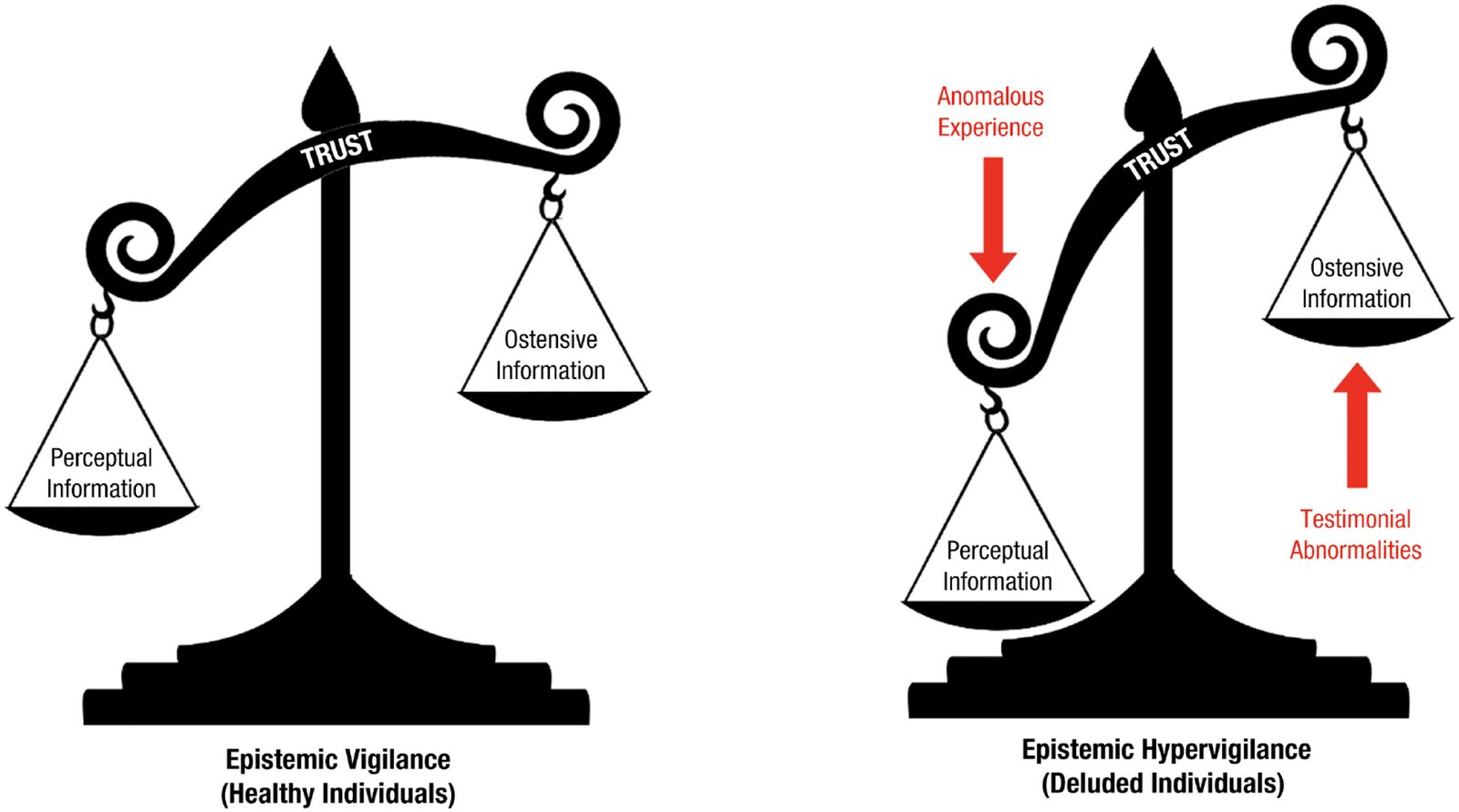
Epistemic Hypervigilance
In classical psychiatry, vigilance is often treated as a neutral or even adaptive cognitive function: the capacity to remain alert to relevant stimuli, detect threats, and update beliefs accordingly. However, a little-examined phenomenon exists at the border between cognition, anxiety, and psychosis, which can be provisionally termed epistemic hypervigilance. This condition is not formally recognized in diagnostic manuals, yet it appears across clinical observations in patients who do not fit neatly into obsessive–compulsive disorder, paranoia, or schizophrenia. Epistemic hypervigilance refers to a persistent, involuntary state in which the mind becomes excessively alert to meaning itself—treating ordinary information, language, coincidence, and internal thoughts as if they carry hidden, urgent, or destabilizing significance. Unlike classic paranoia, epistemic hypervigilance does not necessarily involve fixed persecutory beliefs. Instead, the individual experiences a chronic sense that “something is about to be understood,” “something important is being missed,” or “this detail cannot be random.” The person may remain intellectually skeptical and even insight-oriented, yet is unable to disengage from constant interpretive scanning. Everyday stimuli—phrases overheard in conversation, repeated numbers, subtle changes in tone, minor bodily sensations—are experienced as epistemically charged, as if they demand interpretation. This creates a paradoxical mental state: the subject doubts their interpretations while simultaneously being unable to stop generating them. Clinically, epistemic hypervigilance differs from obsessive rumination. Obsessions are typically recognized as intrusive and irrational, whereas hypervigilant meaning-search often feels compulsively rational. The individual may report that their mind is “over-working,” “connecting too much,” or “refusing to leave things unresolved.” Importantly, this is not merely curiosity or philosophical reflection; it is experienced as exhausting, destabilizing, and often frightening. Patients frequently describe a loss of cognitive rest, as if the mind has lost its capacity for epistemic trust—the basic assumption that most things do not require deep interpretation. Neurophenomenologically, this state may involve dysregulation in salience attribution systems, particularly dopaminergic circuits implicated in assigning importance to stimuli. When salience becomes uncoupled from actual relevance, the mind begins to over-tag neutral events as meaningful. Unlike full psychosis, however, reality testing may remain partially intact. The individual senses that the meaning overload is internal, yet cannot prevent it. This intermediate zone may explain why epistemic hypervigilance is often misdiagnosed as anxiety, high intelligence, or early psychosis depending on the clinician’s framework. One of the most overlooked consequences of epistemic hypervigilance is its impact on identity. Because meaning-making is central to self-narrative, excessive interpretive activity can fragment the sense of self. Patients may report feeling “mentally exposed,” “too conscious,” or unable to return to a previous, more automatic way of being. Over time, this can lead to depersonalization, existential distress, and secondary depression—not because life lacks meaning, but because meaning has become oppressive. Treatment remains largely exploratory. Standard antipsychotics may reduce salience intensity but risk blunting cognition excessively. Cognitive-behavioral approaches often fail because the problem is not faulty beliefs, but an overactive epistemic engine. Some emerging therapeutic strategies focus instead on restoring epistemic trust: helping patients relearn that uncertainty can be tolerated and that not all stimuli require interpretation. Mindfulness-based interventions, when carefully adapted, may help by shifting attention away from meaning extraction toward raw perception, though they can initially worsen symptoms if introduced too abruptly. Epistemic hypervigilance challenges psychiatry’s traditional categories. It raises a deeper question: can the drive to understand reality itself become pathological, not because it is delusional, but because it is unrelenting? As psychiatry increasingly engages with predictive processing and Bayesian models of the mind, this phenomenon may offer a crucial insight—mental illness does not always arise from false beliefs, but sometimes from an inability to stop asking what something means.
Cognitive Emptiness With Preserved Intelligence
Cognitive emptiness with preserved intelligence is one of the most misunderstood states in psychopathology. It is not intellectual decline, dementia, confusion, or low intelligence. The individual can reason, calculate, speak fluently, and understand complex concepts. Yet internally, the mind feels empty, hollow, or uninhabited. Thought occurs, but it lacks density. Ideas arise, but they feel weightless. The mind works, yet no longer feels lived in. This condition is often misinterpreted as laziness, lack of curiosity, depression, or even spiritual detachment. In reality, it is a profound disruption of mental presence. The architecture of cognition remains intact, but the subjective experience of thinking has thinned. The person may say, “My mind is blank,” even while actively solving problems or holding conversations. From the inside, cognitive emptiness is deeply unsettling. There is no chaos, no racing thoughts, no confusion. Instead, there is a smooth, sterile clarity devoid of inner texture. Thinking feels mechanical rather than experiential. The person does not struggle to think; they struggle to feel themselves thinking. Clinically, this state appears in schizophrenia-spectrum disorders (especially negative-symptom and residual phases), severe dissociation, advanced burnout, post-traumatic shutdown states, and certain depressive conditions following prolonged cognitive overexertion. It often emerges after periods of extreme mental strain, emotional overload, or prolonged vigilance, where thinking became a survival tool rather than a lived process. Neuropsychologically, cognitive emptiness reflects a dissociation between executive function and self-referential processing. The brain continues to generate and manipulate information efficiently, but the systems that imbue thought with personal relevance, emotional tone, and ownership are underactive. Thought becomes procedural rather than subjective. This distinction is crucial. Intelligence is not lost. Creativity may still be accessible on command. Memory remains functional. What disappears is the spontaneous inner movement of thought — the sense that ideas arise organically from within. Instead, thinking feels externally prompted, reactive, or inert unless effortfully engaged. Emotionally, cognitive emptiness often coexists with a peculiar neutrality. The individual may not feel sad or anxious, yet experiences a quiet distress rooted in absence. The absence is not of content, but of inhabitation. The mind feels like a well-lit room with no one inside. Existentially, this state erodes identity. We often equate the self with the thinking mind. When thinking loses its felt presence, the self feels diluted. The person may fear that they are “disappearing,” “losing depth,” or “becoming less human,” despite outward functionality. These fears are not delusional; they reflect an authentic alteration of self-experience. Interpersonally, cognitive emptiness is difficult to detect. The individual may appear articulate, rational, and composed. They can respond appropriately, even insightfully. Others may assume mental health because cognition appears intact. Meanwhile, the person may feel profoundly disconnected from their own mental life. This condition differs from brain fog. Brain fog involves slowed processing and confusion. Cognitive emptiness involves clarity without presence. The mind is sharp, but silent in a deeper sense. There is no internal echo, no lingering thought, no mental aftertaste. Psychodynamically, cognitive emptiness often functions as a protective withdrawal. When thinking became associated with pain, responsibility, or relentless demand, the psyche learned to strip thought of emotional investment. Thought continues, but without attachment. This reduces suffering at the cost of vitality. Therapeutically, cognitive emptiness is often mishandled. Attempts to stimulate thinking, increase productivity, or enhance insight miss the core issue. The problem is not insufficient cognition, but insufficient self-connection to cognition. Therapy must aim to restore mental inhabitation rather than mental performance. This often involves slowing down thought rather than accelerating it. Allowing ideas to linger. Attending to the felt sense of thinking. Linking thought to bodily sensation and emotion. The therapist’s curiosity about the patient’s inner experience — not just their conclusions — is critical. “What does it feel like when you think that?” becomes a central question. As cognitive emptiness begins to lift, discomfort often emerges. Mental presence brings emotional consequence. The earlier emptiness may have protected the individual from grief, fear, or exhaustion. Re-inhabiting the mind means allowing thought to matter again. This transition must be paced carefully. Recovery is marked by subtle changes: thoughts that linger, ideas that provoke feeling, moments of spontaneous reflection, mental wandering that feels personal again. These are not signs of inefficiency; they are signs of life returning to cognition. Ultimately, cognitive emptiness with preserved intelligence reveals a vital truth: thinking is not merely computation. It is a lived experience. Mental health is not defined by how well the mind functions, but by whether the self is present inside it. When presence returns, intelligence regains depth, thought regains weight, and the mind becomes not just a tool, but a place where one truly exists.
Volitional Disappearance
Volition is the felt experience of being the initiator of one’s own actions. It is not merely movement or decision-making, but the internal conviction that “this action originates from me.” Volitional disappearance occurs when this conviction dissolves. The individual continues to act, speak, decide, and move through life, yet no longer experiences themselves as the source of these actions. Life proceeds, but authorship is absent. This condition is not paralysis, nor is it indecision. Actions still occur. Choices are still made. What disappears is the felt sense of choosing. The person may say, “Things just happen,” or “I don’t feel like I decide anything anymore.” Importantly, this is not delusional loss of control; reality testing may remain intact. The disturbance lies in subjective agency, not objective behavior. Clinically, volitional disappearance appears in schizophrenia-spectrum disorders (especially negative and disorganized presentations), severe dissociation, advanced depression, catatonic-spectrum states, and prolonged trauma exposure. It is particularly common in individuals whose autonomy was repeatedly overridden — environments where choice led to punishment, coercion, or futility. Over time, the psyche adapts by disengaging from the experience of choice itself. From the inside, this state feels strangely hollow. There is often little overt distress, but a pervasive sense of passivity. The person may comply easily, follow routines, and meet expectations, yet feel internally absent from their own life. Action feels automatic, procedural, or externally driven, even when no external force is present. This phenomenon differs from learned helplessness. In learned helplessness, the individual believes effort is useless. In volitional disappearance, belief is not central. The experience of intending is gone. The mind no longer generates the internal signal that says “I am about to act.” Instead, action unfolds without prelude. Neuropsychologically, volition depends on integration between intention formation, motor planning, and self-referential awareness. When these systems desynchronize — due to trauma, chronic stress, or neurodevelopmental vulnerability — intention may still form unconsciously, but fails to be experienced as “mine.” The result is action without agency. In schizophrenia-spectrum conditions, this disruption can border on psychotic phenomena. The individual may feel moved, directed, or guided without attributing control to an external agent. Unlike classic delusions of control, however, there may be no explanatory belief — only the raw experience of non-authorship. The world acts through the person rather than against them. Existentially, volitional disappearance is devastating. To choose is to assert existence. Without choice, the self feels ghostlike — present but not operative. The person may feel that they are watching their life rather than living it. This contributes to a profound erosion of responsibility, guilt, pride, and moral weight. If one does not feel like the chooser, accountability becomes abstract. Interpersonally, this state often goes unnoticed. The individual may appear cooperative, calm, and functional. In fact, they may be praised for being “easygoing.” Yet internally, they may feel erased. Compliance replaces agency. The absence of conflict is mistaken for health. Therapeutically, volitional disappearance presents a paradox. Asking the patient to “make choices” presupposes the very capacity that is missing. Forcing decision-making can increase alienation or anxiety. The therapeutic task is not to demand choice, but to reawaken the experience of choosing. This often begins with micro-volitions: noticing preferences rather than decisions. “Which feels slightly closer?” rather than “What do you want?” The goal is to reintroduce the bodily and emotional signals that precede intention. Choice must be felt before it can be articulated. The therapist’s stance is crucial. Over-directiveness reinforces non-agency; excessive neutrality can leave the patient drifting. A balance is needed, where options are offered but not imposed, and where even minimal expressions of preference are highlighted and validated as acts of agency. As volition begins to return, discomfort often emerges. Choosing means owning consequences. The earlier disappearance may have protected the individual from guilt, regret, or fear of error. Reclaiming agency requires tolerating these affects. Therapy must help the patient endure the weight of authorship without collapsing back into passivity. Recovery is marked by subtle shifts: feeling a pause before action, sensing an internal “yes” or “no,” recognizing oneself as the initiator of movement. These moments may feel unfamiliar or even unsettling, but they signal the re-emergence of volition. Ultimately, volitional disappearance reveals a fundamental truth of psychological life: action alone does not constitute agency. To live as a self is to feel oneself choosing, even imperfectly. When this feeling vanishes, life continues without ownership. Healing restores not control over everything, but the simple, vital experience of being the one who acts — the quiet conviction that “this movement begins with me.”

Perceptual Trust Collapse
Perceptual trust is the quiet, automatic confidence that what one sees, hears, feels, and senses corresponds—at least approximately—to reality. It is not the belief that perception is perfect, but the assumption that it is usable. When perceptual trust collapses, the individual does not necessarily experience hallucinations or delusions. Instead, they experience something far more destabilizing: a chronic uncertainty about whether their own experience can be relied upon at all. In perceptual trust collapse, the problem is not perception itself, but confidence in perception. The world may look normal, sound normal, and behave normally, yet the individual feels unable to stand behind their own experience of it. “I see this, but I don’t trust that what I see is real,” or “I feel something, but I can’t be sure it’s actually happening” become persistent internal states rather than fleeting doubts. This condition is often invisible in standard diagnostics. Reality testing may remain intact. The individual may explicitly state that they are not psychotic. Yet internally, every perception is accompanied by a corrosive second-order doubt. Experience is continuously questioned, monitored, and undermined. Living becomes cognitively exhausting. Clinically, perceptual trust collapse appears in schizophrenia-spectrum disorders (especially early or residual phases), severe anxiety disorders, obsessive–compulsive pathology, chronic derealization–depersonalization, complex trauma, and prolonged gaslighting environments. It frequently develops in individuals whose perceptions were repeatedly invalidated by others. When the external world consistently contradicts one’s internal experience, the psyche learns a dangerous lesson: perception is not a safe foundation. From the inside, this state is deeply destabilizing. The individual may repeatedly check, compare, or seek reassurance. They look to others to confirm what they see or feel, not out of insecurity, but out of necessity. Without external confirmation, perception feels suspended — real but ungrounded. The world becomes provisional. Importantly, this is not simple doubt. Ordinary doubt is flexible and context-dependent. Perceptual trust collapse is global. It applies to emotions, bodily sensations, memory, and sensory input alike. The person may question whether they are truly tired, truly in pain, truly anxious, or truly seeing what is in front of them. The self becomes epistemically unstable. Neuropsychologically, perceptual trust depends on integration between sensory input and predictive models of reality. When predictive confidence collapses—due to chronic stress, trauma, or neurodevelopmental vulnerability—the brain fails to assign sufficient certainty to incoming data. Perception occurs, but is not endorsed. The result is a constant sense of unreality without overt distortion. This condition has serious consequences for agency. Action requires trust in perception. If one cannot trust what one experiences, decision-making becomes paralyzed. The individual may hesitate excessively, avoid action, or withdraw from situations requiring rapid response. This paralysis is often misinterpreted as indecision or anxiety alone, when in fact it reflects a deeper epistemic injury. Emotionally, perceptual trust collapse creates chronic anxiety and alienation. The world feels unstable not because it is chaotic, but because it lacks internal confirmation. The individual may feel as though they are constantly on the verge of being mistaken, deceived, or wrong — even in neutral situations. Existentially, this condition erodes the sense of being a subject. To exist as a self is to trust one’s own access to reality. When this trust disappears, the self becomes tentative. The person may feel like a visitor in the world rather than a participant, unsure whether their experience grants them legitimate presence. Therapeutically, perceptual trust collapse is often mishandled. Excessive reality-testing exercises can worsen the problem by reinforcing doubt. Reassurance can become addictive, further externalizing trust. The goal is not to prove perception correct, but to restore the capacity to stand behind experience. This requires consistent validation of subjective experience without confirming false beliefs. Statements such as “Your experience makes sense given what you’ve been through” help restore trust without collapsing into agreement. The therapist becomes a stabilizing witness rather than a judge of reality. Over time, therapy aims to rebuild tolerance for uncertainty while restoring basic confidence. The individual learns that perception does not need to be perfect to be usable. Small acts of trusting one’s senses—making choices based on feeling, responding without checking—become therapeutic milestones. As perceptual trust returns, anxiety often spikes. Trusting experience reintroduces the risk of being wrong. The earlier collapse may have functioned as protection against error or harm. Therapy must therefore proceed slowly, allowing trust to return without overwhelming fear. Recovery is marked by subtle changes: acting without double-checking, accepting feelings as sufficient grounds for response, inhabiting perception without constant verification. The world does not become more real; the self becomes more present in it. Ultimately, perceptual trust collapse reveals a fundamental truth: mental health depends not on certainty, but on confidence in experience. To live is to accept perception as a working bridge to reality. When that bridge collapses, existence becomes cautious and suspended. Healing restores not omniscience, but the simple, vital ability to say: “This is what I experience — and that is enough to move forward.”
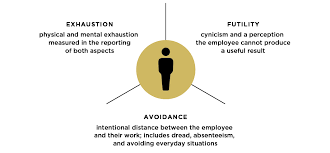
Intentional Exhaustion
Intentional exhaustion is not apathy, not laziness, and not the simple absence of motivation. It is a far deeper psychological failure: the collapse of the mind’s capacity to generate intention itself. In this state, the individual does not merely lack desire for specific goals; they lack the internal mechanism that produces wanting. The question “What do you want?” becomes unanswerable not because options are unclear, but because the act of wanting no longer occurs. Human action depends on intention — the internal signal that converts perception into movement, choice into behavior. When this signal weakens, life continues mechanically, but without inner propulsion. The person may still function, fulfill obligations, and respond to demands, yet feel internally inert. Actions happen, but they are not initiated from within. Clinically, intentional exhaustion appears in severe depression, schizophrenia-spectrum disorders (particularly negative-symptom presentations), complex trauma, prolonged burnout, and states of extreme learned helplessness. It often develops after long periods in which intention was punished, ignored, overridden, or rendered meaningless. When wanting repeatedly leads to frustration, danger, or loss, the psyche adapts by shutting down the wanting system itself. From the inside, this condition is profoundly confusing. The person may say, “I don’t want anything,” but this is not peaceful neutrality. It is experienced as a disturbing void. The absence of desire is not relieving; it is disorienting. Without intention, time stretches endlessly. Decisions feel arbitrary. Life feels stalled, not because of resistance, but because of internal silence. This state differs from anhedonia. In anhedonia, pleasure is diminished. In intentional exhaustion, direction is lost. The person may still enjoy small sensory experiences when they occur, yet feel incapable of initiating movement toward anything. Desire has lost its generative power. Neuropsychologically, intentional exhaustion reflects disruption in motivational and executive networks that translate valuation into action. Chronic stress and trauma impair dopaminergic signaling related to anticipation and effort. Over time, the brain learns that initiating action carries high cost with low reward. The safest option becomes non-initiation. Psychodynamically, intentional exhaustion often functions as a defense. Wanting exposes vulnerability. Desire implies hope. Hope risks disappointment. By eliminating intention, the psyche reduces exposure to pain. However, this protection comes at a steep cost: without intention, agency collapses. Interpersonally, this condition is often misunderstood. Others may interpret the individual as passive, unambitious, or resistant. Pressure to “try harder” or “find motivation” only deepens the collapse, reinforcing the belief that intention is demanded but not internally available. The individual may experience shame for something they cannot produce. Existentially, intentional exhaustion erodes the sense of being alive. To live is not merely to exist, but to lean toward something. Without leaning, existence becomes static. The person may describe life as something they are enduring rather than inhabiting. This state is a major but often hidden contributor to passive suicidal ideation — not the desire to die, but the inability to want to live. Therapeutically, intentional exhaustion cannot be treated through goal-setting or motivational techniques alone. Asking the person to identify desires presupposes the very capacity that has collapsed. Treatment must instead focus on restoring the safety of wanting. This begins with reducing demand, minimizing pressure, and validating non-initiation as a state rather than a failure. Small, externally supported intentions are often the first step. The therapist may temporarily hold intention on behalf of the patient, offering gentle structure without expectation. “We will meet again,” “Let’s notice what happens,” become acts of shared intention. Over time, the patient may begin to feel flickers of internal movement — not strong desires, but slight preferences or inclinations. As intention begins to return, anxiety often follows. Wanting reintroduces vulnerability. The patient may fear disappointment, loss, or responsibility. Therapy must help the individual tolerate desire without immediately collapsing into avoidance or exhaustion. Recovery is not marked by ambition or passion at first. It is marked by the quiet reappearance of wanting: choosing one thing over another, initiating a small action, feeling pulled rather than pushed. These moments are fragile but profound. They signal the return of agency. Ultimately, intentional exhaustion reveals a fundamental truth of psychological life: desire is not a luxury — it is a structural function. To want is to move toward existence. When wanting collapses, life stalls. Healing does not require grand purpose; it requires the restoration of the simplest intention — the capacity to lean, however slightly, toward something and feel that the leaning comes from within.

Self-Continuity Collapse
Self-continuity is the silent psychological assumption that the person who existed yesterday, who exists now, and who will exist tomorrow is fundamentally the same self. This continuity is not a logical conclusion but a lived feeling — a sense of being carried forward through time as a coherent subject. When this continuity collapses, the individual does not lose memory, intelligence, or identity labels. Instead, they lose the felt ownership of persistence. Each moment feels inhabited by a slightly different self, unanchored from the one before. This condition is rarely named in clinical language, yet it appears across severe psychopathology. The person may say, “I don’t feel like the same person from day to day,” or “I wake up as someone else,” without experiencing full dissociative identity fragmentation. The shift is subtler and more disturbing: identity remains singular, but continuity dissolves. Self-continuity collapse is not ordinary mood fluctuation. Everyone changes emotionally across days. What distinguishes this state is the absence of an internal bridge. Yesterday’s emotions, decisions, values, and intentions feel irrelevant or foreign today. The present self does not feel responsible for the past self, nor invested in the future one. Identity becomes episodic rather than continuous. Clinically, this phenomenon appears in schizophrenia-spectrum disorders, severe dissociation, complex trauma, advanced depression, and prolonged derealization-depersonalization states. It is especially common in individuals whose lives were marked by repeated psychological resets — environments where adaptation required abandoning previous selves to survive. From the inside, self-continuity collapse is deeply destabilizing. The person may retain autobiographical memory, yet lack emotional recognition of those memories. They know what happened, but it does not feel like them. This produces a haunting sense of impersonation: “I am playing the role of myself, but I don’t feel like the one who lived this life.” This collapse severely impairs responsibility and motivation. Promises lose binding force when the self who made them no longer feels present. Goals dissolve when the future self feels unreal. Moral continuity weakens; guilt and pride lose weight. Life becomes a sequence of disconnected present moments rather than a coherent narrative. Neuropsychologically, self-continuity depends on integration between memory, emotion, and self-referential processing. When this integration fails, memory remains factual but loses personal anchoring. The brain retrieves information without re-embedding it into a stable self-model. The result is a life remembered but not inhabited. Existentially, this condition is terrifying. Without continuity, existence feels unjustified. The individual may fear that they are slowly disappearing, being replaced, or hollowed out. Importantly, this fear is not delusional; it reflects a genuine disruption of self-experience rather than a false belief. Self-continuity collapse is often misdiagnosed as lack of insight or avoidance. In reality, the individual may desperately want consistency but lack the internal structure to sustain it. Efforts to impose identity through labels, routines, or external roles often fail because continuity must be felt, not enforced. Therapeutically, restoring self-continuity requires more than insight. It requires experiential linking. Therapy must help the person feel that states persist across time. This often involves revisiting recent experiences and emotionally re-owning them in the present. “You were here last week, and you are still the one who felt that” becomes a therapeutic act. The therapeutic relationship itself often serves as a continuity anchor. The therapist remembers when the patient cannot. This remembered presence slowly becomes internalized. Over time, the patient may begin to feel that they persist because someone else experiences them as persistent. As continuity returns, anxiety may increase. A continuous self must carry regret, responsibility, and consequence. The earlier fragmentation may have protected the individual from unbearable emotional accumulation. Therapy must therefore proceed slowly, allowing continuity to return without overwhelming the system. Recovery is marked by subtle but profound shifts: remembering yesterday and feeling that it was “me,” anticipating tomorrow and sensing that it will still be “me.” These moments may feel fragile at first, but they signal the reconstitution of a temporally extended self. Ultimately, self-continuity collapse reveals that identity is not defined by traits, memories, or names, but by persistence. To be oneself is not merely to exist in moments, but to carry oneself forward. Healing restores this carrying function — the ability to wake up and feel that the one who opens their eyes is the same being who closed them the night before.

Existential Saturation
Psychopathology is usually described as a deficit: too little meaning, too little emotion, too little connection. Yet there exists a lesser-known and profoundly destabilizing condition characterized not by absence, but by excess. Existential saturation occurs when meaning accumulates beyond the mind’s capacity to metabolize it. In this state, reality is not empty or absurd; it is overwhelmingly significant. Every thought, action, object, and moment feels loaded with consequence. Life becomes too dense to inhabit. Existential saturation is not philosophical curiosity or spiritual awakening. It is a pathological intensification of meaning in which the individual can no longer maintain psychological distance from existence. Nothing is neutral. Nothing is merely functional. Every experience feels weighted, symbolic, and consequential. The mind loses its ability to let things be ordinary. From the inside, this state is exhausting. The individual may feel crushed by the seriousness of everything. Simple choices feel monumental. Everyday actions carry moral, cosmic, or existential weight. There is no rest from interpretation. The mind is constantly forced into significance-making, with no capacity for triviality or play. Clinically, existential saturation appears in prodromal psychosis, certain forms of schizophrenia, severe anxiety disorders, melancholic depression, and some trauma-related conditions. It often emerges in highly introspective individuals with strong meaning-making tendencies who are exposed to prolonged stress, isolation, or existential threat. The psyche, in attempting to understand and control uncertainty, overproduces meaning. This condition is easily misinterpreted as insight or depth. The individual may speak in abstract, philosophical, or symbolic language. They may appear intellectually sophisticated. Yet internally, they are drowning in significance. The problem is not that life lacks meaning, but that meaning has become inescapable. Neuropsychologically, existential saturation reflects hyperactivation of salience networks. The brain flags too many stimuli as important. Nothing fades into the background. Normally, the mind filters relevance, allowing most of reality to remain neutral. When this filter fails, the world becomes painfully loud with meaning. Existential saturation profoundly affects agency. Action requires a degree of emotional lightness. When everything matters too much, action becomes paralyzing. The individual may freeze, withdraw, or collapse under the weight of decision-making. In extreme cases, even breathing or moving feels symbolically charged, leading to psychomotor slowing or catatonic features. Relationships suffer as well. Interpersonal interactions become overinterpreted. Words, glances, and silences are loaded with implication. Misattunement feels catastrophic. The individual may withdraw socially, not from lack of desire, but from the unbearable density of interpersonal meaning. There is also a close relationship between existential saturation and suicidality. Unlike states driven by emptiness, this form of suicidality arises from overweight existence. The individual does not want life to end because it is meaningless, but because it is too much. Non-existence appears as relief from unbearable significance. Therapeutically, existential saturation requires reducing meaning, not increasing it. Insight-oriented approaches can worsen the condition by adding further layers of interpretation. What is needed is a restoration of psychological lightness. This involves grounding, routine, sensory neutrality, and activities that reintroduce the ordinary and the trivial. The therapist must actively normalize neutrality. Statements like “This does not have to mean anything” can be deeply therapeutic. Relearning that not every thought requires interpretation, and not every feeling requires existential framing, is a critical step in recovery. As saturation decreases, patients often experience guilt or fear. Meaning had provided a sense of control or specialness. Letting go of significance can feel like betrayal of depth or truth. Therapy must address this ambivalence gently, validating the need for meaning while restoring proportion. Recovery is marked by the return of banality — the ability to experience moments as simply moments. To drink water without symbolism. To speak without cosmic consequence. To exist without constant interpretation. This banality is not emptiness; it is freedom. Ultimately, existential saturation reveals a paradox of psychological life: meaning is essential, but only in metabolizable doses. When meaning becomes total, life becomes unlivable. Mental health depends not on finding meaning everywhere, but on knowing where meaning is not required. To heal is to rediscover the right to exist lightly in a world that does not always demand interpretation.
Emotional Muting Without Numbness
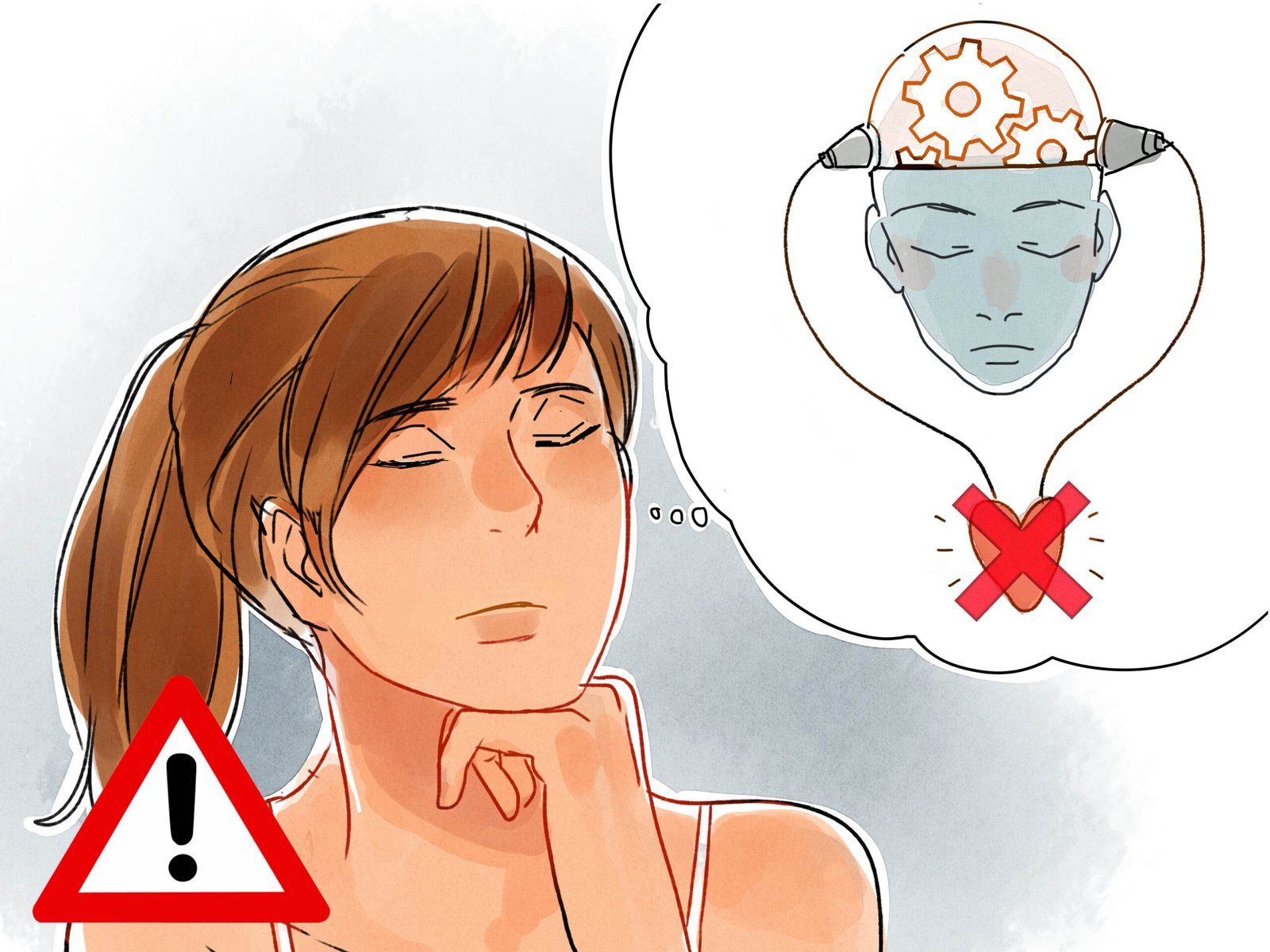
Emotional life is usually described in terms of presence or absence: feeling versus numbness. Yet there exists a far subtler and more disturbing condition in which emotions are neither absent nor inaccessible, but unarrived. In emotional muting without numbness, feelings continue to arise in the psyche, yet fail to reach the level of subjective ownership. The individual is not empty, not flat, and not devoid of affect — but emotions no longer land. They pass through the mind without impact, resonance, or consequence. This state is often misidentified as emotional blunting, alexithymia, or depression. However, unlike true numbness, the emotional system here is active. Physiological arousal occurs. Emotional cues are cognitively recognized. The person may correctly identify what they are “supposed” to feel. What is missing is affective arrival — the moment when emotion becomes personally felt and integrated into the sense of self. From the inside, this condition is deeply alienating. People often say, “I know I’m sad, but I don’t feel sad,” or “Something happened that should matter, but it didn’t reach me.” The emotional event is registered intellectually, sometimes even somatically, yet fails to become experientially meaningful. It is as if emotions knock, but no one answers the door. Clinically, emotional muting without numbness appears in chronic trauma, prolonged dissociation, schizophrenia-spectrum disorders, severe burnout, and certain post-depressive states. It often follows periods of emotional overload. When feelings once overwhelmed the system — flooding the individual with fear, grief, or despair — the psyche learned not to eliminate emotion, but to disconnect from its impact. This is not emotional death, but emotional quarantine. Psychodynamically, this condition represents a compromise. The psyche allows emotions to exist to maintain basic functioning and reality testing, but prevents them from being fully experienced to avoid destabilization. Feeling becomes informational rather than transformational. Emotions are known, not lived. Neuropsychologically, this state reflects a disruption between limbic activation and self-referential integration. Emotional signals are generated, but fail to synchronize with networks responsible for personal relevance and autobiographical meaning. As a result, emotions remain unowned. They are processed as data rather than experience. This has profound consequences for decision-making. Emotions normally guide priorities, values, and action. When emotions do not land, choices lose internal guidance. The person may appear indecisive or oddly indifferent, not because they do not care, but because caring no longer provides directional force. Motivation weakens, not from apathy, but from lack of emotional gravity. Relationships are especially affected. Emotional muting disrupts resonance. The individual may respond appropriately, offer empathy, and behave correctly, yet feel internally detached. Intimacy requires emotional impact — being moved by another. Without this impact, connection becomes procedural. Others may feel subtly unheld or unseen, even when no overt coldness is present. Existentially, this condition creates a peculiar emptiness. Life events occur — achievements, losses, changes — yet nothing seems to matter enough. The world feels distant not because it is unreal, but because it fails to penetrate. Over time, this leads to a quiet despair: a life filled with events that leave no trace. Importantly, emotional muting without numbness is often adaptive in origin. It allows survival after prolonged affective injury. However, when it becomes chronic, it erodes vitality. The individual may function well externally while internally experiencing life as weightless and inconsequential. Therapeutically, this state requires careful handling. Direct attempts to intensify emotion often fail or provoke shutdown. The issue is not insufficient emotion, but insufficient integration. Therapy must focus on safe emotional arrival. This involves slowing experience, anchoring emotion in the body, and linking feeling to personal meaning in tolerable doses. The therapist’s emotional presence is crucial. When the therapist visibly registers and is affected by the patient’s emotional material, it models what emotional arrival looks like. Over time, the patient may begin to feel what was previously only known. These moments can be startling — even frightening — because emotional impact has been long absent. As emotional muting lifts, grief often emerges: grief for years lived without being touched, for moments that should have mattered but did not. This grief is not regression; it is evidence that emotions are reaching the self again. Recovery is not about becoming emotionally intense or overwhelmed. It is about restoring emotional consequence. Feeling again that emotions matter, move, and shape the self. When emotions regain their ability to land, life regains depth. Experiences begin to leave marks. Choices regain meaning. Ultimately, emotional muting without numbness reveals a critical distinction in psychopathology: emotional life is not defined by whether feelings exist, but by whether they arrive. To feel fully is not merely to generate emotion, but to allow it to touch the self — to be changed by it. When this capacity returns, the individual does not simply feel more; they begin to live inside their own life again.