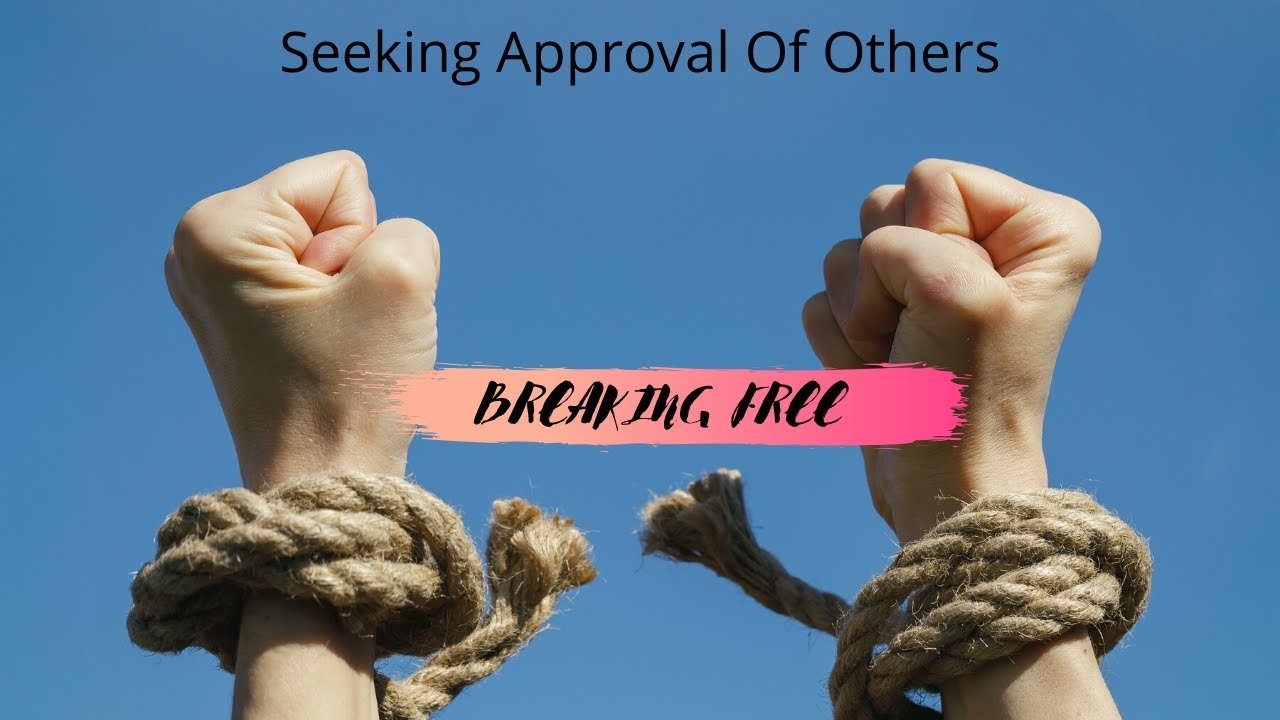
The desire to be accepted by others is one of the most deeply rooted psychological tendencies in human beings. People naturally care about how they are perceived by family members, friends, colleagues, and society. Being appreciated can create feelings of belonging and security, while criticism or rejection can produce anxiety, sadness, shame, or self-doubt. Seeking approval is therefore not automatically a sign of weakness. In moderate forms, it is a normal part of social life. The difficulty begins when a person’s sense of worth becomes dependent almost entirely on the opinions of others.
Human beings developed in social groups in which cooperation was essential for survival. Being excluded from a group could historically have serious consequences. For this reason, the brain is highly sensitive to social acceptance and rejection. A compliment can produce a sense of reward, while criticism may activate emotional and physiological responses associated with threat. Even today, although most social rejection does not threaten physical survival, the nervous system can respond to it as though something extremely important has been lost.
This helps explain why a short negative comment can sometimes remain in a person’s mind for hours or even days, while several positive comments are quickly forgotten. Human attention tends to be particularly sensitive to information that may indicate social danger. A person who is already insecure may therefore focus intensely on one criticism while ignoring ten compliments.
The need for approval often begins during childhood. Children depend heavily on adults for emotional security, guidance, and recognition. When a child receives affection and acceptance consistently, they can gradually develop an internal sense of worth. However, when affection appears to depend strongly on achievement, obedience, appearance, or behavior, the child may learn that being worthy requires satisfying other people’s expectations.
For example, a child who receives attention mainly after achieving excellent academic results may gradually connect personal value with achievement. As an adult, the person may feel uncomfortable whenever they are not performing at a high level. Success provides temporary reassurance, but the reassurance disappears when another challenge appears.
This can create a psychological cycle in which achievement becomes a method of obtaining emotional security.
Approval-seeking can appear in many forms. Some individuals constantly ask others whether they made the right decision. Others apologize excessively, avoid expressing disagreement, or change their opinions to fit the group. Some people become extremely sensitive to social media reactions and interpret the number of likes, comments, or messages as evidence of their social value.
These behaviors may provide temporary relief. When another person says, “You did the right thing,” anxiety decreases. However, if reassurance becomes necessary every time uncertainty appears, the individual may gradually lose confidence in their own judgment.
This is one of the central problems with excessive approval-seeking: external reassurance can become psychologically addictive.
A person may begin asking others for confirmation not because they lack information but because they cannot tolerate the feeling of uncertainty. Even after receiving reassurance, the doubt eventually returns. The individual asks again, receives another temporary reduction in anxiety, and repeats the behavior.
The pattern resembles other forms of avoidance. Instead of learning to tolerate uncertainty, the person learns that anxiety must be removed immediately through external validation.
Self-confidence develops differently. Confidence does not mean believing that everyone will approve of one’s choices. It means developing the ability to make decisions, tolerate criticism, recognize mistakes, and continue functioning without constant confirmation from others.
This distinction is especially important in adulthood. Adults inevitably encounter disagreement. Colleagues may criticize their work. Friends may misunderstand them. Family members may disagree with their decisions. Partners may have different needs and opinions.
If a person interprets disagreement as proof that they are unworthy, relationships can become extremely stressful.
The fear of disappointing others can also lead to difficulty setting boundaries. A person may agree to responsibilities they do not want because saying no creates anxiety. They may help others even when exhausted, accept unfair treatment, or remain silent during conflicts.
At first, being agreeable may appear positive. However, constant self-sacrifice can eventually produce resentment.
The individual may secretly think, “I do everything for everyone, but nobody appreciates me.” Yet other people may not understand the problem because the person has never communicated their limits.
Healthy relationships require honesty about needs. Saying no does not automatically mean being selfish. It can be an expression of self-respect.
Approval-seeking can also influence career decisions. Some individuals choose professions based primarily on prestige or family expectations rather than personal interests. They may achieve external success while experiencing internal dissatisfaction.
This creates an important psychological question: if nobody could see the achievement, would the person still want it?
The question does not imply that recognition is meaningless. Appreciation and professional achievement can be deeply satisfying. The problem occurs when external recognition becomes the only source of motivation.
Intrinsic motivation is the desire to engage in an activity because it is meaningful, interesting, enjoyable, or consistent with personal values. Extrinsic motivation depends more heavily on rewards, status, praise, or avoidance of criticism.
Healthy motivation can contain both.
Problems arise when external evaluation becomes so important that the individual cannot enjoy an activity unless someone else approves of it.
Social media has intensified this issue for many people. Online platforms make social evaluation highly visible. A photograph, opinion, achievement, or creative work can receive immediate feedback. Positive feedback can produce pleasure, while low engagement can be interpreted personally.
The brain’s reward systems respond to social feedback, making online approval psychologically powerful. However, digital feedback is an imperfect measurement of personal value. Algorithms, timing, audience size, trends, and countless other factors influence what receives attention.
A person’s psychological worth cannot be measured by digital engagement.
Nevertheless, repeated comparison can make people believe otherwise. They may begin asking whether they are attractive enough, successful enough, interesting enough, or socially connected enough.
This comparison can gradually transform self-evaluation into an external process.
Instead of asking, “Do I like this?” the person asks, “Will other people like this?”
Instead of asking, “Is this decision right for me?” they ask, “What will people think?”
The second question can become dominant.
Fear of judgment may also reduce authenticity. A person who constantly monitors how they appear may begin adapting their personality to different audiences. They may behave differently around friends, family, colleagues, and strangers not simply because social contexts naturally require adjustment, but because they are afraid that their genuine preferences will be rejected.
Over time, this can create a feeling of not knowing oneself.
Authenticity does not mean behaving identically in every situation. Social flexibility is normal. The problem is losing contact with personal values because of constant adaptation to other people’s expectations.
Developing self-awareness can help. Individuals can ask themselves what they genuinely believe, value, enjoy, and need. They can examine whether a particular decision reflects personal values or mainly an attempt to obtain approval.
This process may initially feel uncomfortable because reducing approval-seeking means accepting that some people may disagree.
Disagreement is unavoidable.
No individual can be liked by everyone. Even highly compassionate and successful people are criticized. Attempting to achieve universal approval is therefore an impossible goal.
Psychological freedom increases when a person accepts this reality.
This does not mean becoming insensitive to feedback. Constructive criticism can be extremely valuable. The ability to distinguish useful feedback from destructive judgment is an important psychological skill.
For example, a colleague’s specific criticism about a professional mistake may provide useful information. A random insult from someone online may provide little meaningful information about the person’s actual abilities.
Not all opinions deserve equal psychological weight.
The source, intention, evidence, and relevance of feedback should be considered.
Self-compassion can also reduce excessive dependence on approval. Instead of waiting for someone else to say, “You are doing well,” individuals can learn to evaluate themselves fairly.
Self-compassion does not mean ignoring mistakes. It means responding to mistakes without unnecessary cruelty.
A person can say, “I made an error, and I need to improve,” without concluding, “I am worthless.”
This distinction protects self-esteem from collapsing after failure.
Fear of rejection is another major component of approval-seeking. Some people avoid expressing their true opinions because they believe disagreement will cause abandonment. This can be particularly intense in romantic relationships.
A person may agree with everything their partner says, suppress concerns, or avoid difficult conversations. The relationship may appear peaceful, but the peace is based on emotional suppression.
Healthy intimacy requires enough safety for disagreement. Two people can love each other while holding different opinions.
In fact, the ability to disagree respectfully may be evidence of relationship security.
Approval-seeking can also affect friendships. Someone may constantly organize their behavior around being included. They may laugh at jokes they dislike, accept plans they do not enjoy, or remain in unhealthy friendships because exclusion feels unbearable.
Learning to tolerate temporary rejection can therefore be an important step toward healthier relationships.
Sometimes losing approval creates space for more authentic connections.
When people stop trying to please everyone, they may discover that certain relationships were based mainly on compliance. Other relationships may become stronger because they can finally involve honesty.
Psychotherapy can be helpful when approval-seeking becomes deeply rooted. Cognitive behavioral therapy can examine beliefs such as “If someone dislikes me, I must have done something wrong” or “I need everyone to approve of me to feel valuable.”
Attachment-focused approaches can explore earlier relationship experiences that shaped these beliefs. Other therapeutic approaches may focus on self-compassion, emotional regulation, interpersonal boundaries, and values.
The purpose of therapy is not to make a person indifferent to other people’s opinions. Humans will always care about relationships to some extent. The goal is to create a healthier balance between social feedback and internal judgment.
A psychologically mature person can listen to criticism without automatically accepting it. They can appreciate compliments without becoming dependent on them. They can change their behavior when evidence suggests that change is necessary while maintaining a stable sense of self.
This balance requires practice.
One useful exercise is to make small decisions without seeking reassurance. Choosing what to wear, what book to read, what activity to pursue, or how to spend free time may seem insignificant, but these decisions can strengthen trust in personal judgment.
Another exercise is learning to express small disagreements respectfully. Saying, “I see it differently,” can be uncomfortable for someone accustomed to constant agreement. With repetition, the nervous system can learn that disagreement does not automatically result in rejection.
Boundaries can also be practiced gradually. Saying no to an unreasonable request, asking for personal time, or communicating a preference can strengthen a person’s sense of agency.
Agency is closely related to psychological well-being because it gives individuals the experience that their behavior is influenced by their own choices rather than controlled entirely by external expectations.
The ultimate goal is not independence from everyone. Human beings need relationships, recognition, affection, and belonging. Wanting to be loved is not a psychological defect.
The healthier goal is to avoid making external approval the foundation of identity.
A person can enjoy being appreciated while knowing that criticism does not destroy their worth. They can accept rejection without concluding that they are fundamentally unlovable. They can make mistakes without believing that they have become a failure.
This is a more stable form of self-esteem.
In conclusion, the desire for approval is a normal human need rooted in our social nature, but excessive dependence on external validation can create anxiety, insecurity, perfectionism, difficulty setting boundaries, and fear of rejection. When individuals constantly measure themselves through the opinions of others, they may gradually lose contact with their own values and judgment. Developing self-awareness, self-compassion, emotional tolerance, and healthy boundaries can help restore a more balanced relationship with social approval. Other people’s opinions will always matter to some degree, but they do not have to become the final authority on a person’s worth. True psychological confidence begins when an individual can listen to others without completely losing the ability to listen to themselves.