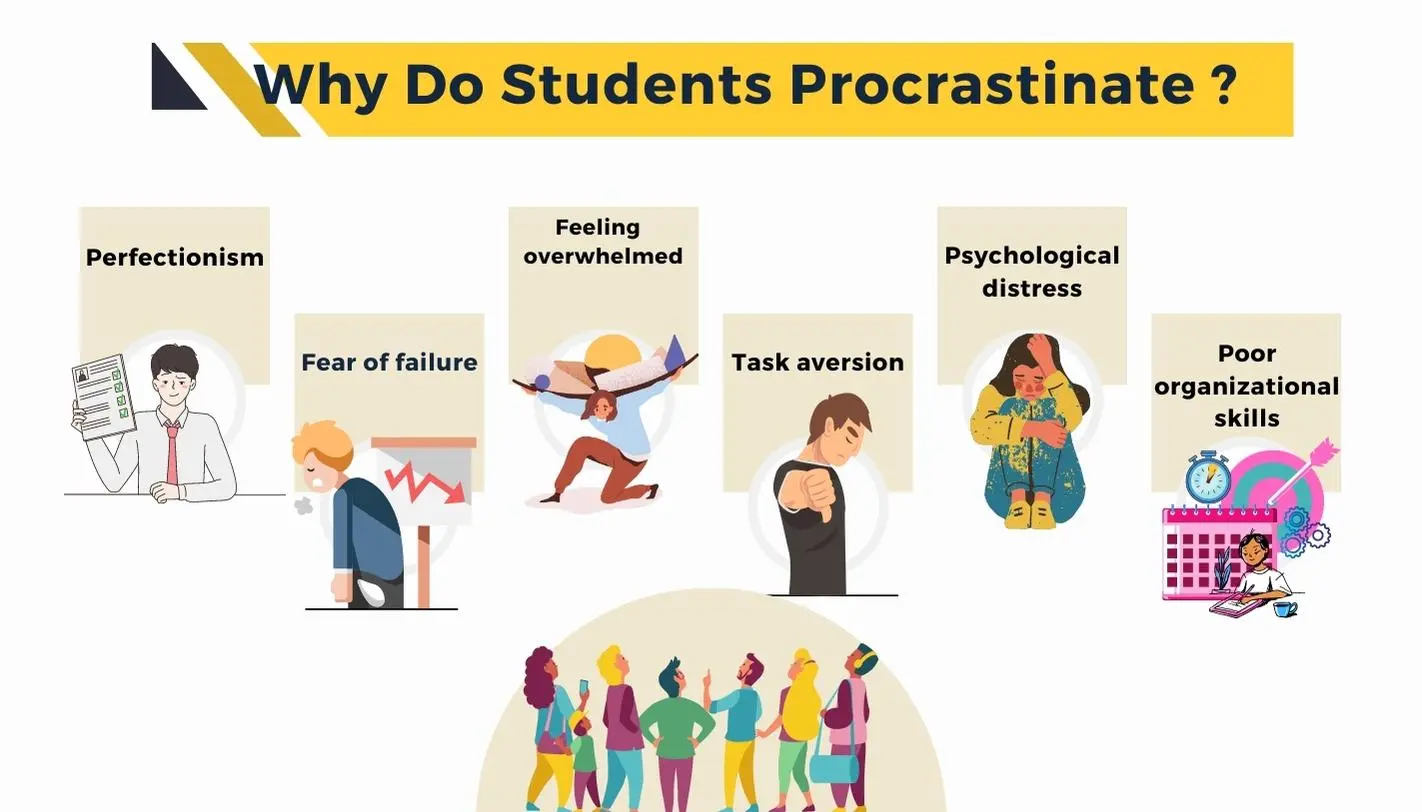
Procrastination is one of the most common behavioral patterns in modern life. People postpone studying, working, exercising, making decisions, answering messages, organizing their homes, or beginning important projects even when they know that delaying will eventually create additional stress. Almost everyone procrastinates occasionally, but for some individuals it becomes a persistent pattern that interferes with productivity, relationships, education, and emotional well-being.
Procrastination is often misunderstood as laziness. However, psychological research suggests that postponing a task is not always a simple lack of motivation. In many cases, procrastination is closely connected to emotions. People may delay an activity because it makes them feel anxious, bored, overwhelmed, insecure, or afraid of failure. Avoiding the task provides immediate emotional relief, even though it creates larger problems later.
This explains why procrastination can be so difficult to overcome. The individual is not simply choosing between working and not working. They are choosing between immediate discomfort and delayed consequences. When a difficult task is postponed, anxiety may decrease temporarily. The brain learns that avoidance provides relief, which makes the behavior more likely to happen again.
A student may know that an examination is approaching but continue watching videos instead of studying. While watching the video, the student experiences temporary relief from the anxiety associated with studying. Later, the deadline becomes closer, anxiety increases, and the student may feel guilty. Yet the guilt itself can create additional emotional discomfort, which may lead to further avoidance.
This creates a cycle of procrastination, temporary relief, guilt, increased anxiety, and further procrastination.
One important psychological factor behind procrastination is fear of failure. People who strongly associate mistakes with personal inadequacy may experience ordinary tasks as threats to their self-esteem. Starting the task creates the possibility of discovering that they are not as capable as they hoped.
Avoiding the task protects them temporarily from that possibility.
Perfectionism can strengthen this pattern. A perfectionistic individual may believe that a task should be completed exceptionally well or not at all. Because producing perfect work requires enormous effort, beginning can feel overwhelming. The person may wait for the ideal mood, perfect concentration, or sufficient motivation.
Unfortunately, ideal conditions rarely appear.
The person continues waiting, the deadline approaches, and the task becomes even more stressful.
This is why perfectionism and procrastination frequently exist together. The individual may appear unmotivated from the outside while internally experiencing excessive pressure to perform perfectly.
Another factor is the size of the task. Large and unclear tasks can create cognitive overload. If someone thinks, “I have to write an entire research paper,” the task may feel enormous. The brain may not know where to begin.
Breaking the task into smaller actions can reduce this psychological barrier. Instead of “write the paper,” the first step might be “choose a topic.” The next might be “find three sources.” Then “write the introduction.”
Small actions provide immediate evidence of progress.
Motivation is also often misunderstood. Many people believe they must feel motivated before beginning. In reality, motivation frequently develops after action begins. Completing a small part of a task can produce a sense of progress, which makes continuing easier.
Waiting for motivation can therefore become another form of procrastination.
Behavioral activation principles emphasize starting with manageable actions even when motivation is low. The goal is not to force enormous productivity but to interrupt inactivity.
Procrastination can also be influenced by how the brain evaluates rewards. Immediate activities such as social media, entertainment, or short videos provide rapid stimulation. Long-term goals often offer rewards only later.
Studying for several hours may eventually lead to a successful examination, but scrolling through a phone provides immediate novelty and entertainment.
The brain naturally responds to immediate rewards.
This does not mean that people are incapable of self-control. It means that environments filled with immediate rewards can make delayed gratification more difficult.
Digital technology has intensified this problem. A phone can provide endless distractions with almost no effort. Notifications, messages, videos, games, and social media can interrupt attention repeatedly.
Even when an individual intends to work, the presence of constant digital stimulation can make concentration more difficult.
Creating environmental boundaries can therefore be more effective than relying entirely on willpower. Putting the phone away, disabling unnecessary notifications, or working in a space associated with concentration can reduce opportunities for distraction.
Procrastination can also occur when a person feels emotionally exhausted. Someone who has been dealing with prolonged stress may postpone tasks not because they do not care but because their cognitive resources are limited.
Mental fatigue reduces concentration and decision-making capacity. Simple tasks can feel disproportionately difficult.
For this reason, productivity strategies should not ignore rest. Constant pressure to work more can sometimes worsen the problem. Adequate sleep, physical activity, breaks, and realistic workloads are important components of sustained functioning.
Another psychological factor is avoidance of uncomfortable emotions. A task may remind someone of previous criticism, failure, conflict, or uncertainty. The individual may not consciously recognize this connection. They simply notice that they strongly dislike beginning the task.
Understanding the emotional meaning of procrastination can therefore be more useful than simply telling someone to “work harder.”
A person might ask: What do I feel when I think about starting? Is it boredom, fear, shame, confusion, resentment, or exhaustion?
The answer can reveal what is maintaining the behavior.
For example, if the main emotion is confusion, the solution may be clearer instructions. If it is fear of failure, the solution may involve changing perfectionistic beliefs. If it is exhaustion, the individual may need rest or a more realistic schedule.
Procrastination is therefore not always solved by the same strategy.
Time management can help, but only when the psychological barrier is also understood. Creating a schedule without addressing fear or perfectionism may simply produce another list that the individual avoids.
Specific planning is usually more effective than vague intentions. “Study English tomorrow” is less actionable than “At 10:00, sit at the desk and study vocabulary for twenty minutes.”
The more concrete the first action, the less mental effort is required to begin.
Starting for a short period can also reduce resistance. Telling oneself to work for ten minutes may feel more manageable than committing to several hours. Once the individual begins, they may continue naturally.
Even when they do not, the ten minutes still represent progress.
Another useful principle is reducing the emotional importance of the first attempt. People sometimes expect their first version to be excellent. Instead, the goal can be to produce an imperfect first draft.
A rough beginning is easier to improve than an empty page.
This approach is particularly useful for writing, studying, artistic work, and professional projects.
Self-compassion is also important. People who procrastinate often respond with harsh self-criticism. They may call themselves lazy, irresponsible, or incapable. Such criticism rarely creates sustainable motivation.
Instead, it can increase shame and emotional discomfort, which may encourage further avoidance.
A more constructive response is to examine what happened without attacking personal identity. “I postponed this task because I felt overwhelmed” provides information. “I am useless” provides little useful information.
Self-compassion does not mean excusing chronic avoidance. It means addressing the behavior without creating unnecessary psychological damage.
Procrastination can also affect self-esteem. Repeatedly promising to complete something and failing to do so may weaken trust in oneself. The individual begins thinking, “I never do what I say I will do.”
This is why small commitments can be powerful. Keeping a realistic promise to oneself strengthens self-efficacy. Completing a ten-minute task may seem insignificant, but repeated successful actions can gradually change self-perception.
The person begins developing evidence that they can act even when they do not feel motivated.
There are also cases in which chronic procrastination is associated with broader psychological difficulties. Attention problems, depression, anxiety, sleep disorders, burnout, and other conditions can make initiation and concentration difficult. When procrastination is severe and persistent, professional assessment may help identify underlying factors.
The solution may require more than productivity techniques.
Psychological therapy can help individuals examine avoidance patterns, perfectionistic beliefs, emotional regulation difficulties, and fear of evaluation. Cognitive behavioral approaches can be particularly useful for identifying thoughts that appear immediately before procrastination.
For example, the thought “I have to finish everything today” can create overwhelming pressure. Replacing it with “I only need to complete the first step today” can make action more accessible.
Procrastination can also be understood through the concept of emotional regulation. People sometimes postpone tasks because they are regulating their current emotional state rather than managing their long-term goals.
Watching a video makes them feel better now. Working may make them anxious now. The brain chooses the activity that provides immediate emotional comfort.
This does not mean that the individual does not care about the future. It means that the present emotional state has temporarily become more influential than the future consequence.
Understanding this mechanism can reduce moral judgment. Instead of asking, “Why am I so lazy?” a more useful question is, “What feeling am I trying to escape right now?”
That question can reveal the real obstacle.
Sometimes the answer is boredom. Boredom is a normal emotion, but modern technology provides countless ways to avoid it immediately. Learning to tolerate a certain amount of boredom can therefore improve concentration.
Other times the answer is fear. The person may fear being judged, failing, making the wrong decision, or discovering that they are not good enough.
In such cases, the task itself may not be the main problem. The meaning attached to the task is.
People can gradually learn that imperfect performance is survivable. Failure may be disappointing, but it does not automatically define a person’s value.
This psychological shift can make action easier.
Procrastination also becomes less powerful when individuals focus on process rather than outcome. Instead of thinking only about the final result, they can concentrate on the next concrete behavior.
A writer writes one paragraph. A student studies one chapter. A person cleaning the house organizes one area. A musician practices one section.
Progress becomes visible through action.
Another important strategy is creating starting rituals. Performing the same small sequence before beginning work can signal to the brain that concentration is about to begin. Over time, the routine itself can become associated with productivity.
Consistency is more important than intensity.
A person who works moderately every day may accomplish more than someone who waits for occasional bursts of motivation.
However, flexibility remains necessary. Human energy varies. There will be days when productivity is lower. A realistic system should allow for this rather than interpreting every difficult day as failure.
The goal is sustainable functioning, not constant maximum performance.
Ultimately, procrastination is rarely just about time. It is often about emotions, expectations, self-esteem, uncertainty, reward, and avoidance. People postpone tasks because doing them can feel psychologically difficult in the present moment.
The solution therefore involves both behavioral and emotional changes.
A person can make tasks smaller, reduce distractions, create realistic schedules, begin before motivation appears, and reward progress. At the same time, they can examine fear of failure, perfectionism, self-criticism, and the emotional discomfort associated with particular tasks.
When these elements are addressed together, change becomes more sustainable.
In conclusion, procrastination is a complex psychological behavior rather than simply a sign of laziness. People often postpone tasks because they are trying to escape anxiety, boredom, fear of failure, confusion, or emotional exhaustion. The temporary relief produced by avoidance can reinforce the behavior, creating a cycle that becomes increasingly difficult to break. Small actions, realistic expectations, environmental changes, self-compassion, and emotional awareness can help interrupt this cycle. When procrastination is persistent and seriously interferes with daily life, professional psychological support may also be appropriate. The most important step is often not completing the entire task but beginning it. A small action can weaken the psychological barrier that made the task seem impossible in the first place.