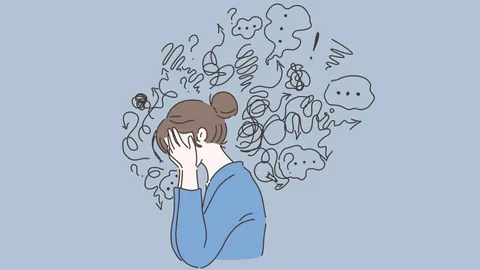
The fear of public speaking is one of the most common forms of social anxiety experienced by people in different stages of life. For some individuals, standing in front of an audience and expressing their thoughts is an ordinary activity. For others, even the possibility of speaking in public can produce intense discomfort. Their heart begins to beat faster, their hands become cold, their voice may shake, and their thoughts become difficult to organize. Although they may know their subject very well, the presence of an audience can make them feel uncertain about their abilities.
Public speaking anxiety is not simply a fear of standing on a stage. It is often connected to deeper psychological processes involving self-evaluation, social acceptance, embarrassment, rejection, and the desire to make a positive impression. People may worry that they will forget their words, make grammatical mistakes, appear unintelligent, or become the subject of criticism. In many cases, the imagined consequences of a speaking situation become more frightening than the situation itself.
Understanding the psychological foundations of this fear is important because public speaking is a valuable communication skill in education, professional life, and everyday social interaction. Students may need to present research, employees may be expected to explain their ideas, and professionals may have to communicate with groups of people. When fear becomes overwhelming, it can prevent individuals from demonstrating knowledge, expressing opinions, and pursuing opportunities.
One of the central psychological factors behind public speaking anxiety is the fear of negative evaluation. Human beings are social creatures, and acceptance by others has historically played an important role in social life. People naturally pay attention to how they are perceived by those around them. However, this tendency can become excessive when an individual begins to interpret ordinary social situations as potential threats to their self-worth.
For example, a person preparing to give a presentation may repeatedly imagine how the audience will react. They may think that one mistake will make everyone lose respect for them. They might interpret a neutral facial expression as disappointment or assume that a person looking away is bored. These interpretations can increase anxiety even before the presentation begins.
The fear of negative evaluation is closely connected to self-consciousness. Self-conscious individuals pay considerable attention to their own appearance, behaviour, voice, and performance. During public speaking, their attention may shift away from the message they want to communicate and toward the way they believe they are being perceived. Instead of thinking about the subject, they begin monitoring their posture, facial expressions, pronunciation, and movements.
This excessive self-monitoring can interfere with natural communication. When a speaker constantly evaluates their own performance, they may find it difficult to think clearly and respond spontaneously. They become both the speaker and the imagined observer of their own behaviour. As a result, the speaking experience can feel like a continuous examination.
Another important factor is the fear of embarrassment. Many people are more afraid of making mistakes in front of others than of making mistakes privately. Forgetting a sentence while reading alone may seem unimportant, but forgetting the same sentence during a presentation can feel humiliating. The presence of witnesses changes the emotional meaning of an ordinary mistake.
Embarrassment is a self-conscious emotion that occurs when individuals believe that their behaviour has violated social expectations or created an undesirable impression. It is often accompanied by blushing, nervous laughter, avoiding eye contact, or an urge to escape the situation. In public speaking, the possibility of experiencing embarrassment can become a source of anxiety in itself.
Some individuals also develop catastrophic expectations. They imagine that a small speaking mistake will lead to a serious and lasting consequence. For example, they may believe that stumbling over one word will destroy their professional reputation or that an audience will remember their nervousness for years. These expectations are often disproportionate to what actually happens.
Cognitive distortions can contribute to this process. Cognitive distortions are patterns of thinking that lead people to interpret situations in inaccurate or unhelpful ways. A person who experiences public speaking anxiety may engage in mind reading, assuming that others are judging them without sufficient evidence. They may also engage in catastrophizing, imagining the worst possible outcome of a presentation.
Another common pattern is all-or-nothing thinking. Individuals with this tendency may believe that a presentation is either completely successful or entirely unsuccessful. They do not allow room for ordinary imperfections. If they forget one point or make a minor mistake, they may conclude that the entire performance was terrible.
These patterns of thinking can make public speaking appear more dangerous than it really is. The audience may be interested in the information rather than the speaker’s minor mistakes. Some listeners may not even notice a moment of hesitation. However, an anxious speaker may interpret the smallest imperfection as proof of personal failure.
The physical symptoms of public speaking anxiety are also significant. When a person perceives a situation as threatening, the body’s stress response becomes activated. The sympathetic nervous system prepares the individual to respond to danger. This response is commonly associated with the fight-or-flight mechanism.
During this process, the heart rate may increase, breathing can become faster, muscles may become tense, and sweating may occur. Some people experience trembling hands, a dry mouth, dizziness, or discomfort in the stomach. These reactions are not necessarily signs of weakness. They are physiological responses that can occur when the nervous system interprets a situation as threatening.
Unfortunately, people who fear public speaking may become frightened by their own physical symptoms. They notice their shaking hands and begin thinking that everyone can see them. They feel their heart beating faster and assume that they are losing control. This creates a secondary layer of anxiety: they are no longer afraid only of speaking but also of appearing anxious.
This process can become a self-reinforcing cycle. Anxiety produces physical symptoms, the individual interprets those symptoms negatively, and that interpretation increases anxiety. As the emotional intensity rises, the physical reactions may become more noticeable. The person may then struggle to concentrate on the content of the presentation.
The role of attention is particularly important in understanding this experience. Effective public speaking requires individuals to divide their attention between several tasks. They must remember the subject, organize their thoughts, observe the audience, and communicate clearly. When anxiety consumes a large part of their mental resources, fewer resources remain available for these activities.
Working memory is involved in temporarily holding and processing information. During a presentation, speakers use working memory to remember what they have already said, identify what comes next, and construct meaningful sentences. High levels of anxiety may interfere with this process, making it harder to retrieve information or maintain a clear train of thought.
This explains why some people suddenly forget familiar information when they stand before an audience. They may have prepared carefully and understood the subject, but their anxiety makes it difficult to access what they know. The problem is not necessarily a lack of knowledge. It may be the effect of excessive emotional and cognitive demands.
Previous experiences can also shape public speaking anxiety. An individual who was laughed at during a school presentation may associate speaking in front of others with humiliation. A student who received harsh criticism from a teacher may become afraid of making mistakes in future presentations. Even a single emotionally intense experience can influence how a person approaches similar situations.
Learning through observation may also contribute. Children often observe how adults respond to social situations. If a parent repeatedly expresses fear of speaking in front of others or describes public attention as dangerous, a child may gradually develop similar expectations. This does not mean that public speaking anxiety is always inherited or directly learned from parents. It simply suggests that social experiences can influence the development of fear.
Personality characteristics may also affect how individuals experience public speaking. Introverted people, for example, may prefer smaller social environments and may feel more comfortable expressing themselves in individual conversations. However, introversion should not be confused with social anxiety or an inability to communicate. Many introverted individuals are excellent public speakers, particularly when they have sufficient preparation and feel connected to the subject.
Similarly, being naturally quiet does not mean that someone lacks confidence. Some people prefer listening before speaking, carefully considering their words, and avoiding unnecessary attention. These characteristics can coexist with strong communication skills. The important distinction is whether a person chooses silence because it reflects their preferences or avoids speaking because fear prevents them from expressing themselves.
Perfectionism is another psychological factor frequently associated with speaking anxiety. Perfectionistic individuals may establish extremely high standards for their presentations. They may believe that every sentence must be carefully constructed, every answer must be correct, and every movement must appear confident. Their fear is not necessarily limited to making mistakes; they may fear that any imperfection will reveal something negative about their abilities.
This pressure can make preparation exhausting. Some individuals repeatedly rewrite their presentations, memorize every sentence, and rehearse the same sections for hours. Although preparation is valuable, excessive preparation can sometimes strengthen the belief that speaking is only safe when everything is completely controlled.
Public speaking, however, is an interactive activity. Audiences may ask unexpected questions, react differently than anticipated, or introduce new points into a discussion. Speakers cannot control every aspect of the experience. Learning to tolerate uncertainty is therefore an important part of developing confidence.
Another relevant concept is self-efficacy, which refers to an individual’s belief in their ability to perform a particular task. People with low public speaking self-efficacy may doubt their capacity to communicate effectively, even when they possess the necessary knowledge and skills. They may interpret nervousness as evidence that they are incapable of speaking well.
Self-efficacy develops partly through experience. When individuals complete a challenging task successfully, they gain evidence that they can manage similar situations in the future. This is why gradual practice can be more helpful than waiting until all anxiety disappears. Each manageable speaking experience can provide an opportunity to develop a more realistic sense of personal ability.
Avoidance is one of the main factors that can maintain public speaking anxiety. A person who fears presentations may refuse invitations to speak, choose tasks that do not require public communication, or allow other people to present their work. Avoidance provides immediate relief because the individual no longer has to face the feared situation.
However, this relief can strengthen the fear over time. When someone repeatedly escapes a situation, they lose opportunities to discover that it may be manageable. Their mind may interpret avoidance as confirmation that public speaking is genuinely dangerous. Consequently, the next speaking opportunity may feel even more threatening.
In behavioural psychology, this pattern can be understood through negative reinforcement. A behaviour becomes more likely when it removes an unpleasant experience. Avoiding a presentation reduces anxiety temporarily, making future avoidance more appealing. Although this behaviour offers short-term comfort, it may prevent long-term improvement.
One useful approach to reducing this pattern is gradual exposure. Exposure involves approaching feared situations in a planned and manageable way rather than avoiding them completely. A person who feels uncomfortable speaking in front of a large audience might begin by reading a short paragraph aloud alone, then speaking in front of one trusted person, and later participating in a small group discussion.
The purpose of gradual exposure is not to force someone into an overwhelming situation. It is to create opportunities for learning through experience. Each step should be challenging enough to encourage growth but manageable enough to allow the individual to remain engaged. Over time, the person may discover that anxiety can be experienced without preventing effective communication.
Preparation is another important part of managing public speaking anxiety. Understanding the subject reduces uncertainty and provides a stronger foundation for communication. However, preparation should focus on organizing ideas rather than memorizing every sentence. A speaker who understands the main arguments can often recover more easily after losing their place.
Creating a simple structure can be particularly helpful. A presentation usually needs a clear introduction, several main points, and a conclusion. Knowing the sequence of ideas provides a mental framework that can guide the speaker if anxiety interrupts their concentration.
Practising aloud is more useful than simply reading the presentation silently. Speaking allows individuals to become familiar with the rhythm of their sentences, the sound of their voice, and the transitions between ideas. Recording a practice presentation may also help identify areas that need improvement. However, recordings should be used for constructive evaluation rather than excessive self-criticism.
Breathing techniques can help some individuals manage physical tension. Slow, controlled breathing may support relaxation by influencing physiological arousal. Before speaking, a person can take a few comfortable breaths, allowing the exhalation to be slightly longer than the inhalation. The goal is not to eliminate every sign of nervousness but to create a more manageable physical state.
Changing the relationship with nervousness is equally important. Many speakers believe that confidence means feeling completely calm. This expectation can create additional pressure. In reality, experienced speakers may also experience nervousness before important presentations. The difference is often that they have learned to continue communicating despite the presence of uncomfortable feelings.
Anxiety and competence are not mutually exclusive. A person can feel nervous and still deliver a clear, meaningful presentation. They can experience a trembling voice and still communicate valuable information. Recognizing this distinction can reduce the fear of anxiety itself.
Cognitive behavioural therapy (CBT) is one psychological approach that may help individuals who experience significant public speaking anxiety. CBT focuses on identifying unhelpful thinking patterns and examining how thoughts, emotions, physical reactions, and behaviours influence one another. A person may learn to question assumptions such as “Everyone will laugh at me” or “If I make one mistake, I will lose their respect.”
Instead of replacing negative thoughts with unrealistic positive statements, CBT encourages more balanced and evidence-based interpretations. For example, the thought “I must not make any mistakes” may be replaced with “I can communicate my main ideas even if I make a small mistake.” This approach allows room for realistic expectations and human imperfection.
For some individuals, public speaking anxiety is part of a broader pattern of social anxiety. Social anxiety disorder involves persistent fear or anxiety about social situations in which a person may be observed or evaluated by others. The fear is often intense, lasts over time, and interferes with everyday functioning. Public speaking may be one of the main feared situations, although some people experience anxiety across a wider range of social interactions.
It is important not to assume that every nervous speaker has a psychological disorder. Feeling uncomfortable before an important presentation is a normal human response. A clinical concern becomes more relevant when the fear is persistent, disproportionate, causes significant distress, or leads to considerable avoidance of education, work, or social opportunities. In such cases, a mental health professional can help assess the situation and discuss appropriate support.
The relationship between self-esteem and public speaking also deserves attention. Individuals who base their personal worth heavily on external approval may experience presentations as tests of their value. They may believe that a successful performance will make them worthy of respect, while a poor performance will expose their inadequacy.
This way of thinking gives an ordinary communication activity an unnecessarily heavy emotional meaning. Instead of viewing a presentation as an opportunity to share information, the person begins treating it as a judgment of their entire identity.
A healthier perspective separates performance from personal worth. A presentation is one activity performed by an individual, not a complete measurement of their intelligence, character, or value. People can communicate imperfectly and still deserve respect. They can receive criticism without interpreting it as proof that they are inadequate.
The audience’s role should also be reconsidered. Anxious speakers often imagine that listeners are closely monitoring every detail of their performance. In reality, audiences usually have their own concerns, interests, and expectations. Most people attend a presentation because they want to receive information, understand an argument, or participate in a discussion.
This does not mean that audiences never judge speakers. They may evaluate the clarity, organization, or relevance of a presentation. However, professional evaluation is not the same as personal rejection. A listener can disagree with an argument without disliking the speaker. A question can indicate interest rather than hostility.
Developing communication skills can also improve confidence. Public speaking is not simply about delivering a memorized speech. It involves explaining ideas clearly, adjusting language to the audience, responding to questions, and maintaining a meaningful connection with listeners. These skills improve through practice and feedback.
It is also helpful to focus on the purpose of speaking. When individuals become excessively concerned about how they appear, they may forget why they are speaking in the first place. Shifting attention toward the message can make communication feel less like a personal performance and more like an exchange of information.
For example, a teacher presenting an educational topic may feel less pressure when concentrating on helping students understand an idea rather than trying to appear perfect. A researcher explaining a study may become more engaged when focusing on the importance of the findings rather than worrying about every possible mistake. A person sharing a personal experience may communicate more naturally when thinking about what the audience can learn from the story.
This shift in attention does not remove the need for preparation or awareness of the audience. Instead, it places these elements within a more meaningful context. The speaker’s objective becomes communication rather than self-protection.
Public speaking anxiety can also change across different stages of life. A student who feels frightened during school presentations may become more comfortable after gaining experience at university or work. An adult who has avoided public communication for many years may discover that their confidence improves when they begin practising in supportive environments. Development is not always linear, and occasional nervousness does not mean that progress has disappeared.
It is important to recognize individual differences as well. Some people may need more preparation time, smaller audiences, or additional opportunities to practise. Others may become comfortable relatively quickly. Comparing one’s progress with the speaking abilities of experienced presenters can create unnecessary frustration. Confidence develops through personal experience, not through competition with others.
Ultimately, the fear of public speaking is a complex psychological experience involving social evaluation, emotional regulation, attention, memory, self-esteem, and learned behaviour. It cannot always be explained by a lack of communication skills or insufficient preparation. Sometimes, the greatest difficulty is not knowing what to say but feeling that every word will be used to judge the person saying it.
Learning to speak in front of others does not require becoming a different personality. Quiet individuals do not need to become highly outgoing, and sensitive individuals do not need to stop caring about how others respond. The goal is to develop enough psychological flexibility to express thoughts even when discomfort is present.
A successful speaker is not necessarily someone who never feels afraid. It may simply be someone who understands that nervousness is not a command to remain silent. A small mistake does not destroy credibility, an imperfect sentence does not cancel knowledge, and an audience’s reaction does not determine a person’s entire worth.
Perhaps the most meaningful transformation occurs when individuals stop asking themselves, “What if everyone judges me?” and begin asking, “What is important for me to communicate?” This change in perspective can turn public speaking from a threatening test of personal value into an opportunity for learning, connection, and self-expression.