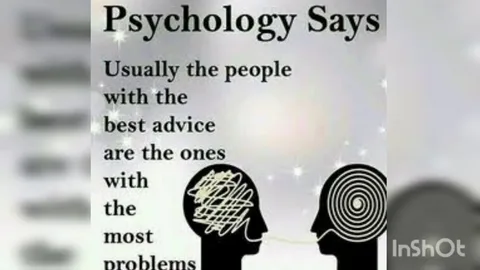
Understanding yourself is one of the most important psychological processes in personal development. It involves recognizing your emotions, examining your thoughts, identifying your values, and becoming aware of the experiences that influence your behaviour. Although people often believe they know themselves well, self-understanding is not always straightforward. Sometimes, our actions are influenced by fears we have not acknowledged, expectations we have unconsciously accepted, or emotions we find difficult to express.
Psychologists and philosophers have explored self-awareness, identity, personal growth, and the relationship between the individual and the surrounding world. Their ideas offer different perspectives on what it means to understand oneself.
The following 15 quotes explore self-knowledge, acceptance, identity, and psychological development.
1. Carl Rogers
“The curious paradox is that when I accept myself just as I am, then I can change.”
This statement reflects Rogers’s humanistic approach to psychology. Self-acceptance does not mean refusing to improve. Instead, it creates an environment in which individuals can examine their weaknesses without constantly attacking themselves. Personal development becomes more meaningful when people acknowledge their current experiences honestly.
2. Socrates
“To know thyself is the beginning of wisdom.”
Self-knowledge has been considered an essential part of wisdom since ancient philosophy. Understanding personal motivations, limitations, and values helps individuals make more conscious decisions. Without self-awareness, people may spend much of their lives following expectations that do not genuinely reflect who they are.
3. Carl Jung
“Until you make the unconscious conscious, it will direct your life and you will call it fate.”
Jung emphasized the importance of recognizing unconscious psychological processes. People may repeat certain behaviours without understanding their origins. Becoming aware of hidden fears, unresolved conflicts, and emotional patterns can help individuals develop a deeper understanding of themselves.
4. Viktor Frankl
“Between stimulus and response there is a space. In that space is our power to choose our response.”
This statement is widely attributed to Viktor Frankl, although its exact wording is not securely established in his published work. It expresses an important idea associated with his approach: individuals can sometimes choose how they respond to difficult circumstances. Self-awareness helps create distance between an emotional reaction and a deliberate decision.
5. Abraham Maslow
“What a man can be, he must be.”
Maslow’s theory of self-actualization emphasizes the desire to develop one’s potential. People do not simply seek comfort or security; they may also want to discover their abilities, pursue meaningful goals, and become more fully themselves. Understanding personal potential is therefore an important part of psychological growth.
6. Erich Fromm
“Man is the only animal for whom his own existence is a problem which he has to solve.”
Fromm explored the relationship between freedom, identity, and human existence. People often question who they are, what they should become, and what gives their lives meaning. These questions can create uncertainty, but they also provide opportunities for reflection and personal development.
7. William James
“The greatest discovery of my generation is that a human being can alter his life by altering his attitudes.”
James emphasized the importance of mental attitudes in human experience. The way individuals interpret situations can influence their emotions and behaviour. Changing an attitude does not automatically change external circumstances, but it can change how a person understands and responds to them.
8. Alfred Adler
“To be human means to feel oneself inferior.”
Adler considered feelings of inferiority a fundamental part of human experience. Such feelings are not necessarily signs of weakness. They can motivate individuals to develop abilities and overcome personal limitations. Problems may arise when feelings of inferiority become excessive and begin to shape a person’s entire identity.
9. Rollo May
“Freedom is the capacity to pause in the face of stimuli from many directions at once and, in this pause, to choose our response.”
May explored freedom, responsibility, and anxiety from an existential perspective. His idea suggests that self-understanding involves recognizing the difference between automatic reactions and conscious choices. Personal freedom is connected to the ability to take responsibility for one’s decisions.
10. Epictetus
“Men are disturbed not by things, but by the views which they take of them.”
This statement highlights the relationship between interpretation and emotional experience. Two people may experience similar situations but respond differently because they understand those situations in different ways. Examining personal interpretations can help individuals recognize the beliefs influencing their emotional reactions.
11. Søren Kierkegaard
“The most common form of despair is not being who you are.”
Kierkegaard explored the difficulties of becoming an authentic individual. People sometimes shape their identities around social expectations, fear of rejection, or the desire to receive approval. Over time, they may become disconnected from their own values and preferences.
12. Friedrich Nietzsche
“Become who you are.”
Nietzsche’s famous expression encourages the development of individuality. It can be understood as an invitation to examine inherited beliefs, social expectations, and personal possibilities. Becoming oneself is not necessarily a simple process; it may require questioning familiar ideas and accepting the responsibility of personal growth.
13. Virginia Satir
“We must not allow other people’s limited perceptions to define us.”
Satir’s work emphasized communication, self-worth, and family relationships. Other people may understand us through their own experiences, expectations, and limitations. Their opinions can provide useful feedback, but they should not become the only source through which we define our identities.
14. Nathaniel Branden
“The first step toward change is awareness. The second step is acceptance.”
Branden’s work on self-esteem highlighted the importance of awareness and personal responsibility. People cannot meaningfully address patterns they refuse to recognize. Accepting the existence of a difficulty does not mean approving of it; it means becoming honest enough to begin working with it.
15. Søren Kierkegaard
“Life can only be understood backwards; but it must be lived forwards.”
This reflection captures the difficulty of understanding personal experience. People often recognize the meaning of certain events only after time has passed. Memories, mistakes, and unexpected changes may become clearer when viewed from a later perspective. However, life continues to move forward, requiring decisions even when complete understanding is impossible.
Final Reflection
Understanding yourself is not a single achievement that can be completed at a particular moment. It is an ongoing process shaped by experience, relationships, emotions, and personal choices. Some aspects of identity become clearer with age, while others may remain uncertain or change over time.
These quotations offer different perspectives on self-awareness. Some emphasize acceptance, others focus on freedom, unconscious processes, personal responsibility, or the search for meaning. Despite their differences, they share an important idea: knowing yourself requires more than observing your behaviour. It also requires examining the beliefs, emotions, and experiences that influence it.
Perhaps the most important question is not simply “Who am I?” but also “Why do I think, feel, and behave in the ways that I do?”