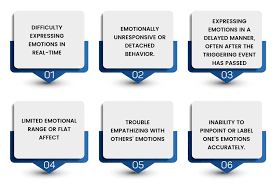
Affective Latency Integration Disorder is a psychological condition in which emotional responses remain appropriate and intelligible, yet consistently arrive after cognitive appraisal rather than alongside it. Individuals with this condition...


Affective Latency Integration Disorder is a psychological condition in which emotional responses remain appropriate and intelligible, yet consistently arrive after cognitive appraisal rather than alongside it. Individuals with this condition...

Mnemonic Self-Discontinuity Disorder is a psychological condition in which memory functions remain structurally intact while the subjective sense of personal continuity across remembered events gradually weakens. Individuals affected by this...

Autogenic Cognitive Agency Erosion Disorder is a psychological condition in which core cognitive functions remain intact while the subjective sense of initiating one’s own thoughts gradually weakens. Individuals affected by...

Autogenous Thought Detachment Disorder (ATDD) refers to a psychological condition in which thinking remains structurally intact while the subjective sense of authorship over thought is diminished or absent. Individuals affected...

Autogenous Thought Detachment Disorder (ATDD) describes a psychological condition in which individuals experience their thoughts as internally generated yet experientially unauthored. The mind continues to function with logical coherence, linguistic...

The condition provisionally referred to as Cognitive Echo Dissolution Syndrome (CEDS) is characterized by a progressive erosion of the boundary between internally generated thought and externally encountered cognition, without the presence of...

Psychiatry usually links attention to interest. We attend to what attracts us, threatens us, or promises reward. Loss of interest is often assumed to lead to distractibility. Yet there exists...

Psychiatry often treats responsibility as a marker of intact agency and maturity. Taking care of duties, honoring commitments, and acting reliably are usually interpreted as signs of psychological health. Yet...

Psychiatry often assumes that psychological stability depends on the ability to organize experience into a coherent personal narrative. Disruption of narrative is usually associated with confusion, psychosis, or trauma. Yet...

Psychiatry often links difficulty in decision-making to anxiety, doubt, or ambivalence. However, a rarely described condition exists in which decision-making capacity remains intact, yet the experience of choosing is already...
Role conflict occurs when an individual faces incompatible demands attached to different social roles they occupy. Each person plays multiple roles—such as employee, parent, partner, student, friend—and these roles come with specific expectations and responsibilities. When these expectations clash, they create psychological tension and stress.
At Famout, we are passionate about quality, innovation, and excellence.
24/7 Support
Subscribe for latest products
© 2024 Famout