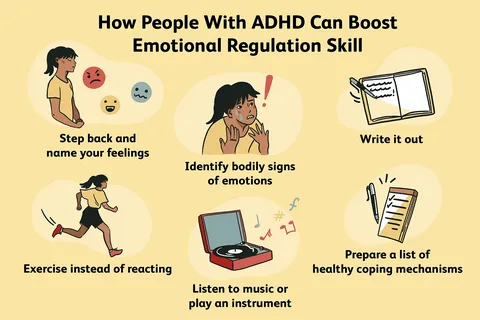
Emotional dysregulation refers to difficulties in recognizing, understanding, managing, and responding to emotional experiences. It occurs when an individual struggles to regulate the intensity, duration, or expression of emotions in a way that is appropriate to a particular situation. Emotions are a natural part of human functioning, but their regulation can become challenging when emotional reactions feel overwhelming, unpredictable, or difficult to control. A person experiencing emotional dysregulation may react intensely to relatively minor situations, remain distressed long after an upsetting event, or find it difficult to return to an emotionally balanced state.
Emotional regulation is not the same as suppressing feelings or avoiding unpleasant experiences. Healthy regulation involves recognizing emotions, understanding their possible causes, and choosing how to respond to them. For example, a person may feel angry during a disagreement but still communicate calmly and consider the consequences of their actions. Emotional dysregulation, on the other hand, may make it difficult to create this distance between an emotional reaction and a behavioral response. The individual may respond immediately, regret the reaction later, and experience additional distress because of what happened.
One important aspect of emotional dysregulation is emotional intensity. Some individuals experience sadness, anger, anxiety, or frustration more strongly than others. An ordinary disagreement may produce a powerful emotional reaction, while a small disappointment may remain psychologically significant for hours or even days. This does not necessarily mean that the person is deliberately exaggerating their feelings. Their emotional response may genuinely feel overwhelming, particularly when they have limited strategies for managing distress.
Emotional dysregulation can also influence the duration of emotional experiences. Two individuals may experience the same stressful event but recover at different rates. One person may gradually regain emotional balance, while another may continue thinking about the situation and experiencing emotional discomfort. This prolonged response can contribute to rumination, a repetitive thinking pattern in which individuals repeatedly examine upsetting experiences, conversations, or perceived mistakes. Rather than helping them find a solution, rumination may maintain emotional distress and make it more difficult to move forward.
The relationship between thoughts and emotions is particularly important. People do not respond only to events themselves; they also respond to the meanings they assign to those events. For example, receiving a short message from a friend may be interpreted as a sign of rejection, even when there is no clear evidence of negative intentions. This interpretation can activate anxiety, sadness, or anger. Such patterns may involve cognitive distortions, which are habitual ways of interpreting information that can intensify negative emotional experiences.
Another important factor is emotional awareness. Some individuals recognize that they feel uncomfortable but cannot identify the exact emotion involved. They may describe themselves as irritated, overwhelmed, or exhausted without understanding whether the underlying experience is disappointment, fear, shame, loneliness, or frustration. Developing emotional awareness can help individuals identify what they are experiencing before the emotion becomes more intense. Naming an emotion does not automatically eliminate it, but it can make the experience easier to understand and manage.
Emotional dysregulation may also affect physical functioning. Strong emotional reactions can activate the body’s stress response, producing changes in heart rate, breathing, muscle tension, and attention. During intense anxiety or anger, an individual may experience physical sensations that make it even more difficult to think clearly. The connection between psychological and physiological responses explains why emotional regulation sometimes requires attention to both thoughts and bodily sensations.
The nervous system plays an important role in emotional responses. The autonomic nervous system helps regulate physiological reactions to stress, while brain networks involving the amygdala and prefrontal cortex contribute to emotional processing and behavioral control. The amygdala is involved in detecting emotionally significant information, whereas the prefrontal cortex participates in processes such as decision-making, planning, and regulation. These systems work together rather than functioning independently. Emotional dysregulation may involve difficulties in the coordination of processes responsible for emotional reactions and their regulation.
Childhood experiences can influence the development of emotional regulation skills. Children gradually learn how to recognize and manage emotions through interactions with caregivers and other important people. When adults respond to children’s emotional experiences with patience, understanding, and consistent guidance, children have opportunities to develop effective regulation strategies. This process is often described through the concept of co-regulation, in which one person’s emotional support helps another person manage distress.
In contrast, environments characterized by unpredictable reactions, emotional invalidation, or limited emotional support may make emotional development more difficult for some children. A child who repeatedly hears that their feelings are unimportant may gradually struggle to recognize or communicate emotional needs. However, childhood experiences do not determine an individual’s psychological future. Emotional regulation skills can continue developing throughout adulthood, and people can learn healthier ways of responding to their emotions.
Emotional dysregulation is associated with several psychological conditions, although it is not a diagnosis by itself. It may occur in borderline personality disorder, attention-deficit/hyperactivity disorder, post-traumatic stress disorder, depression, anxiety disorders, and certain other mental health conditions. In borderline personality disorder, difficulties regulating emotions can be particularly significant and may influence relationships, self-image, and impulse control. However, experiencing emotional dysregulation does not automatically mean that someone has borderline personality disorder or any other specific condition.
In interpersonal relationships, emotional dysregulation can create repeated cycles of misunderstanding and conflict. An individual may interpret criticism as rejection, respond defensively, and later feel guilty about their reaction. In some situations, the emotional response may be connected to previous experiences rather than the immediate disagreement. A partner’s temporary silence, for example, may activate fears of abandonment in someone who has experienced unstable relationships. Understanding fear of abandonment can therefore provide useful context for exploring certain emotional reactions.
Another possible consequence is difficulty tolerating uncertainty. People who experience emotional dysregulation may feel an urgent need to resolve uncomfortable situations immediately. They may repeatedly ask for reassurance, attempt to control circumstances, or make impulsive decisions to reduce emotional tension. Although these behaviors can provide temporary relief, they may create additional problems over time. Learning distress tolerance can help individuals remain present during uncomfortable emotional experiences without reacting in ways that produce further difficulties.
Emotional suppression is sometimes confused with emotional regulation. Suppression involves consciously or unconsciously hiding emotional expressions, whereas regulation includes a broader range of strategies for understanding and managing emotions. A person who never expresses anger may still experience intense internal distress. Similarly, avoiding conversations about painful experiences does not necessarily mean that emotional difficulties have been resolved. Healthy emotional functioning involves finding appropriate ways to acknowledge and communicate feelings rather than simply concealing them.
Several psychological approaches can help individuals develop emotional regulation skills. Cognitive behavioral therapy (CBT) focuses on identifying connections between thoughts, emotions, and behaviors. It helps individuals examine interpretations that may contribute to distress and develop more balanced responses. For example, someone who immediately assumes that a friend is angry because of a delayed response can learn to consider alternative explanations before reaching a conclusion.
Dialectical Behavior Therapy (DBT) is another important approach, particularly for individuals experiencing significant emotional instability. It teaches practical skills involving mindfulness, distress tolerance, emotional regulation, and interpersonal effectiveness. These skills encourage individuals to observe emotional experiences, tolerate discomfort, and respond more thoughtfully during difficult situations. DBT is especially well known for its use in treating borderline personality disorder, although its skills may also be useful in other contexts.
Mindfulness can also support emotional regulation by helping individuals observe thoughts and feelings without immediately reacting to them. Instead of attempting to eliminate an unpleasant emotion, a person learns to notice its presence and recognize that emotions change over time. For example, during a moment of anger, an individual may observe physical tension, rapid thoughts, and the desire to respond aggressively. This awareness can create an opportunity to choose a different response.
Breathing exercises and grounding techniques may be useful when emotional arousal becomes intense. Slow, controlled breathing can help some individuals reduce physiological activation, while grounding exercises encourage attention to immediate sensory experiences. These strategies do not solve the underlying cause of emotional distress, but they may help create enough psychological space to respond more effectively.
Journaling is another way to explore emotional experiences. Writing about a difficult situation can help individuals identify what happened, what they felt, what they thought, and how they responded. Over time, recurring patterns may become easier to recognize. For example, someone may discover that feelings of anger frequently appear after experiences of rejection or that anxiety becomes stronger when expectations remain unclear. Such observations can support greater self-understanding.
It is also important to consider sleep, physical activity, daily stress, and social support. Insufficient sleep and prolonged stress may make emotional regulation more difficult. Regular routines, adequate rest, meaningful relationships, and realistic expectations can contribute to psychological stability. These factors do not replace therapy when professional support is needed, but they can form part of a broader approach to emotional well-being.
Emotional dysregulation should not be interpreted as a personal weakness or a lack of character. It is a psychological difficulty that can involve biological, developmental, cognitive, and environmental influences. People experiencing it may already be highly aware of their emotional reactions and feel frustrated by their inability to manage them. Criticism and shame rarely provide useful long-term solutions. A more constructive approach involves understanding emotional patterns and developing practical skills gradually.
When emotional difficulties repeatedly interfere with relationships, work, education, or everyday functioning, consulting a qualified mental health professional may be beneficial. A professional assessment can help identify possible underlying conditions and determine which therapeutic approach is appropriate. Persistent emotional distress, impulsive behavior, or difficulties maintaining stable relationships deserve attention rather than judgment.
Ultimately, emotional dysregulation is not simply about having strong feelings. It concerns the difficulty of managing emotional experiences in a way that supports psychological well-being and effective functioning. Learning to recognize emotions, understand personal triggers, tolerate discomfort, and choose thoughtful responses can gradually improve emotional stability. The goal is not to become emotionally unaffected by life, but to develop the ability to experience emotions without being completely controlled by them.