

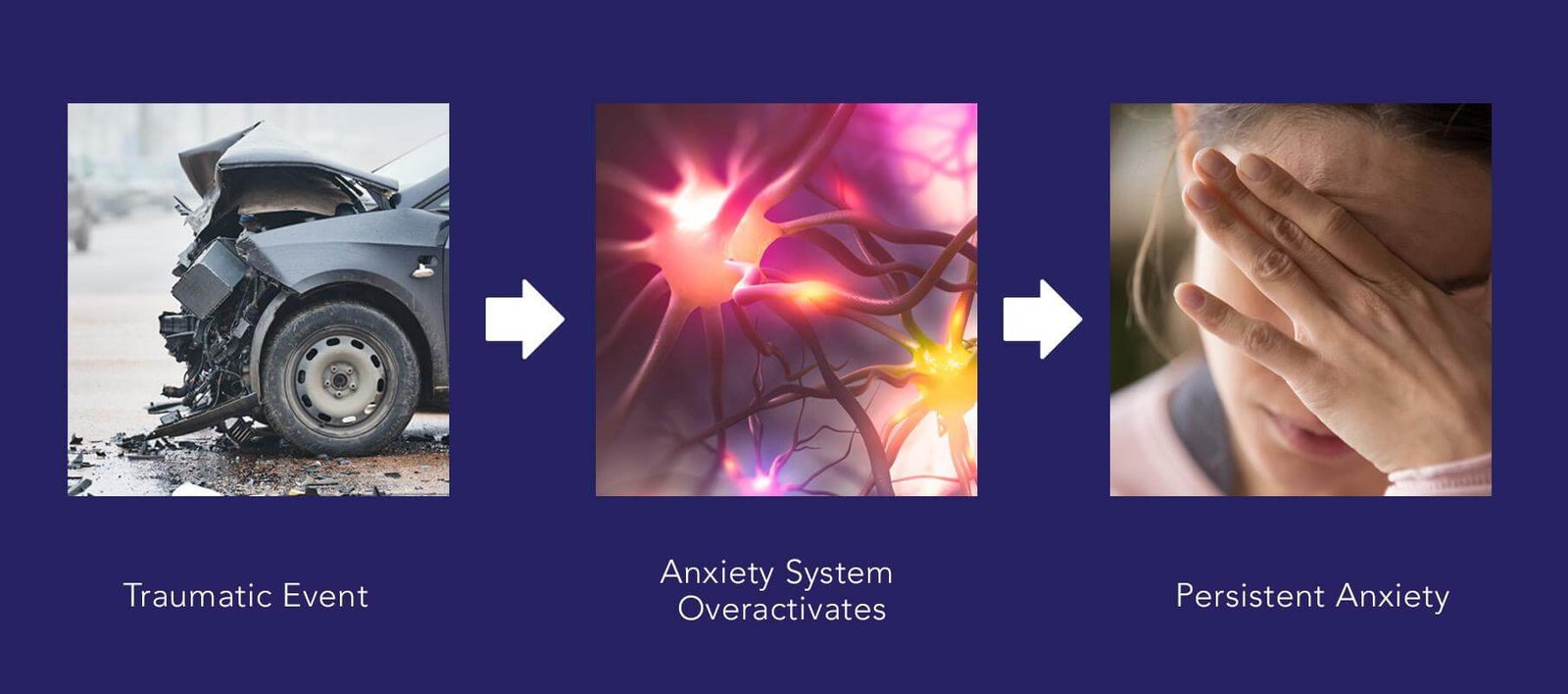
Few questions in psychiatry are as complex and emotionally significant as whether trauma can permanently change a person’s personality. Most people intuitively recognize that difficult experiences leave psychological marks. The death of a loved one, childhood abuse, war, violence, severe neglect, chronic humiliation, or prolonged fear can alter how individuals think, feel, and relate to others. Yet psychiatry seeks to go beyond intuition and ask a deeper question: can trauma fundamentally reshape personality itself, or does it merely affect emotions and behavior temporarily? To answer this question, it is first necessary to understand what psychiatrists mean by personality. Personality is not simply a collection of preferences or habits. It refers to relatively stable patterns of thinking, emotional responding, motivation, and interpersonal behavior that persist across situations and over time. Personality influences how people interpret the world, regulate emotions, form relationships, and respond to challenges. Historically, personality was often viewed as relatively fixed after adolescence. Modern research, however, paints a more dynamic picture. Contemporary psychology increasingly recognizes that personality is neither completely stable nor endlessly flexible. Instead, it reflects an ongoing interaction between genetic predispositions, developmental experiences, social environments, and biological processes. This understanding has profound implications for trauma research because it suggests that sufficiently powerful experiences may influence core aspects of psychological functioning. Trauma differs from ordinary stress in important ways. Stress is a normal part of life and often promotes adaptation. Trauma occurs when experiences overwhelm an individual’s ability to cope and integrate what has happened. The event may involve actual or threatened death, serious injury, sexual violence, extreme helplessness, or prolonged exposure to conditions that fundamentally challenge psychological safety. Importantly, trauma is defined not only by the event itself but also by how the nervous system responds to it. The human brain evolved mechanisms designed to detect and survive threats. During dangerous situations, stress-response systems activate rapidly. Heart rate increases. Attention narrows. Memory formation changes. Hormonal cascades prepare the body for survival. Under ordinary circumstances, these responses are temporary. Once danger passes, physiological systems gradually return to baseline. Trauma can disrupt this recovery process. Instead of returning fully to normal functioning, the nervous system may remain partially organized around threat detection. The world begins to feel less predictable, less safe, and more dangerous than before. This shift can influence nearly every aspect of psychological life. One of the most consistently observed consequences of trauma involves alterations in trust. Human beings develop expectations about safety and relationships through experience. Individuals exposed to severe betrayal, abuse, or violence may begin viewing others through a different lens. Suspicion increases. Vulnerability becomes more difficult. Intimacy may feel threatening rather than comforting. These changes often extend beyond specific memories of traumatic events. They become generalized expectations about the world. A person who once approached relationships openly may become guarded. Someone previously comfortable with dependence may become intensely self-reliant. Such transformations can persist for years and sometimes appear indistinguishable from personality characteristics. Research on childhood trauma is particularly revealing. Childhood represents a period of extraordinary brain development. Neural networks responsible for emotional regulation, social cognition, self-concept, and stress management are actively forming. Experiences occurring during this period therefore exert disproportionate influence. Children exposed to chronic adversity often adapt in ways that enhance survival within difficult environments. Hypervigilance, emotional suppression, mistrust, and heightened sensitivity to threat may provide short-term protection. However, these adaptations can become problematic later when environmental conditions change. What once functioned as survival becomes embedded within personality. The adult may continue responding to ordinary situations as though danger remains imminent. This process illustrates an important psychiatric principle. Symptoms are often adaptations that outlive their original usefulness. From this perspective, trauma-related personality changes are not random damage. They represent learned strategies developed under extreme conditions. Neuroscience provides additional insight into how these changes occur. Brain imaging studies have identified alterations in multiple regions associated with trauma exposure. The amygdala, involved in threat detection and emotional processing, often becomes more reactive. The hippocampus, which contributes to memory integration and contextual understanding, may function differently. Prefrontal regions involved in emotional regulation and decision-making can also show altered activity patterns. These findings demonstrate that trauma affects not only psychological narratives but also biological systems. The distinction between mind and brain becomes increasingly difficult to maintain. Psychological experiences influence neural structure. Neural changes influence psychological experience. The relationship is reciprocal rather than separate. Memory processes play a central role in this transformation. Traumatic memories differ from ordinary memories in several respects. They are often encoded under conditions of intense emotional arousal, affecting how information is stored and retrieved. Instead of becoming integrated into coherent autobiographical narratives, traumatic experiences may remain fragmented, sensory, and emotionally charged. As a result, past danger may continue feeling psychologically present. The individual knows intellectually that the event is over, yet emotionally the threat remains active. This mismatch between knowledge and emotional experience contributes significantly to long-term personality change. Over time, repeated activation of threat-related systems can influence identity itself. The individual begins defining themselves through adaptations developed in response to trauma. A survivor may see themselves primarily as vulnerable, independent, suspicious, resilient, damaged, or responsible for protecting others. These identities become woven into the broader personality structure. Another important factor involves attachment. Attachment theory proposes that early relationships shape expectations regarding safety, trust, and emotional support. Children develop internal models of relationships based on interactions with caregivers. When caregivers provide consistent support, secure attachment tends to develop. When relationships involve neglect, unpredictability, abuse, or fear, attachment systems may become disrupted. Trauma occurring within attachment relationships often produces particularly profound consequences. The very individuals expected to provide safety become sources of danger. This contradiction creates challenges for psychological development because it affects fundamental assumptions about human connection. Many adults with histories of relational trauma struggle not because they consciously remember every painful experience but because early patterns continue influencing emotional responses automatically. Interpersonal expectations become part of personality. Emotional regulation also undergoes significant transformation following trauma. Some individuals become highly reactive, experiencing

Can a Person Lose Contact With Reality Gradually?
When most people imagine severe psychiatric disorders, they often picture a sudden and dramatic break from reality. Popular culture frequently portrays psychosis as an abrupt event in which an individual instantly begins experiencing hallucinations, bizarre beliefs, or profound confusion. In reality, however, the path toward psychosis is often far more subtle and gradual. Many individuals who eventually develop serious psychiatric symptoms experience months or even years of changes before a full psychotic episode emerges. These early changes may involve shifts in perception, thinking, emotion, social functioning, and self-awareness that initially appear mild or difficult to recognize. The question of whether a person can lose contact with reality gradually is therefore not merely theoretical. It is one of the most important topics in contemporary psychiatry because understanding early changes may allow intervention before severe symptoms become established. Research over the past several decades has demonstrated that psychosis frequently develops through identifiable stages rather than appearing suddenly without warning. To understand this process, it is first necessary to clarify what psychiatrists mean by “reality.” Reality testing refers to the ability to distinguish between internal experiences and external events. It involves evaluating beliefs against evidence, recognizing the difference between imagination and perception, and maintaining a shared understanding of the world with other people. When reality testing weakens, individuals may begin interpreting experiences in unusual ways or attributing excessive significance to ordinary events. Importantly, reality testing is not an all-or-nothing phenomenon. It exists along a spectrum. Even psychologically healthy individuals occasionally misinterpret situations, become overly suspicious, or believe things that later prove incorrect. Human cognition is inherently imperfect. The difference between ordinary errors and psychiatric symptoms often lies in intensity, persistence, and impact on functioning. One of the earliest signs sometimes observed before psychosis is a vague sense that something feels different. Individuals may struggle to describe the experience clearly. The world may seem subtly altered, unfamiliar, or difficult to interpret. Objects remain physically unchanged, yet they may feel strangely significant or emotionally charged. Researchers sometimes refer to these experiences as disturbances in the basic sense of reality. The individual recognizes that something feels unusual but may not know why. At this stage, there may be no obvious delusions or hallucinations. Instead, there is often a growing sense of uncertainty. Ordinary events may begin attracting unusual attention. Coincidences may seem more meaningful. Random occurrences may feel connected in ways that are difficult to explain. These experiences do not necessarily indicate psychosis. Many people encounter similar sensations during periods of stress, anxiety, exhaustion, or major life transitions. What becomes clinically important is the persistence and progression of these changes. As the process develops, attention may become increasingly focused on interpreting unusual experiences. The brain naturally seeks explanations for ambiguity. Human beings are meaning-making creatures. When something feels different, the mind attempts to determine why. This search for explanation can become a critical stage in psychosis development. The individual begins constructing theories. At first, these theories may remain tentative. A person might wonder whether others are behaving differently around them. They may question whether certain events are directed toward them. They may feel unusually self-conscious in social situations. Importantly, they often retain doubt. They are uncertain about their interpretations. Over time, however, certainty may increase. Psychiatric researchers have proposed that abnormalities in dopamine signaling contribute significantly to this process. Dopamine helps determine which stimuli deserve attention and importance. When dopamine systems become dysregulated, ordinary events may acquire excessive salience. A passing comment. A stranger’s glance. A television program. A social media post. Any of these may suddenly feel unusually significant. The individual experiences a powerful sense that something important is happening, even when objective evidence is lacking. The brain naturally attempts to explain this feeling. As a result, unusual beliefs may begin forming. These beliefs often emerge gradually rather than appearing fully developed. A person may initially suspect that others are paying special attention to them. Later they may believe that hidden messages are being communicated. Eventually these interpretations can become increasingly elaborate and resistant to contradiction. This gradual progression illustrates an important principle of psychiatry. Delusions rarely emerge in isolation. They often develop as explanations for unusual experiences. From the individual’s perspective, the beliefs make sense because they account for perceptions that genuinely feel different. Understanding this subjective logic is essential for effective clinical care. Hallucinations may also develop gradually. Many people assume that hallucinations begin as vivid experiences impossible to ignore. In reality, early hallucinatory phenomena can be subtle. An individual may occasionally think they heard their name being called. They may briefly hear indistinct sounds. They may experience fleeting perceptions that disappear upon closer attention. Such experiences are surprisingly common within the general population. The distinction becomes clinically significant when they increase in frequency, intensity, and conviction. Over time, ambiguous auditory experiences may become more structured. Voices may become clearer. They may begin commenting, criticizing, or conversing. What started as uncertainty can gradually transform into persistent hallucinatory experience. Social withdrawal often accompanies these changes. Many individuals entering prodromal phases of psychosis become increasingly isolated. Activities once enjoyed may lose their appeal. Relationships may become difficult to maintain. Social interactions can feel confusing, overwhelming, or threatening. This withdrawal may occur for several reasons. The person may feel different from others. They may struggle to explain their experiences. Suspiciousness may increase. Concentration difficulties may make conversation exhausting. Regardless of the cause, isolation often reduces opportunities for reality testing. Without regular social feedback, unusual beliefs may become more difficult to challenge. Cognitive changes frequently appear during this period as well. Attention may become fragmented. Memory may feel less reliable. Thoughts may seem disorganized or difficult to follow. Some individuals describe feeling mentally slowed, while others report overwhelming streams of thoughts that are difficult to control. These experiences can interfere with academic, occupational, and social functioning long before obvious psychotic symptoms emerge. Emotional changes are equally important. Contrary to stereotypes, psychosis is not purely a disorder of thought. Emotion plays a central role throughout the process.

The Hidden Architecture of Delusion
Psychiatric disorders challenge one of the most fundamental assumptions of human existence: the belief that our perception of reality accurately reflects the world around us. Among all psychiatric phenomena, delusions occupy a unique position because they reveal how the human brain can construct alternative realities that appear completely convincing to the individual experiencing them. Delusions are not simply false beliefs, nor are they merely misunderstandings or errors in judgment. They represent complex neuropsychological phenomena arising from interactions between perception, memory, emotion, cognition, and social experience. Understanding delusions requires examining not only psychiatric illness but also the fundamental mechanisms through which all humans construct reality. Traditionally, psychiatry defines a delusion as a fixed false belief that remains resistant to contradictory evidence and is not shared by the person’s cultural or social group. While this definition is clinically useful, modern psychiatric research suggests that delusions are far more complicated than simple false beliefs. Contemporary neuroscience indicates that delusions emerge from disruptions in the brain’s predictive systems, which constantly generate interpretations about the environment. Rather than passively receiving information, the brain actively predicts what it expects to encounter. Reality, therefore, is not directly perceived but continuously constructed through a dynamic interaction between sensory input and prior expectations. This understanding has transformed psychiatric thinking. Historically, delusions were viewed as irrational products of madness. Today, many researchers argue that delusions may represent understandable attempts by the brain to explain unusual experiences. When perception becomes distorted due to neurological dysfunction, the brain seeks explanations. In many cases, delusions may emerge as the individual’s effort to create coherence from experiences that otherwise appear incomprehensible. One of the most influential contemporary theories involves the concept of predictive processing. According to this framework, the brain functions as a prediction machine. Every moment, it generates expectations about incoming sensory information. When reality differs from expectation, a “prediction error” occurs. Normally, prediction errors help individuals update their beliefs and improve future predictions. However, psychiatric research suggests that abnormal prediction error signaling may contribute significantly to delusion formation. In psychotic disorders such as schizophrenia, researchers have observed abnormalities in dopaminergic systems involved in assigning significance to events. Dopamine is often described as a neurotransmitter associated with reward, but its role extends far beyond pleasure. It helps determine what deserves attention and what carries meaning. When dopamine signaling becomes dysregulated, ordinary events may suddenly appear unusually significant. A stranger’s glance, a random television program, or an unrelated conversation may feel personally relevant. This phenomenon, often called aberrant salience, creates a powerful need for explanation. Imagine an individual who suddenly experiences overwhelming feelings that ordinary events possess hidden meaning. The person’s cognitive system naturally attempts to explain these sensations. A belief may emerge that government agencies are monitoring them, that neighbors are communicating secret messages, or that supernatural forces are influencing events. While such conclusions appear irrational to outside observers, they may represent the brain’s effort to explain genuinely unusual experiences. In this sense, delusions can be viewed as solutions to problems created by abnormal perception. The relationship between perception and belief is particularly important in understanding psychosis. Many people assume that beliefs influence perception, but psychiatric evidence demonstrates that perception also influences belief. If an individual’s perceptual experience changes dramatically, corresponding changes in beliefs often follow. This explains why arguing logically against delusions is frequently ineffective. The delusional belief is supported not merely by reasoning but by the individual’s lived experience. To the person experiencing psychosis, the evidence feels direct and undeniable. Neuroimaging studies have revealed widespread alterations in brain networks among individuals experiencing delusions. Regions involved in self-awareness, emotional processing, memory integration, and social cognition often demonstrate atypical activity patterns. The prefrontal cortex, which contributes to reasoning and cognitive flexibility, may function differently during psychotic episodes. Simultaneously, limbic structures involved in emotion can become hyperactive, intensifying the emotional certainty associated with delusional beliefs. Emotion plays a critical role in delusion formation. Contrary to stereotypes depicting psychosis as purely cognitive dysfunction, emotional disturbances often precede and shape psychotic experiences. Anxiety, fear, loneliness, trauma, and social exclusion can influence the content and development of delusions. Individuals experiencing chronic threat may develop persecutory delusions, while those seeking meaning or significance may develop grandiose beliefs. The emotional environment provides fertile ground upon which psychotic interpretations grow. Trauma has emerged as a particularly important factor in contemporary psychiatric research. Numerous studies indicate elevated rates of childhood adversity among individuals diagnosed with psychotic disorders. Physical abuse, emotional neglect, social humiliation, and chronic instability can alter developmental pathways affecting stress regulation and cognitive processing. Trauma may increase sensitivity to perceived threats, making certain types of delusions more likely to emerge later in life. The connection between trauma and psychosis challenges simplistic biological explanations. While genetic factors clearly contribute to psychotic vulnerability, environmental experiences also exert profound influence. Modern psychiatry increasingly adopts biopsychosocial models recognizing that psychiatric disorders arise from interactions among biological predispositions, psychological processes, and social contexts. Delusions, therefore, cannot be fully understood through neuroscience alone. Social factors deserve particular attention because reality itself is partially socially constructed. Humans learn what is real through interactions with others. Shared beliefs, cultural narratives, and social validation help stabilize perceptions of reality. Psychosis often involves disruptions in these stabilizing mechanisms. Social isolation reduces opportunities for reality testing, while discrimination and exclusion may intensify suspicious interpretations of social events. Cultural influences significantly affect the content and expression of delusions. Throughout history, delusional themes have reflected prevailing social concerns. In earlier centuries, individuals might have attributed unusual experiences to witchcraft, demons, or divine intervention. In modern societies, delusions frequently involve surveillance technologies, artificial intelligence, secret organizations, or digital communication systems. The underlying cognitive mechanisms may remain similar, while the specific narratives change according to cultural context. This cultural variability highlights an important psychiatric principle: delusions are not created in a vacuum. They emerge through interactions between neurobiology and available cultural explanations. The brain constructs interpretations using concepts accessible within the individual’s social environment. Consequently, understanding psychosis requires attention not only to neural

Why Does Time Feel Faster as We Get Older?
One of the most common experiences reported by adults is the feeling that time passes increasingly quickly with age. Childhood summers once seemed endless, school years felt long, and waiting for birthdays or holidays often appeared almost unbearable. Yet many adults describe entire years passing in what feels like a matter of months. This phenomenon is so widespread that it appears nearly universal, raising an intriguing psychological question: why does time seem to accelerate as people grow older? At first glance, this experience appears paradoxical. Time itself does not change speed. A year contains the same number of days regardless of age. The Earth continues orbiting the Sun at the same rate, clocks measure the same intervals, and physical laws remain unchanged. The difference lies not in time itself but in how the human brain experiences and remembers it. To understand this phenomenon, it is important to recognize that psychological time differs from physical time. Physical time is measured objectively through clocks and calendars. Psychological time is the subjective sense of duration experienced by consciousness. These two forms of time often diverge significantly. One of the most influential explanations involves proportional perception. When a person is five years old, one year represents twenty percent of their entire life. By age fifty, one year represents only two percent of their lifetime experience. As people age, each additional year occupies a smaller proportion of the life already lived. Although the brain does not consciously perform this calculation, subjective experience may be influenced by relative comparisons. Early years feel larger because they constitute a greater portion of personal history. Later years appear smaller against the backdrop of an increasingly extensive lifetime. However, proportional perception alone cannot fully explain the phenomenon. Memory also plays a crucial role. Human beings do not experience the passage of time directly. Instead, they often judge time retrospectively by examining memories. When looking back on a period filled with numerous distinctive experiences, that period tends to feel longer. When looking back on a period dominated by routine and repetition, it often feels shorter. Childhood is filled with novelty. Children encounter new environments, new skills, new friendships, and new discoveries almost constantly. They learn language, explore social rules, develop interests, and experience countless firsts. Because these events are highly memorable, they create a dense network of recollections. When adults reflect on childhood, the abundance of stored memories makes that period seem expansive and lengthy. In contrast, adulthood often involves greater routine. Many days resemble one another. Work schedules repeat. Responsibilities become predictable. Familiar environments replace unfamiliar ones. Because fewer experiences stand out as unique, fewer detailed memories are stored. As a result, when looking back, large stretches of time may appear compressed. The brain essentially asks, “How much happened during this period?” If relatively few memorable events come to mind, the period may feel surprisingly short. Novelty is therefore one of the most important factors influencing subjective time. Research suggests that new experiences require more extensive neural processing. The brain pays closer attention to unfamiliar information, creating richer memory traces. These detailed memories contribute to the impression that more time has passed. This explains why vacations often seem to pass quickly while they occur but feel long in retrospect. During the vacation, enjoyment may cause attention to focus on immediate experiences, making time seem to move rapidly. Later, the abundance of memorable events expands the period in memory, making it appear longer than it felt at the time. Routine often produces the opposite effect. A repetitive week may feel slow while it is happening, especially if boredom is present. Yet when recalled later, the same week may seem to have disappeared almost instantly because few distinctive memories were created. Attention itself influences time perception. The brain does not measure time continuously like a clock. Instead, subjective duration depends partly on how much attention is directed toward the passage of time. When individuals focus intensely on waiting, time often feels slow. Minutes seem longer because attention repeatedly returns to the clock. Conversely, during engaging activities, attention shifts away from time monitoring, causing hours to pass unnoticed. This principle helps explain why childhood often feels longer. Children frequently pay closer attention to experiences themselves. Their worlds contain mystery, uncertainty, and discovery. Because so much is unfamiliar, attention remains highly engaged. Adults, however, often process familiar situations automatically. Activities that once required conscious attention become routine. The brain spends less effort encoding details, reducing the richness of experience. Another important factor involves prediction. The human brain functions as a prediction system, constantly anticipating future events. Familiar environments are easier to predict than unfamiliar ones. As life becomes more predictable, experiences require less active processing. This efficiency is beneficial for survival and decision-making, but it has an interesting side effect. Highly predictable experiences often leave weaker memory traces. The result is a sense that time has passed quickly because fewer details were consciously registered. Emotional states also affect time perception. Periods of stress, uncertainty, or crisis often feel longer while they occur because the brain allocates increased attention to potential threats. Emotional intensity heightens awareness and strengthens memory formation. Conversely, stable periods characterized by repetition and low emotional variation may seem shorter in retrospect. Interestingly, major life events often serve as temporal landmarks. People frequently organize memories around graduations, relationships, relocations, career changes, births, illnesses, or losses. These events divide life into meaningful chapters. When many landmarks are present, time appears more detailed and expansive. When fewer landmarks exist, years may blend together, creating the impression that time is accelerating. Technology may further contribute to this experience. Modern life provides constant stimulation and information. Many activities that once required effort now occur instantly. Communication, entertainment, shopping, and information retrieval happen with remarkable speed. This acceleration of daily life can create the feeling that entire weeks or months disappear before they are fully noticed. Continuous engagement with digital environments may also reduce reflective moments that help individuals register the passage of time consciously. From
Why Does the Brain Create an Inner World?
Every human being lives in two worlds at the same time. One is the external world of objects, people, sounds, and events. The other is an invisible internal world composed of thoughts, memories, emotions, fantasies, expectations, and private experiences. While the external world is shared with others, the inner world belongs exclusively to the individual. A person may sit silently in a crowded room while simultaneously experiencing vivid memories, imagining future possibilities, reliving conversations, or constructing entirely fictional scenarios. This remarkable ability raises an important question: why does the brain create an inner world at all? At first glance, the answer might seem obvious. Thoughts help people solve problems and plan for the future. However, the existence of a rich inner world goes far beyond practical reasoning. Humans spend a significant portion of their lives engaged in mental activity unrelated to immediate external demands. Even when resting quietly, the mind rarely becomes completely inactive. Instead, it generates narratives, memories, daydreams, worries, and reflections. This tendency suggests that the inner world serves functions far deeper than simple problem-solving. From an evolutionary perspective, one of the primary advantages of an inner world is simulation. Unlike many other animals, humans can mentally explore situations without physically experiencing them. The brain can imagine possible futures, evaluate risks, and rehearse responses before action becomes necessary. Consider a simple example. A person preparing for an important conversation may mentally rehearse different outcomes. They imagine possible questions, responses, misunderstandings, and reactions. By the time the conversation occurs, the brain has already explored multiple scenarios. This ability provides a significant survival advantage. Mistakes made in imagination are less costly than mistakes made in reality. The inner world functions as a psychological laboratory where experiences can be tested safely. Memory plays a crucial role in constructing this laboratory. Human memories are not merely records of past events. They are resources used to generate future possibilities. When people imagine tomorrow, the brain often recombines fragments of previous experiences into new simulations. Neuroscientific research suggests that remembering the past and imagining the future involve many of the same brain systems. This overlap indicates that memory evolved not simply to preserve history but also to support prediction. The past becomes useful because it helps create models of what might happen next. The inner world therefore connects time. It allows individuals to carry yesterday into tomorrow. Without this capacity, long-term planning would be impossible. Identity would become fragmented. Personal continuity would weaken. The sense of self itself depends heavily upon the inner world. Most people experience themselves as continuous individuals who persist across years despite constant physical and psychological change. This continuity is largely maintained through internal narratives. The brain constructs stories linking past experiences, present circumstances, and future goals. These stories are not always perfectly accurate. They are interpretations. Yet they provide coherence. Without them, life would consist of disconnected moments rather than an organized personal history. The inner world acts as the space where these narratives are continuously created and revised. Emotion is another major reason for its existence. Human beings do not merely react to events; they also react to their interpretations of events. Two individuals can experience the same situation yet feel entirely different emotions because they assign different meanings to it. Meaning emerges within the inner world. An external event becomes psychologically significant only after it is interpreted. For example, criticism may be experienced as helpful guidance, personal rejection, motivation for improvement, or evidence of failure depending upon how it is understood internally. The emotional impact arises not solely from the event itself but from the mental framework surrounding it. The inner world therefore functions as a system for generating meaning. Without meaning, experiences would remain isolated sensory occurrences. Meaning transforms events into stories, goals, lessons, and values. Social life also depends heavily upon internal reality. Humans possess an extraordinary ability to imagine the minds of others. Psychologists often refer to this capacity as theory of mind. It allows individuals to estimate what other people may be thinking, feeling, intending, or believing. This skill is essential for cooperation, communication, and relationships. However, it requires extensive internal simulation. When someone wonders whether a friend is upset, they are creating a model of another person’s mental state within their own inner world. In effect, social understanding depends partly upon imagination. The brain constantly generates invisible representations of other minds. These representations help navigate complex social environments. Creativity emerges from similar processes. Art, literature, music, scientific innovation, and technological invention all originate within internal reality before appearing in the external world. Every building first existed as an idea. Every theory began as a possibility. Every story was once imagined. The inner world provides a space where novel combinations of information can emerge. Ideas that do not yet exist physically can be explored mentally. This capacity enables innovation. Without an internal world, creativity as humans know it would likely be impossible. Dreaming offers another fascinating perspective. During sleep, the brain generates experiences that can feel astonishingly real despite limited sensory input from the external environment. Entire worlds appear. Conversations occur. Emotions unfold. Events progress according to their own logic. Dreams demonstrate that the brain possesses the ability to construct reality-like experiences from internal information alone. Although dreams differ from waking consciousness, they reveal the immense generative power of the mind. The brain is not merely a device for perceiving reality. It is also a device for creating experiences. This distinction is profound. Perception itself may involve more construction than most people realize. Modern neuroscience increasingly views the brain as a prediction machine. Rather than passively receiving sensory information, it actively generates expectations about the world and updates those expectations according to incoming data. In this framework, perception results from an interaction between prediction and sensation. The inner world therefore participates directly in shaping the experience of external reality. People do not simply see the world. They interpret it continuously. Expectations influence attention. Beliefs influence perception. Prior experiences influence interpretation. Consequently, the

Why Do We Sometimes Feel Like Strangers to Ourselves?
Most people assume they know themselves better than anyone else. After all, no one else has direct access to their thoughts, memories, emotions, and experiences. Yet there are moments when this assumption seems to collapse. A person may suddenly react in an unexpected way, make a decision that feels out of character, or experience emotions they cannot explain. Sometimes individuals look back on their past actions and wonder how they could have behaved so differently. At other times, they may feel disconnected from their own thoughts, as though part of their mind has become unfamiliar. These experiences raise an intriguing psychological question: why do people sometimes feel like strangers to themselves? At first glance, the idea seems paradoxical. How can someone fail to understand the person they spend every moment with? The answer begins with recognizing that self-knowledge is far less complete than it appears. Human consciousness provides access to only a portion of mental activity. Beneath conscious awareness lies an enormous network of automatic processes, emotional patterns, memories, motivations, and associations that influence behavior without being fully visible. The brain continuously performs countless operations outside awareness. It regulates bodily functions, interprets sensory information, predicts future events, and evaluates emotional significance. Most of this activity occurs automatically. Consciousness receives the final product rather than the entire process. As a result, people often know the outcomes of their mental processes before they know the reasons behind them. For example, an individual may instantly dislike a stranger without understanding why. Later reflection might reveal subtle reminders of a previous negative experience. Similarly, a person may feel drawn toward a particular place, career, or relationship without initially recognizing the deeper emotional factors involved. In these situations, the mind has already reached conclusions before conscious awareness catches up. This creates the impression that part of the self remains hidden. Memory contributes significantly to this phenomenon. People often imagine memory as a complete archive of personal experience. In reality, memory is selective, reconstructive, and imperfect. Many experiences are forgotten entirely. Others are remembered only partially. Even vivid memories change over time as they are repeatedly reconstructed. Because identity depends heavily on memory, gaps in memory create gaps in self-understanding. A person remembers fragments of childhood, important achievements, painful failures, and significant relationships. Yet countless experiences that shaped personality may no longer be accessible consciously. The result is that individuals know themselves through an incomplete narrative. Like reading only selected chapters of a book, they understand parts of the story while remaining unaware of many details that influenced its development. Emotions further complicate self-knowledge. Emotional reactions often emerge before conscious reasoning begins. Neuroscientific research suggests that emotional evaluation can occur extremely rapidly, sometimes before individuals consciously identify what they are feeling. Someone may become irritated, anxious, or excited without immediately understanding the cause. Only later does reflection provide possible explanations. This delay reveals that emotional life is not fully transparent to consciousness. The feeling arrives first. The explanation arrives afterward. In many cases, explanations themselves may be incomplete. The brain prefers coherent stories. When causes are unclear, people often create narratives that seem reasonable, even if they do not fully capture the true origins of their behavior. Psychologists sometimes refer to this tendency as confabulation in its broader sense—the construction of explanations that feel convincing despite limited access to underlying processes. Most of the time these explanations are not deliberate falsehoods. They are sincere attempts to make sense of complex mental activity. The social environment also shapes self-perception. From early childhood onward, individuals learn about themselves partly through interactions with others. Parents, teachers, friends, and communities provide feedback that influences identity formation. A child repeatedly praised for creativity may begin to view themselves as creative. A child frequently criticized may develop a different self-concept. Over time, these social reflections become integrated into personal identity. However, social identities are not always perfectly aligned with inner experience. Sometimes people adopt roles that satisfy expectations while suppressing other aspects of themselves. Years later, they may discover interests, emotions, or values that feel unfamiliar because those parts of the self received little attention. This discovery can produce a surprising sense of meeting oneself for the first time. Life transitions often trigger such experiences. Major events—graduation, marriage, parenthood, relocation, career changes, illness, or loss—can alter the psychological structures that previously supported identity. The person who felt certain about who they were at twenty may feel very different at forty. Not because the old self disappeared, but because identity continuously evolves. The self is not a fixed object. It is an ongoing process. Many individuals struggle with this reality because they unconsciously expect consistency. They assume that personal identity should remain stable across time. When change occurs, it can feel disorienting. Yet change is not evidence of inauthenticity. It is evidence of adaptation. The brain constantly updates beliefs, goals, and priorities in response to experience. As circumstances change, the self changes as well. Dreams provide another fascinating example of unfamiliarity within the mind. During dreams, individuals often encounter thoughts, fears, desires, and symbols that seem unexpected. A dream may reveal emotions that were ignored during waking life or combine memories in unusual ways. Although dreams are generated by the dreamer’s own brain, their content can feel strangely foreign. This experience highlights an important truth: the mind contains far more information than conscious awareness normally accesses. The dream state allows some of this information to emerge in symbolic and often surprising forms. Neuroscience also suggests that the sense of self is distributed across multiple interacting brain systems rather than located in a single center. Different neural networks contribute to memory, emotional regulation, bodily awareness, decision-making, and social cognition. Under ordinary circumstances, these systems work together smoothly enough to create the impression of a unified self. However, this unity is partly an achievement of integration. When integration changes, the sense of self can change as well. This becomes especially apparent in certain psychological conditions. Individuals experiencing depersonalization sometimes report feeling detached from themselves,

Why Does the Mind Fear the Unknown?
Among all human emotions, fear is one of the most powerful and influential. It can alter perception, reshape memory, change behavior, and even affect physical health. While people commonly fear specific dangers such as illness, failure, loss, or physical harm, many fears ultimately share a deeper source: uncertainty. The unknown often produces stronger psychological reactions than dangers that are clearly defined. A person may cope with a confirmed diagnosis more effectively than with weeks of waiting for test results. An employee may handle a job loss better than months of uncertainty about whether dismissal will occur. In countless situations, the mind appears to fear what it does not know more than what it does know. Understanding why this occurs reveals important insights into the nature of consciousness, prediction, and survival. The human brain evolved primarily as a prediction system. Although people often think of the brain as a machine for processing information, neuroscience increasingly suggests that its central function is anticipating future events. The brain constantly generates expectations about the environment and compares them to incoming sensory information. These predictions help individuals respond quickly and efficiently without having to analyze every situation from scratch. From an evolutionary perspective, prediction is essential for survival. An organism that can anticipate danger has a greater chance of avoiding harm than one that merely reacts after danger appears. As a result, natural selection favored nervous systems capable of forecasting potential threats. However, prediction depends upon information. When information is limited, predictions become uncertain. When predictions become uncertain, the brain struggles to determine the safest course of action. This uncertainty creates psychological tension. In many ways, fear of the unknown emerges because uncertainty disrupts the brain’s fundamental goal of reducing surprise. The mind seeks patterns, regularities, and explanations. It prefers environments that can be understood and anticipated. Unknown situations provide none of these comforts. Imagine walking through your home at night and hearing an unexpected sound. If you immediately identify the source as a falling object, anxiety usually decreases. If the source remains unknown, however, concern often grows. The lack of information allows multiple possibilities to compete for attention. Some of those possibilities may involve danger. The brain generally treats uncertainty cautiously because caution has historically carried fewer survival costs than recklessness. For ancient humans, assuming that a strange movement in the grass might indicate a predator was often safer than assuming it was harmless. Even if most uncertainties turned out to be benign, the occasional real threat rewarded vigilance. This evolutionary tendency continues today. Modern life contains far fewer predators, but the brain still responds to uncertainty as though it might conceal danger. As a result, ambiguous situations often trigger stress responses disproportionate to actual risk. This tendency is closely related to anxiety. Anxiety differs from fear in important ways. Fear typically concerns an identifiable threat. Anxiety concerns potential threats that may or may not exist. Fear reacts to immediate danger. Anxiety reacts to uncertainty about future danger. Because the future is inherently unknown, anxiety often focuses on possibilities rather than realities. The mind begins generating scenarios. “What if something goes wrong?” “What if I fail?” “What if I lose something important?” “What if I am unprepared?” These questions reflect the brain’s attempt to reduce uncertainty through simulation. Humans possess an extraordinary capacity to imagine future events. This ability supports planning, creativity, and problem-solving. Yet it also enables prolonged worry. The same imagination that helps individuals prepare for tomorrow can generate endless hypothetical dangers. Consequently, the human mind often suffers not from actual events but from imagined possibilities. Memory contributes significantly to this process. Past experiences shape expectations about the future. If uncertainty previously led to pain, embarrassment, rejection, or loss, similar uncertainties may trigger heightened vigilance later. The brain learns associations. An unpleasant outcome becomes linked to uncertainty itself. Eventually, uncertainty begins to feel threatening even when no specific danger exists. This learning process helps explain why individuals differ greatly in their tolerance for ambiguity. Some people adapt relatively easily to uncertain circumstances. Others experience substantial distress. These differences reflect variations in temperament, life experiences, cognitive habits, and emotional regulation. Research suggests that individuals with high intolerance of uncertainty are more likely to experience anxiety disorders. They often interpret ambiguous situations negatively and struggle to tolerate incomplete information. For them, uncertainty feels less like a temporary absence of knowledge and more like a direct threat. Interestingly, certainty itself can sometimes feel more comforting than positive outcomes. People frequently prefer unpleasant certainty to uncertain possibility. For example, waiting for important news may feel worse than receiving disappointing news because certainty ends psychological tension. Once an outcome becomes known, the brain can reorganize around reality. Planning becomes possible. Adaptation begins. The endless cycle of prediction and speculation decreases. This phenomenon highlights an important psychological principle: humans often need predictability as much as they need pleasure. Control plays a central role as well. Unknown situations reduce perceived control over events. The less control individuals believe they possess, the more vulnerable they often feel. This perception activates stress responses designed to prepare the body for potential challenges. Heart rate increases. Attention narrows. Muscles become more tense. Stress hormones rise. These reactions evolved to support survival during uncertain conditions. Yet in modern environments, they are frequently activated by symbolic threats rather than physical ones. A difficult conversation, financial uncertainty, or social evaluation can produce physiological responses similar to those triggered by physical danger. The brain reacts not only to what is happening but also to what might happen. Social uncertainty is particularly powerful. Humans are profoundly social beings whose survival historically depended upon group membership. Rejection, exclusion, and loss of status could have serious consequences in ancestral environments. As a result, uncertainty involving relationships often generates intense emotional reactions. People worry about how others perceive them. They analyze ambiguous messages. They search for hidden meanings. They imagine future conflicts. Much of this behavior reflects attempts to reduce uncertainty regarding social belonging. Another important factor is the mind’s

Why Does The Mind Create An Inner Self?
Every human being experiences a persistent sense of “I.” Thoughts appear to belong to someone. Memories seem connected to a continuous identity. Decisions feel as though they are made by an internal self observing, evaluating, and directing experience. This inner self appears so obvious that most people rarely question its existence. Yet from a psychological and neuroscientific perspective, the nature of this self is surprisingly complex. The brain contains no single location where a unified “I” sits watching reality unfold. Instead, consciousness emerges from countless interacting processes involving perception, memory, emotion, prediction, language, and social cognition. This raises a profound question: Why does the mind create an inner self at all? To understand this, it is important first to recognize that survival requires continuity. An organism must distinguish itself from the environment in order to protect its body, obtain resources, avoid danger, and pursue goals. Without some form of self-representation, adaptive behavior would become nearly impossible. Even simple organisms demonstrate primitive forms of self-other distinction. However, human consciousness extends this process far beyond immediate physical boundaries. Humans do not merely experience a physical body. They experience a psychological identity. This identity stretches across years, sometimes decades, linking childhood memories to future plans through a single narrative perspective. The remarkable aspect of this continuity is that it often feels permanent despite constant change. Cells die and regenerate. Beliefs evolve. Relationships change. Goals shift. Memories transform. Yet the subjective feeling of being the same person often persists. Psychologically, this continuity serves an important function. Without it, experiences would remain disconnected fragments. Memory would lose coherence. Planning would become difficult. Responsibility would become meaningless. The self acts as an organizing principle that binds diverse experiences together. In many ways, the self functions like a story. This comparison is not intended to suggest that the self is imaginary. Rather, it highlights that identity depends heavily upon narrative organization. People continuously construct explanations regarding who they are. These explanations include personal history, values, relationships, strengths, weaknesses, hopes, fears, and aspirations. The resulting narrative creates stability within an otherwise changing psychological landscape. Importantly, this narrative is constantly updated. When new experiences occur, they must be integrated into existing identity structures. Sometimes this integration is easy. Sometimes it creates conflict. For example, imagine a person who sees themselves as honest but later discovers evidence of behavior contradicting that self-image. Psychological discomfort emerges because the identity narrative has been challenged. The mind must either revise the narrative or reinterpret the experience. This process illustrates that the self is dynamic rather than fixed. Memory plays a central role here. Autobiographical memory allows individuals to perceive themselves across time. Without memory, continuity of identity weakens dramatically. Certain neurological conditions demonstrate this clearly. Individuals with severe memory impairments often struggle maintaining stable self-concepts because experiences cannot be integrated effectively into long-term narrative structures. However, memory alone cannot explain the self. After all, memory itself is reconstructive. As discussed previously, memories change over time. They are influenced by emotion, interpretation, and present identity. This creates a fascinating feedback loop. The self shapes memory. Memory shapes the self. Each continuously influences the other. Consequently, identity is not simply discovered through memory but actively constructed through ongoing interpretation. Social interaction contributes enormously to this construction. Human beings evolved within intensely relational environments. Survival depended upon cooperation, communication, and group membership. As a result, much of the self develops through interaction with others. Children learn who they are partly through how caregivers respond to them. Praise, criticism, affection, neglect, and expectation all influence identity formation. Over time, external perspectives become internalized. People begin carrying imagined social audiences within their own minds. This internal audience influences behavior even when nobody else is physically present. For example, individuals often evaluate themselves through standards learned from parents, peers, teachers, or cultural norms. The self therefore contains social elements from the very beginning. In a sense, identity is partly relational memory made internal. Language further transforms selfhood. Human beings possess the ability to describe themselves symbolically. Thoughts can be converted into narratives. Emotions can be labeled. Experiences can be categorized. Language allows the mind to reflect upon itself recursively. A person can think about thinking. Observe observation. Question identity itself. This recursive capacity creates extraordinary psychological complexity. The self becomes both subject and object simultaneously. One part of consciousness experiences life. Another part evaluates that experience. Another interprets it. Another imagines future consequences. The result is a layered psychological structure rather than a single unified entity. Neuroscience supports this view. Different aspects of selfhood involve different neural systems. Body awareness, autobiographical memory, emotional processing, social cognition, and future planning each rely upon partially distinct networks. Yet consciousness integrates these processes into a coherent subjective experience. This integration creates the impression of a singular self. Importantly, the feeling of unity may itself be a construction. The brain continuously combines diverse information streams into a stable representation because coherence improves adaptive functioning. Without such integration, consciousness would become fragmented. Certain psychological conditions reveal what happens when integration weakens. Dissociation provides one example. During dissociative states, individuals may feel detached from themselves, their bodies, or their surroundings. The normally unified sense of identity becomes disrupted. People often describe feeling like observers of their own lives rather than active participants. These experiences demonstrate that selfhood is not guaranteed. It requires ongoing psychological organization. Depersonalization offers another example. Individuals experiencing depersonalization frequently report that they still possess memories, thoughts, and awareness, yet the feeling of being a unified self becomes strangely diminished. The world may appear normal, but the sense of ownership over experience weakens. Such cases reveal how complex and fragile selfhood can be. Dreams provide additional insight. During dreams, identity often changes dramatically. People may become different versions of themselves, occupy unfamiliar roles, or accept bizarre circumstances without questioning them. Yet a sense of self usually remains present in some form. This suggests that selfhood is highly flexible. The mind continuously reconstructs identity according to context. Meditation traditions have explored these
Why Does Consciousness Need Meaning?
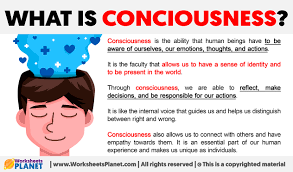
Among the countless psychological needs that shape human experience, the search for meaning may be one of the most powerful and least understood. Human beings do not merely seek pleasure, safety, food, status, or social connection. They also seek explanation. People want to know why events happen, why suffering exists, why relationships end, why death occurs, why they themselves exist, and whether their experiences possess significance beyond immediate circumstances. When meaning collapses, emotional stability often deteriorates even when material survival remains secure. This suggests that meaning is not a luxury added onto consciousness but a fundamental psychological function. The question is why. Why does consciousness need meaning at all? To answer this, it is necessary first to understand that human beings possess a unique cognitive capacity rarely seen elsewhere in nature: the ability to perceive themselves across time. The human mind remembers the past, imagines the future, evaluates the present, and continuously compares these temporal perspectives. This ability provides extraordinary advantages. It allows planning, learning, cooperation, and complex culture. Yet it also creates psychological burdens. Unlike most animals, humans recognize mortality. They understand that relationships end, bodies age, opportunities disappear, and life itself possesses limits. Consciousness therefore confronts uncertainty, loss, and impermanence constantly. Meaning functions partly as a response to this awareness. Without meaning, experiences become isolated events lacking narrative connection. Suffering feels random. Success feels temporary. Relationships appear fragile. Mortality becomes psychologically overwhelming. Meaning organizes experience into a coherent structure. From a psychological perspective, coherence is essential because the brain evolved to identify patterns. Randomness creates uncertainty, and uncertainty activates threat systems. Consequently, the mind continuously searches for explanations capable of transforming confusion into understanding. Importantly, meaning does not require objective truth to provide psychological stability. A belief system may reduce distress because it organizes experience coherently, even if certain aspects of that system cannot be empirically verified. This explains why meaning-making appears universally across cultures. Religions, philosophies, myths, political ideologies, scientific frameworks, and personal narratives all attempt answering fundamental questions regarding existence. Although their conclusions differ dramatically, they serve similar psychological functions: they reduce ambiguity and organize experience. The search for meaning becomes especially intense during suffering. When painful events occur, individuals rarely ask only “What happened?” They ask “Why did this happen?” This distinction is crucial. The factual description of an event often fails to satisfy consciousness emotionally. People seek significance because emotional systems require contextual integration. Pain without meaning becomes psychologically difficult to tolerate. Consider grief. The death of a loved one creates more than emotional loss. It often disrupts the narrative structure through which individuals understood themselves and their future. The bereaved person must reconstruct meaning because the previous psychological world no longer exists. This reconstruction process explains why grief frequently involves existential reflection. Individuals question identity, purpose, mortality, and relationship significance because meaning structures have been destabilized. Trauma reveals similar dynamics. Traumatic experiences often shatter assumptions regarding safety, fairness, predictability, and control. Recovery therefore involves more than symptom reduction. It frequently requires rebuilding meaning systems capable of integrating overwhelming experiences. People commonly ask: Why did this happen to me? What does this experience mean? Who am I now? These questions emerge because consciousness seeks narrative coherence even under devastating circumstances. Memory plays an important role here. Human beings do not remember experiences simply as isolated data. Memories become embedded within broader stories regarding identity and life trajectory. Meaning determines which memories receive emphasis, how they are interpreted, and how they influence future behavior. Two individuals may experience similar events yet construct entirely different meanings. One person interprets hardship as evidence of personal failure. Another interprets the same hardship as evidence of resilience and growth. The emotional consequences differ dramatically because meaning alters psychological reality. Importantly, meaning is not merely intellectual. Many people assume meaning exists primarily in philosophical reflection or religious belief. In reality, meaning operates continuously at emotional and perceptual levels. Relationships provide meaning. Work provides meaning. Creativity provides meaning. Parenthood provides meaning. Community provides meaning. Even small daily routines often contribute meaning by creating continuity and structure. When these sources disappear suddenly, individuals frequently experience profound disorientation because meaning systems have been disrupted. Loneliness demonstrates this clearly. Human beings evolved within social groups where identity and purpose emerged relationally. Isolation therefore threatens not only emotional comfort but existential orientation itself. Lonely individuals often report feelings of emptiness extending beyond sadness. They struggle with questions regarding significance, belonging, and purpose because social connection contributes heavily to meaning construction. Neuroscience provides additional insight. The brain continuously attempts integrating information into coherent models. Predictive systems organize perception, memory, emotion, and expectation into narratives that guide behavior. Meaning may therefore represent a large-scale expression of predictive organization. Without meaning, experiences remain fragmented. With meaning, experiences become integrated. This integration reduces cognitive load because the brain no longer processes every event independently. Instead, events become components within larger explanatory structures. The desire for meaning is therefore partly a desire for psychological efficiency. Uncertainty complicates this process significantly. As discussed previously, the brain dislikes ambiguity because uncertainty undermines prediction. Meaning reduces uncertainty by providing explanatory frameworks. However, this creates an important vulnerability. People sometimes accept inaccurate explanations because explanation itself feels emotionally preferable to uncertainty. Conspiracy theories, extreme ideologies, and rigid belief systems often become attractive during periods of social instability because they provide certainty and narrative structure. Psychologically, a coherent explanation may feel safer than admitting complexity and ambiguity. This tendency reveals that meaning can both stabilize and distort perception. The same cognitive mechanisms supporting resilience and purpose may also reinforce dogmatism when flexibility disappears. Existential psychology explores these issues deeply. According to existential thinkers, humans confront four fundamental realities: mortality, freedom, isolation, and uncertainty. Meaning emerges partly as a response to these realities. Mortality creates urgency. Freedom creates responsibility. Isolation creates longing for connection. Uncertainty creates desire for understanding. Meaning helps organize these tensions into psychologically survivable forms. Importantly, meaning is not always discovered. Often it is created. This distinction matters because many individuals search
Why Does The Brain Fear Uncertainty?
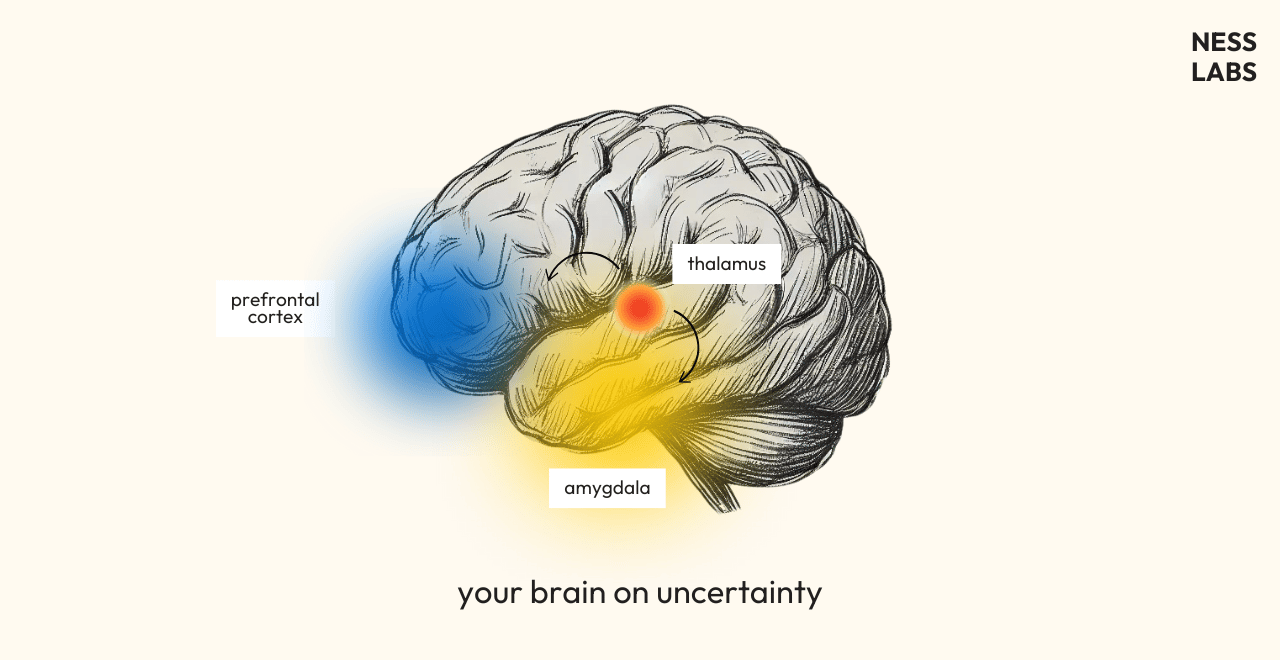
Among all psychological experiences capable of destabilizing human consciousness, uncertainty occupies a uniquely powerful position. People often tolerate pain, grief, hardship, or even danger more effectively than ambiguity regarding what may happen next. Uncertainty amplifies anxiety, intensifies obsessive thinking, distorts perception, and alters emotional regulation in ways that frequently exceed the distress caused by confirmed negative outcomes themselves. Individuals awaiting medical results, relationship decisions, financial collapse, social rejection, or existential answers commonly report that the unknown becomes psychologically unbearable long before reality arrives. This raises a profound neuropsychological question: why does the brain fear uncertainty so intensely, and why does ambiguity itself become emotionally threatening even in the absence of immediate danger? To understand this phenomenon, it is first necessary to recognize that the human nervous system evolved fundamentally as a predictive organ. The brain’s primary task is not merely reacting to the present moment but anticipating future conditions in order to guide survival behavior efficiently. Prediction allows organisms to conserve energy, avoid danger, maintain social stability, and prepare adaptive responses before threats fully emerge. Certainty therefore provides neurological efficiency. When the environment becomes predictable, the nervous system reduces metabolic and emotional expenditure because future outcomes can be anticipated with relative confidence. Routine, familiarity, and stable expectation allow attentional systems to relax partially, freeing cognitive resources for exploration, social interaction, and long-term planning. Uncertainty disrupts this predictive stability completely. Under ambiguous conditions, the brain loses confidence regarding what actions will preserve safety or emotional equilibrium. Predictive systems become hyperactive because multiple possible outcomes must be monitored simultaneously. The nervous system therefore enters a state of heightened vigilance designed to detect relevant information rapidly. Importantly, this vigilance is emotionally costly. The uncertain brain continuously scans for clues, patterns, and signs capable of reducing ambiguity. Thoughts loop repeatedly around unresolved possibilities because prediction systems cannot achieve closure. The result is rumination, compulsive checking, catastrophic imagination, and emotional exhaustion. From an evolutionary perspective, this response makes sense. In ancestral environments, uncertainty often signaled hidden danger. Unclear sounds in darkness, unpredictable weather, unfamiliar strangers, or ambiguous social dynamics carried genuine survival consequences. Organisms that remained highly sensitive to uncertainty therefore possessed adaptive advantages because ambiguity itself frequently preceded threat. Consequently, the nervous system evolved to treat uncertainty not as neutral absence of information but as a potential indicator of danger. This explains why the brain often prefers negative certainty over unresolved ambiguity. A confirmed threat allows organized response. Uncertainty, by contrast, prevents resolution because the nervous system cannot determine whether defensive action is necessary or what form it should take. The emotional tension produced by this unresolved state becomes psychologically aversive. Anxiety emerges directly from this predictive instability. Unlike fear, which typically responds to identifiable threat, anxiety concerns uncertain future possibilities. The anxious mind attempts compensating for ambiguity through hyperanalysis, overpreparation, avoidance, reassurance-seeking, or catastrophic simulation. These behaviors represent attempts to restore predictive control. Catastrophic thinking is particularly important here. Many individuals assume anxiety exaggerates negativity irrationally, yet catastrophizing often functions psychologically as defensive prediction. The mind imagines worst-case scenarios because preparing emotionally for disaster feels safer than remaining uncertain. Paradoxically, certainty about catastrophe may feel temporarily more tolerable than unresolved ambiguity because at least the future becomes conceptually organized. Obsessive-compulsive behaviors reveal these mechanisms dramatically. Compulsions such as checking, counting, reassurance-seeking, or ritual repetition often emerge from inability to tolerate uncertainty rather than from the feared outcome itself. The compulsive act temporarily reduces ambiguity, creating brief relief before uncertainty inevitably returns. The cycle persists because the brain learns associating ritualized behavior with predictive stabilization. Social uncertainty affects humans especially strongly because survival historically depended upon group belonging. Ambiguous social signals—unclear facial expressions, delayed responses, inconsistent affection, uncertain status—activate threat-processing systems intensely. Individuals experiencing attachment insecurity frequently become hypervigilant toward relational ambiguity. A short message lacking emotional clarity may trigger disproportionate distress because uncertainty regarding connection activates deep predictive fear surrounding abandonment or rejection. Importantly, the emotional intensity often reflects not objective danger but the nervous system’s inability to resolve ambiguous relational signals confidently. Trauma intensifies intolerance of uncertainty profoundly. Traumatic experiences teach the nervous system that unexpected events may produce overwhelming helplessness or danger. After trauma, predictive systems become organized around preventing surprise itself. Hypervigilance therefore emerges partly as an attempt to eliminate uncertainty through continuous monitoring. Traumatized individuals often struggle intensely with unpredictability because uncertainty reactivates emotional memories associated with loss of control. Even minor ambiguity may trigger exaggerated autonomic arousal because the nervous system interprets unpredictability as inherently unsafe. Children illustrate the developmental roots of these processes clearly. Young children rely heavily upon routine and predictable caregiving because stable patterns support emotional regulation and attachment security. Unpredictable environments increase anxiety because the developing nervous system lacks sufficient cognitive flexibility to tolerate ambiguity comfortably. Over time, healthy development strengthens uncertainty tolerance gradually through repeated experiences demonstrating that unpredictability does not always result in catastrophe. However, chronic instability during development may produce persistent hypersensitivity to uncertainty throughout adulthood. Neurobiologically, uncertainty strongly activates emotional and attentional systems involved in threat anticipation. The brain responds not only to actual danger but to prediction error—the mismatch between expected and uncertain outcomes. Under ambiguous conditions, predictive models lose reliability, increasing cognitive and emotional effort dramatically. Stress hormones rise because the nervous system prepares for multiple possible scenarios simultaneously. This state is metabolically expensive and psychologically exhausting. Importantly, uncertainty amplifies imagination. When concrete information is absent, the mind fills gaps using memory, fear, expectation, and symbolic association. The brain continuously generates possible futures in attempts reducing unpredictability. Yet because emotionally salient possibilities receive attentional priority, negative scenarios often dominate awareness disproportionately. This explains why uncertain situations frequently feel worse psychologically than confirmed outcomes. Imagination produces endless hypothetical threats unconstrained by objective limitation. Silence intensifies uncertainty similarly. In quiet or ambiguous environments, predictive systems search aggressively for hidden meaning because reduced sensory information weakens environmental certainty. Minor sounds acquire exaggerated significance while the absence of explanation itself becomes emotionally threatening. This mechanism contributes to experiences of paranoia, haunting