Sleep is one of the most universal biological behaviors observed across the animal kingdom. Nearly every known species—from insects to mammals—engages in some form of rest that resembles sleep. Despite this universality, sleep remains one of the most intriguing mysteries in biology. For centuries, people assumed that sleep simply allowed the body to rest after physical activity. However, modern science has revealed that sleep performs far more complex functions. During sleep, the body regulates hormones, repairs tissues, strengthens the immune system, consolidates memory, and restores energy balance. Without sleep, these processes begin to fail, affecting both physical health and cognitive functioning. Understanding why the human body requires sleep therefore requires examining the biological systems that operate during this seemingly passive state.
Sleep is controlled primarily by two major regulatory systems within the body: the circadian rhythm and sleep pressure. The circadian rhythm functions as an internal biological clock that follows an approximately twenty-four-hour cycle. This clock regulates numerous physiological processes, including body temperature, hormone release, metabolism, and the timing of sleep and wakefulness. The central regulator of the circadian rhythm is a small cluster of neurons in the hypothalamus known as the suprachiasmatic nucleus. This structure receives information about light exposure through the eyes and adjusts bodily rhythms accordingly.
Light plays a critical role in synchronizing the circadian clock. When light enters the retina, signals are transmitted to the suprachiasmatic nucleus, which then influences the release of hormones such as melatonin. Melatonin is produced by the pineal gland and acts as a biological signal that promotes sleep. As evening approaches and environmental light decreases, melatonin levels gradually rise, signaling to the body that it is time to prepare for rest. In the morning, exposure to light suppresses melatonin production and encourages wakefulness.
The second mechanism regulating sleep is sleep pressure. Throughout the day, the body accumulates chemical signals that increase the urge to sleep. One of the most important substances involved in this process is adenosine, a molecule that builds up in the brain as energy is consumed during waking hours. As adenosine levels rise, the feeling of fatigue becomes stronger. Sleep allows the body to reduce adenosine levels, restoring alertness for the following day.
Caffeine affects this system by blocking adenosine receptors in the brain. When caffeine occupies these receptors, the brain cannot detect the buildup of adenosine, temporarily reducing the sensation of fatigue. However, this effect does not eliminate sleep pressure; it merely masks it. Once the caffeine wears off, the accumulated adenosine continues to signal the need for sleep.
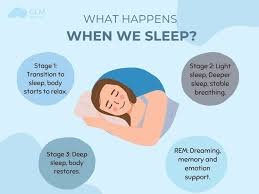
Sleep itself occurs in several stages that repeat in cycles throughout the night. These stages are broadly divided into two categories: non-rapid eye movement sleep and rapid eye movement sleep. Non-rapid eye movement sleep includes three progressively deeper stages. In the early stage, the body begins transitioning from wakefulness to sleep. Muscle activity decreases, breathing becomes slower, and brain waves begin to change. In the deeper stages, brain activity slows significantly, and the body enters a state of profound rest.
The deepest stage of sleep is particularly important for physical restoration. During this phase, the body releases growth hormone, which stimulates tissue repair, muscle development, and cellular regeneration. The immune system also becomes more active during deep sleep, producing proteins known as cytokines that help the body fight infection and inflammation.
Rapid eye movement sleep represents a different physiological state. During this phase, brain activity becomes more similar to wakefulness, and vivid dreaming often occurs. Rapid eye movement sleep plays a critical role in emotional regulation and memory consolidation. Studies suggest that the brain uses this stage to process experiences from the day, integrating them into long-term memory networks.
Memory formation relies on cooperation between different brain regions, particularly the hippocampus and the cerebral cortex. During waking hours, the hippocampus temporarily stores new information. While a person sleeps, especially during deep sleep stages, neural activity patterns replay these experiences, gradually transferring them to more permanent storage in the cortex. This process strengthens memories and allows individuals to retain learned information.
Sleep deprivation disrupts these processes in several significant ways. When individuals do not obtain sufficient sleep, memory consolidation becomes less efficient. People may struggle to learn new information, recall recent events, or maintain concentration. Cognitive tasks requiring attention and problem-solving become more difficult as sleep loss accumulates.
The immune system is also strongly influenced by sleep. Research has shown that individuals who consistently sleep less than six hours per night are more susceptible to infections. During sleep, immune cells increase their activity and produce substances that help combat viruses and bacteria. Lack of sleep reduces this activity, weakening the body’s natural defenses.
Hormonal regulation is another function closely linked to sleep. Several hormones involved in appetite, metabolism, and stress depend on regular sleep patterns. For example, sleep influences the balance between two hormones that regulate hunger: leptin and ghrelin. Leptin signals feelings of fullness, while ghrelin stimulates appetite. Sleep deprivation reduces leptin levels and increases ghrelin levels, which can lead to increased hunger and overeating.
This hormonal imbalance may help explain the relationship between sleep deprivation and weight gain. Individuals who regularly sleep too little often experience stronger cravings for high-calorie foods. At the same time, fatigue reduces motivation for physical activity, further contributing to metabolic imbalance.
Sleep also plays a crucial role in maintaining cardiovascular health. Blood pressure normally decreases during sleep, allowing the heart and blood vessels to recover from daily activity. Chronic sleep deprivation can disrupt this process, leading to persistently elevated blood pressure and increased risk of heart disease.
Another remarkable function of sleep involves the removal of metabolic waste from the brain. Recent research has identified a system known as the glymphatic system, which becomes particularly active during sleep. This system circulates cerebrospinal fluid through brain tissue, flushing away harmful waste products that accumulate during waking hours. One of these substances is beta-amyloid, a protein associated with neurodegenerative diseases when it builds up excessively.
During sleep, brain cells slightly shrink in size, creating more space for fluid to circulate between them. This increased circulation enhances the brain’s ability to clear toxins. Without adequate sleep, waste products accumulate more rapidly, potentially contributing to long-term neurological problems.
Emotional stability is also strongly influenced by sleep. The brain regions responsible for processing emotions communicate differently depending on whether a person is well-rested. Sleep deprivation increases reactivity in emotional centers while weakening regulatory control from higher cognitive systems. As a result, individuals who lack sleep may experience stronger emotional responses and reduced ability to manage stress.
These emotional effects can influence social interactions and mental health. Chronic sleep deprivation has been linked to increased risk of anxiety disorders, depression, and mood instability. Adequate sleep helps maintain the balance of neurotransmitters involved in emotional regulation, contributing to psychological resilience.
The quality of sleep is influenced by many environmental and behavioral factors. Exposure to artificial light during the evening can interfere with melatonin production, delaying the onset of sleep. Electronic devices such as smartphones and computers emit blue light, which strongly affects the circadian rhythm. Limiting exposure to bright screens before bedtime may therefore help support natural sleep patterns.
Physical activity also influences sleep quality. Regular exercise promotes deeper sleep by increasing the body’s need for recovery. However, intense physical activity immediately before bedtime may stimulate the body and delay sleep onset. Balanced daily activity combined with consistent sleep schedules tends to produce the most restorative rest.
Nutrition can also affect sleep patterns. Large meals close to bedtime may cause discomfort and interfere with sleep, while certain substances such as caffeine and nicotine stimulate the nervous system and delay fatigue signals. Maintaining a stable routine that includes balanced meals and limited stimulant consumption can support healthy sleep cycles.
Psychological factors are equally important. Stress and anxiety often disrupt sleep by activating the body’s stress response system. Elevated levels of stress hormones can keep the body in a state of alertness that interferes with the transition into deep sleep. Relaxation techniques, meditation, and consistent bedtime routines may help reduce this activation and promote better sleep quality.
Sleep patterns change throughout the human lifespan. Infants require the greatest amount of sleep, often more than fourteen hours per day, as their bodies and nervous systems undergo rapid development. During adolescence, circadian rhythms shift slightly, leading many teenagers to feel more alert later at night. In adulthood, sleep duration typically stabilizes at around seven to nine hours per night.
Older adults often experience changes in sleep structure, including lighter sleep and more frequent awakenings. These changes do not necessarily indicate a reduced need for sleep but rather reflect alterations in circadian regulation and hormonal balance. Maintaining regular sleep habits becomes increasingly important as these changes occur.
Despite the complexity of modern lifestyles, the biological need for sleep remains constant. The body relies on sleep not merely for rest but for a wide range of physiological processes that support health, cognition, and emotional stability. Sleep integrates multiple systems—immune, endocrine, cardiovascular, and neurological—into a coordinated cycle of restoration and preparation.
Ultimately, sleep can be understood as an active biological process rather than a passive state. During sleep, the body engages in essential maintenance that cannot occur efficiently during wakefulness. Cells repair damage, memories stabilize, hormones rebalance, and metabolic waste is cleared away. These processes allow the body to function effectively during the following day.
The importance of sleep highlights a fundamental principle of human biology: periods of activity must be balanced with periods of recovery. Just as muscles require rest after exertion, the body as a whole requires sleep to maintain internal balance. Recognizing this need and protecting time for adequate sleep remains one of the most effective ways to support long-term health and wellbeing.