Human consciousness relies deeply on meaning. Every day, individuals interpret events, categorize experiences, and connect actions with purposes. Even the simplest activities are framed within networks of significance: a conversation represents communication, work represents responsibility, and relationships represent belonging. Through these frameworks, life becomes understandable and coherent. Yet there are moments when this structure begins to weaken. Situations arise in which events seem strangely hollow, explanations feel insufficient, and familiar interpretations lose their persuasive power. When this happens, a difficult psychological question emerges: why does meaning sometimes collapse?
To understand this phenomenon, it is necessary to examine the role meaning plays in human cognition. Meaning is not merely an abstract philosophical concept; it is a functional system that organizes perception and action. The human brain constantly searches for patterns that connect experiences together. These patterns help individuals predict outcomes, coordinate behavior, and navigate complex environments.
Without such patterns, the world would appear chaotic and overwhelming. Every stimulus would seem isolated, and every decision would require entirely new reasoning. Meaning therefore acts as a cognitive structure that simplifies complexity by linking events through relationships of cause, purpose, and significance.
For much of daily life, these structures operate smoothly and almost invisibly. People rarely pause to question why certain actions feel meaningful or why particular goals appear valuable. The sense of meaning simply accompanies experience as an implicit background assumption.
However, meaning is not a permanent feature of reality itself. Instead, it is produced through interpretation. Individuals assign significance to events based on personal history, cultural context, emotional states, and social expectations. Because meaning arises from interpretation, it can also change or dissolve when those interpretations shift.
One of the most common triggers for a collapse of meaning is contradiction. When new experiences conflict strongly with previously held assumptions, the frameworks that once organized understanding may become unstable. For example, a belief about fairness, trust, or personal ability may suddenly appear inadequate when confronted with unexpected outcomes.
When contradictions accumulate, the mind struggles to integrate them into existing structures. If the contradictions cannot be resolved through reinterpretation, the entire framework may weaken. Events that once seemed clearly meaningful begin to appear ambiguous or arbitrary.
Emotion plays a powerful role in this process. Emotional investment often reinforces particular interpretations of reality. When individuals feel strongly attached to certain goals, relationships, or identities, these elements become central sources of meaning.
If those sources are disrupted—through loss, failure, or disappointment—the emotional foundation supporting meaning may also collapse. Activities that once felt purposeful may suddenly appear empty because the emotional context that sustained them has changed.
Another factor contributing to the collapse of meaning is overfamiliarity. Human cognition is highly sensitive to novelty. New experiences capture attention and generate curiosity, encouraging individuals to explore their significance. Over time, however, repeated experiences become predictable.
When events become too predictable, the sense of discovery that originally made them meaningful may diminish. Routine activities can gradually feel mechanical rather than purposeful. Although the external structure of life remains intact, the internal experience of significance weakens.
This phenomenon often appears in environments where individuals perform the same tasks repeatedly without opportunities for variation or growth. The absence of novelty does not necessarily eliminate meaning completely, but it may reduce the intensity with which meaning is experienced.
Cultural influences also shape the stability of meaning. Societies provide shared narratives that help individuals interpret their experiences. These narratives may involve ideas about success, responsibility, morality, or progress. By participating in these narratives, individuals connect their personal actions to larger social purposes.
However, cultural narratives are not static. They evolve across generations and may lose credibility when historical conditions change. When widely accepted explanations for social or personal events begin to weaken, individuals may find it more difficult to locate their experiences within a stable framework of meaning.
The collapse of shared narratives can produce a sense of uncertainty that extends beyond individual psychology. People may question whether the goals they pursue truly reflect meaningful values or whether those goals were inherited from assumptions that no longer apply.
Personal identity is closely linked to these frameworks of meaning. Individuals often define themselves through roles, achievements, and relationships that appear significant within their cultural context. A profession, a creative pursuit, or a commitment to family may serve as central components of identity.
When these components are disrupted, the sense of self may also become unstable. If a person loses a role that once defined their purpose, they may struggle to reconstruct a coherent narrative about who they are and what their actions represent.
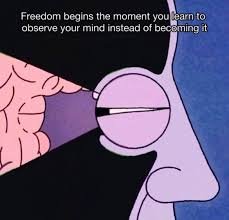
The collapse of meaning does not always arise from external events. Sometimes it emerges through reflection. As individuals examine their beliefs more critically, they may begin to notice inconsistencies or assumptions that previously went unquestioned.
Philosophical inquiry often encourages this type of reflection. By asking fundamental questions about purpose, morality, and existence, philosophical thinking can reveal how many everyday assumptions depend on unexamined premises.
For some individuals, this realization leads to intellectual curiosity and deeper exploration. For others, it may produce discomfort or disorientation. When familiar explanations are removed, the absence of clear alternatives can create a sense of emptiness.
Psychological research suggests that humans have a strong desire for cognitive coherence. People generally prefer interpretations of reality that feel consistent and stable. When coherence breaks down, the resulting ambiguity can be emotionally difficult to tolerate.
As a result, individuals often attempt to restore meaning by constructing new narratives or revising old ones. These efforts may involve reinterpreting past experiences, redefining personal goals, or adopting different philosophical perspectives.
However, the reconstruction of meaning rarely occurs immediately. There is often a transitional period during which previous frameworks have dissolved but new ones have not yet formed. During this interval, experiences may appear strangely neutral or detached from significance.
This transitional state can feel unsettling because it removes the sense of direction that meaning typically provides. Actions that once seemed purposeful may appear arbitrary, and future goals may feel uncertain.
Despite these challenges, the collapse of meaning can also create opportunities for transformation. When existing interpretations lose their authority, individuals gain the freedom to reconsider the assumptions that shaped their previous choices.
This process allows for the possibility of constructing meanings that reflect deeper personal values rather than inherited expectations. By examining which experiences genuinely evoke curiosity, compassion, or engagement, individuals may develop more authentic sources of purpose.
Creativity often emerges during such periods of reevaluation. Artists, writers, and thinkers frequently describe moments when previously accepted interpretations no longer seemed adequate. In response, they developed new forms of expression that attempted to capture more complex aspects of human experience.
These creative efforts illustrate that meaning is not a fixed structure but an evolving process. Rather than existing independently of human interpretation, meaning develops through continuous interaction between individuals and their environments.
Psychological resilience involves learning to navigate this process without becoming overwhelmed by uncertainty. Instead of expecting meaning to remain constant, individuals may gradually accept that interpretation itself is dynamic.
This acceptance does not eliminate the human desire for significance, but it allows that desire to adapt. Meaning becomes something that is discovered, revised, and rediscovered rather than permanently secured.
From this perspective, the collapse of meaning is not necessarily a final state. It is often a transitional moment within a larger cycle of interpretation. Old frameworks dissolve, space opens for reflection, and new frameworks eventually emerge.
These new frameworks may be more flexible than the ones they replace. Instead of relying on rigid assumptions, they may incorporate awareness of complexity and uncertainty. Meaning becomes less dependent on absolute explanations and more connected to ongoing engagement with experience.
The question Why does meaning sometimes collapse? therefore reveals something fundamental about human consciousness. Meaning is powerful precisely because it is constructed through interpretation. Yet this same constructed nature makes it vulnerable to change.
When interpretations fail to account for new experiences or deeper reflection, the structures built upon them begin to weaken. The resulting collapse can be disorienting, but it also exposes the processes through which significance is created.
Understanding this dynamic may allow individuals to approach meaning with greater openness. Instead of seeking a single permanent answer, they may view meaning as an evolving relationship between perception, emotion, culture, and personal exploration.
Through this perspective, the disappearance of meaning is not simply a loss. It can also be the beginning of a different form of inquiry—one that invites deeper engagement with the questions that shape human existence.