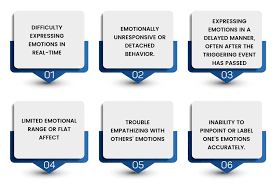
Affective Latency Integration Disorder is a psychological condition in which emotional responses remain appropriate and intelligible, yet consistently arrive after cognitive appraisal rather than alongside it. Individuals with this condition understand situations accurately, interpret meaning correctly, and can verbally identify what they should be feeling, but the emotional experience itself emerges with a noticeable internal delay. The result is not emotional absence, but emotional desynchronization.
Those affected do not lack empathy, emotional intelligence, or moral sensitivity. They recognize joy, threat, loss, and significance in real time, often with high analytical clarity. However, the felt emotional response trails behind cognition, sometimes by seconds, sometimes by minutes, and occasionally by much longer subjective intervals. By the time the emotion fully manifests, the moment that elicited it may already feel past, producing a sense that emotional life is perpetually out of phase with lived experience.
This latency alters the texture of everyday life. Conversations feel intellectually engaging but emotionally incomplete. Events are processed first as information, only later as experience. Individuals often report that they understand how something affects them before they actually feel affected. This sequence inversion creates a quiet sense of artificiality, as if emotions are added retrospectively rather than arising organically.
Unlike emotional blunting, affective intensity is preserved. When emotions do arrive, they can be vivid and proportionate. The disturbance lies in timing, not depth. Happiness, sadness, fear, and tenderness are all accessible, yet they fail to co-occur with the moments that call for them. This temporal misalignment often leads individuals to appear calm or detached in situations where others react immediately, followed later by emotional reactions that feel belated and socially out of context.
The condition becomes especially apparent in interpersonal settings. Emotional reciprocity depends heavily on timing, and delayed affect can disrupt this rhythm. Individuals may respond thoughtfully but without visible feeling, leading others to perceive them as distant or unaffected. Internally, however, the emotional response may surface later in solitude, creating confusion and frustration. The person is left managing emotions without the relational context that originally gave them meaning.
Autobiographical memory remains intact, but emotional tagging of memories is inconsistent. Past events are recalled accurately, yet the emotional tone associated with them often feels reconstructed rather than remembered. Individuals may know that an event was painful or joyful without re-experiencing the corresponding feeling. This contributes to a narrative sense of life that feels emotionally thinned, even though present-moment affect is eventually accessible.
From a neurocognitive standpoint, Affective Latency Integration Disorder is hypothesized to involve disrupted coordination between cognitive appraisal systems and affective signaling pathways. In typical emotional processing, interpretation and feeling emerge in close temporal coupling. In this condition, appraisal proceeds normally, but affective activation is delayed, suggesting weakened or slowed integration rather than diminished capacity. Emotion is not suppressed; it is postponed.
Behaviorally, individuals often compensate by relying on cognitive empathy rather than affective immediacy. They learn to respond based on understanding rather than feeling, which can sustain functional relationships but at the cost of internal authenticity. Some develop habits of emotional rehearsal, revisiting events mentally to allow feelings to emerge later. While this can provide partial relief, it also reinforces the sense that emotional life occurs after the fact rather than in the flow of experience.
The disorder is frequently misinterpreted as emotional avoidance, intellectualization, or mild alexithymia. However, unlike alexithymia, individuals can identify and describe emotions with precision once they arise. Unlike avoidance, there is no resistance to feeling. The primary disturbance is temporal, not defensive. Because outward functioning remains high and emotional vocabulary is intact, the condition often remains clinically invisible.
There is no established pharmacological treatment, as mood and anxiety symptoms are not primary drivers. Therapeutic approaches that emphasize real-time sensory and bodily awareness appear more effective than reflective or interpretive methods. Practices that anchor attention in immediate physiological signals can help reduce the delay between appraisal and affect. Conversely, excessive cognitive processing tends to lengthen emotional latency.
Affective Latency Integration Disorder challenges the assumption that emotion naturally accompanies understanding. It reveals that feeling is not guaranteed by recognition alone, but depends on precise temporal coordination within the mind. When that coordination falters, life is understood clearly but felt belatedly, leaving the individual emotionally competent yet perpetually one step behind their own experience.