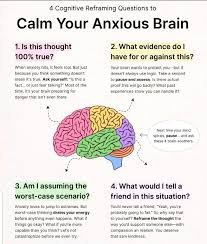
Human consciousness is often described as the most complex phenomenon known to science. It allows individuals to perceive reality, interpret experiences, construct identities, and imagine futures that have not yet occurred. Through consciousness, the mind reflects upon itself, examines its own thoughts, and evaluates its own motivations. This reflexive capacity—this ability of the mind to observe itself—has been considered one of the defining characteristics of human cognition. Yet within this extraordinary capacity lies a paradox: the same mechanism that enables self-awareness can also generate profound psychological tension. Under certain conditions, consciousness appears to oppose its own functioning, producing thoughts, emotions, and perceptions that feel alien or hostile to the individual experiencing them.
Psychopathology has long been interested in this phenomenon because it reveals the delicate balance required for stable psychological functioning. In ordinary circumstances, the processes that generate thoughts, regulate emotions, and guide behavior operate in relative harmony. Even when individuals experience stress or uncertainty, they generally retain the sense that their mental life belongs to them and that their cognitive processes remain fundamentally reliable. However, when this harmony becomes disrupted, the internal architecture of consciousness may begin to fragment. Thoughts emerge that conflict with intentions, emotions appear that contradict values, and the individual may feel as though parts of their own mind are acting independently.
To understand why consciousness sometimes appears to oppose itself, it is necessary to examine the layered structure of the human mind. Psychological research suggests that cognition operates on multiple levels simultaneously. Some mental processes occur deliberately and consciously, such as reasoning through a complex problem or making a moral decision. Other processes occur automatically, outside of conscious awareness. These automatic processes include emotional reactions, associative memory activation, and pattern recognition mechanisms that allow the brain to respond quickly to environmental stimuli.
Under normal conditions, these different levels of processing cooperate efficiently. Automatic processes generate rapid responses, while conscious reasoning evaluates and modifies those responses when necessary. However, when communication between these systems becomes disrupted, the individual may experience their own thoughts or emotions as foreign or intrusive.
One example of this disruption can be observed in the phenomenon of intrusive thoughts. Intrusive thoughts are spontaneous mental events that arise without deliberate intention and often involve content that contradicts the individual’s beliefs or desires. These thoughts can include disturbing images, irrational fears, or morally troubling scenarios. Importantly, intrusive thoughts are not inherently pathological; many people experience them occasionally without significant distress.
The psychological difficulty arises when individuals interpret these thoughts as meaningful indicators of hidden intentions or moral failure. Instead of recognizing intrusive thoughts as random cognitive activity, the individual may believe that the thoughts reveal something dangerous about their character. This interpretation transforms a neutral mental event into a source of anxiety and self-doubt.
At this point, consciousness begins to monitor itself more intensely. The individual becomes hyperaware of every thought that passes through the mind, searching for evidence that confirms or disproves their fears. This heightened self-monitoring can paradoxically increase the frequency of intrusive thoughts, as attention directed toward specific mental content tends to make that content more accessible within memory networks.
As this cycle continues, the individual may begin to experience a split within their mental life. One part of the mind generates thoughts spontaneously, while another part evaluates those thoughts with suspicion. The result is a state in which consciousness appears divided against itself: a generating system producing mental events and a monitoring system attempting to control or suppress them.
This internal division becomes particularly evident in certain anxiety-related conditions. Individuals experiencing obsessive patterns of thinking often report that their minds produce unwanted thoughts repeatedly, even when they attempt to dismiss or suppress them. The more effort they invest in controlling these thoughts, the more persistent the thoughts become. This dynamic illustrates an important principle of cognitive psychology: attempts to exert rigid control over mental processes can sometimes intensify the very phenomena they are intended to eliminate.
Another context in which consciousness may appear to oppose itself involves emotional regulation. Emotions are generated through complex neural systems that evaluate environmental stimuli and internal states. These systems evolved to promote survival by rapidly identifying threats and opportunities. However, emotional reactions do not always align with conscious goals or social expectations.
For instance, an individual may intellectually understand that a particular situation is safe, yet still experience intense fear or anxiety. In such moments, the emotional system appears to disregard rational judgment. The person may then attempt to suppress the emotion through deliberate effort, only to discover that the emotion persists despite their reasoning.
This experience can create the impression that different parts of the mind operate according to incompatible principles. Rational analysis suggests one course of action, while emotional impulses push in another direction. The resulting conflict may lead individuals to question whether they truly control their own psychological responses.
Traumatic experiences can further intensify this conflict. Trauma often disrupts the normal integration of memory, emotion, and perception. Events associated with overwhelming fear or helplessness may become stored in fragmented forms within the brain’s memory systems. Later, reminders of the trauma can trigger emotional responses that seem disconnected from the present situation.
Individuals may intellectually recognize that the current environment is safe, yet their bodies and emotions react as though danger were imminent. The mind attempts to reconcile these contradictory signals—rational knowledge on one side, visceral fear on the other. When integration fails, the person may feel as though their own emotional system has become an adversary.
Another factor contributing to internal conflict involves the phenomenon of self-consciousness. Human beings are capable of imagining how they appear to others, anticipating social judgment, and evaluating their behavior according to cultural standards. This capacity allows individuals to function effectively within complex social environments. However, excessive self-consciousness can produce constant internal evaluation.
When individuals become overly concerned with how their thoughts or actions might be judged, they may begin censoring their own mental activity. Thoughts are examined not simply for their truth or usefulness but for their potential social implications. This continuous evaluation can fragment the flow of consciousness, creating the sensation that one part of the mind is observing and criticizing another.
Philosophical traditions have long recognized the tension between different aspects of human consciousness. Some philosophers have described the self as a collection of competing drives and perspectives rather than a unified entity. Modern psychological research supports this view to some extent, suggesting that the brain consists of multiple interacting systems rather than a single controlling center.
From this perspective, the experience of consciousness opposing itself may not represent a malfunction but rather an exaggerated awareness of the mind’s inherent complexity. The brain constantly negotiates between competing priorities: immediate pleasure versus long-term goals, emotional impulses versus rational analysis, social expectations versus personal desires. Under normal circumstances, these negotiations remain largely invisible to conscious awareness.
However, when stress, trauma, or intense self-monitoring disrupts this balance, the negotiation becomes visible. The individual suddenly perceives the internal debate that usually occurs silently beneath the surface of thought. What once felt like a unified sense of self may now appear as a collection of competing voices.
Despite the distress this experience can produce, it also reveals an important aspect of human psychological resilience. The very capacity that allows consciousness to question itself also enables individuals to reflect, learn, and adapt. When people recognize the multiplicity of their mental processes, they gain the opportunity to develop new relationships with those processes.
Psychological interventions often focus on reducing the adversarial relationship between different aspects of the mind. Instead of attempting to eliminate unwanted thoughts or emotions entirely, therapy encourages individuals to observe these experiences with curiosity rather than fear. This approach acknowledges that mental events arise from complex biological and cognitive systems that cannot be fully controlled through force of will.
Mindfulness-based practices exemplify this perspective. By learning to observe thoughts and emotions without immediately reacting to them, individuals create psychological space between the observing self and the mental events being observed. Thoughts are recognized as temporary phenomena rather than authoritative commands requiring action.
Over time, this shift in perspective can restore a sense of internal harmony. Consciousness no longer feels compelled to fight against itself. Instead, different aspects of mental life are allowed to coexist within a broader field of awareness.
The question of why consciousness sometimes appears to turn against itself therefore invites a deeper understanding of the human mind. What initially seems like internal betrayal may actually reflect the extraordinary complexity of cognitive systems interacting under conditions of stress or uncertainty.
Rather than representing a failure of consciousness, these moments reveal the dynamic nature of mental life. The mind is not a single, unchanging entity but an evolving system composed of multiple processes working together—sometimes cooperatively, sometimes in tension. When individuals learn to recognize this complexity, they may discover that the apparent conflict within consciousness is not a battle to be won but a dialogue to be understood.
In this sense, the mind’s capacity to question itself becomes not a weakness but one of its most profound strengths. Through this capacity, human beings are able to examine their beliefs, reconsider their interpretations, and ultimately transform their understanding of themselves and the world they inhabit.