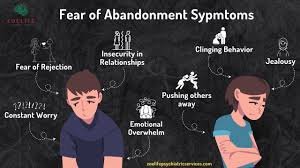
Fear of abandonment is one of the most powerful and complex emotional patterns observed in psychopathology. Many individuals experience occasional worry about losing important relationships, which is a normal part of human attachment. However, for some people this fear becomes overwhelming, persistent, and disproportionate to the situation. They may constantly worry that loved ones will leave them, reject them, or lose interest. Even small signs—such as delayed responses, minor disagreements, or temporary distance—can trigger intense anxiety. Understanding why some individuals develop such a deep fear of abandonment requires exploring the psychological systems that shape attachment, emotional regulation, and interpersonal perception.
Human beings are fundamentally social creatures. From the earliest stages of life, survival depends on the presence and care of others. Infants rely entirely on caregivers for food, safety, warmth, and emotional comfort. Because of this dependence, the human mind develops powerful mechanisms designed to maintain closeness with attachment figures. These mechanisms are not simply emotional preferences; they are deeply rooted survival systems that evolved to ensure protection during early development.
The foundation of these systems is described by attachment theory. According to this framework, early interactions between a child and caregiver shape the expectations the child forms about relationships. When caregivers respond consistently, provide comfort during distress, and show emotional availability, the child gradually develops what psychologists call secure attachment. In secure attachment, the child learns that relationships are reliable sources of safety and support.
However, not all early environments provide such stability. When caregivers are inconsistent, emotionally unavailable, neglectful, or unpredictable, children may develop insecure attachment patterns. In these circumstances, the child’s mind attempts to adapt to uncertainty. Some children become anxiously attached, constantly seeking reassurance and fearing that support may disappear. Others develop avoidant attachment, suppressing emotional needs to protect themselves from disappointment.
Fear of abandonment is most strongly associated with anxious attachment. Individuals with this pattern often experience relationships as unstable or fragile. Because early experiences taught them that support could vanish unexpectedly, their emotional systems remain highly sensitive to signs of rejection or distance. Even in adulthood, when relationships may actually be stable, the emotional memory of early uncertainty continues to influence perception.
Emotional memory plays a significant role in maintaining abandonment fears. The human brain stores emotional experiences not only as facts but also as patterns of expectation. If early relationships were characterized by unpredictability or emotional loss, the brain learns to anticipate similar outcomes in future relationships. This anticipation may occur automatically, without conscious awareness. As a result, individuals may interpret ambiguous social signals as evidence that abandonment is imminent.
For example, if a friend cancels a meeting or responds slowly to a message, a person with strong abandonment fears might immediately assume rejection. Their mind may generate thoughts such as “They are losing interest,” or “They will leave me soon.” These interpretations can occur rapidly, often before the individual has time to consider alternative explanations. The emotional reaction—anxiety, sadness, or anger—may therefore appear sudden and overwhelming.
Cognitive processes also contribute to this pattern. Humans naturally seek patterns and explanations for events in their lives. When someone fears abandonment, the mind may become biased toward noticing evidence that confirms this fear. Psychologists refer to this as confirmation bias. The individual pays close attention to behaviors that suggest rejection while overlooking signals of care or stability.
Over time, these cognitive biases reinforce the fear itself. Each ambiguous event becomes interpreted as proof that abandonment is approaching. This process strengthens the emotional belief that relationships are unreliable, even when objective evidence suggests otherwise.
Fear of abandonment is also closely connected to self-perception. Many individuals who struggle with this fear hold deeply rooted beliefs about their own worth. They may feel fundamentally unlovable, inadequate, or undeserving of stable relationships. These beliefs often develop during childhood, especially in environments where emotional needs were ignored, criticized, or dismissed.
When a person believes they are not worthy of lasting affection, the possibility of abandonment feels almost inevitable. Relationships may be experienced as temporary or fragile, as if rejection is only a matter of time. This expectation can create constant anxiety, even in healthy relationships.
Emotional regulation difficulties further intensify the fear of abandonment. Emotional regulation refers to the ability to manage feelings, tolerate distress, and return to emotional balance after upsetting events. Individuals who struggle with regulation may experience emotions with unusual intensity. When they perceive a potential threat to a relationship, their emotional reaction can escalate quickly.
This intense emotional response sometimes leads to behaviors that unintentionally push others away. For instance, someone who fears abandonment may repeatedly seek reassurance, demand constant contact, or react strongly to minor conflicts. While these behaviors arise from a desire for security, they can place strain on relationships, potentially creating the very distance the individual fears.
In some cases, individuals cope with abandonment fears by attempting to control relationships. They may try to predict others’ behavior, monitor signs of withdrawal, or become overly attentive to the moods and reactions of those around them. This hypervigilance can become exhausting, both for the individual experiencing it and for the people in their life.
Another pattern sometimes associated with abandonment fear is emotional dependency. When a person relies heavily on one relationship for emotional stability, the possibility of losing that connection becomes extremely threatening. The relationship may become the central source of identity, comfort, and validation. Any perceived risk to that bond can therefore feel overwhelming.
Traumatic experiences later in life may also intensify abandonment fears. Events such as divorce, sudden loss, betrayal, or prolonged separation can reinforce earlier emotional patterns. When such experiences occur, they may confirm existing fears that relationships inevitably end in rejection or loss.
Personality disorders, particularly borderline personality disorder, often involve severe fear of abandonment. Individuals with this condition may experience extreme emotional reactions to perceived rejection, even when the threat is minimal. Their relationships may shift rapidly between intense closeness and conflict, reflecting the instability created by overwhelming fears of being left alone.
However, fear of abandonment is not limited to any single diagnosis. Many individuals without clinical disorders experience milder versions of this pattern. The difference often lies in the intensity of the fear and its impact on daily life. When the fear becomes so strong that it interferes with relationships, emotional stability, or personal wellbeing, psychological support may be helpful.
Psychotherapy offers several approaches for addressing abandonment fears. One important goal is helping individuals recognize the connection between past experiences and present emotional reactions. By understanding how early attachment patterns shape expectations, individuals can begin to question whether their fears reflect current reality or past emotional memories.
Cognitive therapy focuses on identifying and challenging the beliefs that sustain abandonment anxiety. Individuals learn to examine their interpretations of social situations and consider alternative explanations. For example, instead of assuming rejection when someone becomes distant, they may explore other possibilities such as stress, distraction, or temporary circumstances.
Emotion-focused therapies help individuals develop stronger emotional regulation skills. Learning how to tolerate distress, calm intense emotional reactions, and respond thoughtfully rather than impulsively can reduce the impact of abandonment triggers. Over time, these skills allow individuals to experience relationships with greater stability.
Developing secure relationships also plays a crucial role in healing abandonment fears. Consistent and supportive interactions can gradually reshape emotional expectations. When individuals repeatedly experience reliability and acceptance, the brain begins to update its internal model of relationships. This process may take time, especially if earlier experiences were deeply painful, but change remains possible throughout life.
Self-compassion is another important element in overcoming abandonment fears. Many individuals who struggle with these fears carry harsh self-criticism or feelings of inadequacy. Learning to treat oneself with patience and understanding can reduce the belief that rejection is inevitable. When self-worth becomes more stable, the emotional threat of losing a relationship decreases.
It is also important to recognize that relationships naturally involve moments of distance, misunderstanding, or change. Healthy connections allow space for individuality and independence. Learning to tolerate these fluctuations without interpreting them as abandonment helps individuals maintain more balanced relationships.
From a broader psychological perspective, fear of abandonment reflects the deep importance of connection in human life. The mind evolved to treat separation from important relationships as a serious threat. In many ways, the intensity of abandonment fear reveals how strongly humans depend on social bonds for emotional survival.
Yet the same psychological systems that produce this fear also allow for growth and healing. Through supportive relationships, self-awareness, and psychological learning, individuals can gradually reshape their expectations and develop a more secure sense of connection.
Understanding abandonment fear therefore reveals both the vulnerability and resilience of the human mind. While early experiences may shape emotional patterns, they do not permanently determine the future. With time, reflection, and supportive environments, individuals can learn to experience relationships not as fragile sources of anxiety but as stable foundations for trust and belonging.