Change is one of the most paradoxical experiences in human life. People complain about routines that exhaust them, relationships that no longer fulfill them, careers that drain their energy, habits that harm their health. They speak about wanting something different, something better, something more aligned with who they are becoming. Yet when the opportunity for change finally appears, fear rises immediately. Doubt interrupts motivation. The familiar, even if uncomfortable, suddenly feels safer than the unknown.
This contradiction is not weakness. It is biology, psychology, and identity working together.
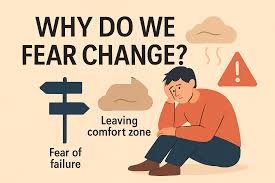
The human brain is designed to prioritize survival over happiness. Familiarity signals safety. Even if a situation is stressful, predictable stress is less threatening than unpredictable possibility. When routines repeat, the brain conserves energy. Neural pathways strengthen through repetition. Habits become automatic. The unknown, however, requires attention, adaptation, and risk assessment. From an evolutionary perspective, uncertainty could mean danger. So resistance appears.
Consider someone who dislikes their job. They wake up tired, feel underappreciated, and imagine a different career. Yet when a new opportunity arises, anxiety spikes. Questions flood in: What if I fail? What if I regret it? What if I am not capable? The old job may be unsatisfying, but it is understood. The expectations are clear. The discomfort is familiar. Leaving it requires stepping into ambiguity, and ambiguity activates threat responses in the nervous system.
Identity also plays a powerful role in resistance to change. Over time, people build narratives about who they are. These narratives include personality traits, roles, and capabilities. “I am not someone who takes risks.” “I have always been this way.” “People expect me to be stable.” When change challenges these stories, it destabilizes identity. Even positive transformation can feel like loss because it requires letting go of an older version of oneself.
Letting go is rarely comfortable. Growth often involves grieving past identities. When someone decides to become more assertive, they may lose approval from those who benefited from their passivity. When someone pursues a creative passion, they may distance themselves from peers who valued their conventional stability. Change can threaten belonging. Since humans are wired for connection, the possibility of social disruption intensifies fear.
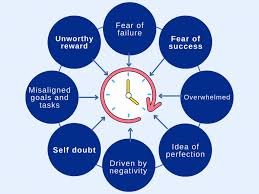
Another layer of resistance stems from perfectionism. Many individuals believe that change must be executed flawlessly. If they cannot guarantee success, they hesitate. This all-or-nothing thinking paralyzes action. Instead of viewing change as an experiment, they treat it as a final verdict on their worth. The pressure becomes overwhelming.
Past experiences reinforce caution. If previous attempts at change led to disappointment, criticism, or failure, the brain stores those memories as warnings. The next opportunity triggers recall of past pain. Even if circumstances are different, emotional memory remains powerful. The body remembers before the mind analyzes.
Interestingly, people often tolerate familiar discomfort longer than unfamiliar possibility. A predictable argument pattern in a relationship may feel exhausting, yet ending the relationship introduces uncertainty about loneliness. Staying feels painful but known. Leaving feels liberating but unpredictable. The mind weighs risks differently than the heart.
Cultural messaging complicates the picture. Society celebrates transformation stories—career shifts, dramatic reinventions, bold decisions. Yet the process behind those stories is rarely shown. The uncertainty, self-doubt, and gradual progress remain invisible. Observers see outcomes without witnessing the messy middle. This distorts expectations and increases fear of personal attempts at change.
Fear of change is also linked to control. When life follows established routines, individuals feel a sense of predictability. Change introduces variables beyond immediate control. Outcomes depend on external factors, other people’s responses, and unforeseen obstacles. Surrendering control, even partially, can feel destabilizing.
At a neurological level, the amygdala—responsible for detecting threats—activates during uncertainty. It does not distinguish between physical danger and social or emotional risk. A new opportunity may trigger the same physiological responses as a tangible threat: increased heart rate, muscle tension, rapid thoughts. The body prepares for defense even when the situation is potentially positive.
Yet alongside fear, there is often excitement. The same uncertainty that triggers anxiety can generate anticipation. The body’s stress response overlaps with arousal systems. The difference lies in interpretation. If someone labels their physical activation as danger, fear dominates. If they interpret it as growth, motivation increases. Reframing bodily sensations changes experience.
Small, incremental change reduces resistance. Radical shifts overwhelm the nervous system. Gradual exposure allows adaptation. Instead of quitting a job abruptly, someone might begin learning new skills part-time. Instead of transforming an entire lifestyle overnight, they might adjust one habit. Each successful step rewires beliefs about capability.
Support systems also influence willingness to change. Encouragement from trusted individuals increases perceived safety. Knowing that failure will not result in rejection lowers stakes. Conversely, environments that punish experimentation reinforce stagnation. Psychological safety is essential for transformation.
Self-compassion plays a crucial role. When individuals treat themselves harshly during setbacks, they associate change with shame. Compassion reframes setbacks as part of learning. It reduces the emotional cost of trying. Without self-compassion, fear becomes louder than curiosity.
Another hidden factor is comfort in complaining. Remaining in a familiar dissatisfaction provides a sense of moral clarity. “I would be happier if circumstances were different.” Change removes that external blame. It shifts responsibility inward. Success or failure becomes personal. For some, this accountability feels heavier than dissatisfaction.
There is also the illusion of timing. Many people delay change waiting for perfect conditions. They imagine a future moment when they will feel fully confident and prepared. That moment rarely arrives. Confidence often follows action, not the reverse. Waiting for fear to disappear before acting ensures stagnation.
Importantly, not all resistance is irrational. Sometimes hesitation signals misalignment. Not every opportunity is right. Discernment differs from avoidance. Reflection helps distinguish between intuitive caution and fear-based paralysis. Questions such as “Am I protecting myself or limiting myself?” clarify motives.
Transformation requires tolerating temporary instability. Like muscles adjusting to new exercise, psychological systems need recovery time. During transitions, emotions fluctuate. Doubt coexists with hope. Productivity may dip before rising. Understanding this pattern prevents misinterpretation of normal adjustment as failure.
Resilience grows through previous change. When individuals recall past transitions they successfully navigated, confidence increases. The mind gathers evidence: I have adapted before. I can adapt again. Remembering personal history of growth counteracts catastrophic thinking.
Curiosity softens fear. Instead of asking “What if it goes wrong?” one might ask “What might I learn?” This shift does not eliminate risk, but it transforms change from threat to exploration. Human beings are naturally curious; reconnecting with that instinct supports courage.
Ultimately, fearing change while desiring it reveals an internal tension between safety and expansion. Safety seeks stability. Expansion seeks possibility. Both are valid needs. The goal is not to eliminate fear but to move with it. Courage is not the absence of anxiety; it is action despite it.
Life inevitably changes regardless of individual resistance. Aging, relationships, technology, health, and circumstances evolve continuously. The only question is whether change will be intentional or reactive. Choosing growth, even slowly, allows participation in shaping one’s direction.
The discomfort at the edge of change is often a signal of potential development. Beyond the initial fear lies adaptation. Beyond adaptation lies integration. And beyond integration lies a new version of self that once felt impossible.
People fear change not because they lack desire, but because transformation requires releasing certainty. Yet within that release exists freedom. And freedom, though intimidating, is the doorway to becoming.