Observational Self Detachment Disorder is a psychological condition in which individuals experience themselves primarily as observers of their own actions rather than as active participants. Behavior remains purposeful and controlled, yet the felt sense of “I am doing this” is replaced by “this is happening.” The self is present, but positioned at a distance from lived experience.
Those affected do not feel controlled by external forces, nor do they doubt the reality of their actions. They recognize that they are the ones moving, speaking, and deciding. However, the experiential quality of agency is weakened. Actions feel executed automatically, as if guided by an internal system that no longer feels fully integrated with conscious selfhood.
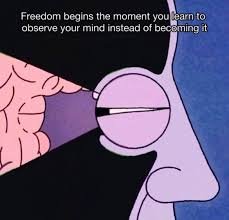
This detachment is most apparent in routine behaviors. Everyday tasks such as walking, speaking, or eating are performed accurately, yet feel strangely impersonal. Individuals often report a sense of watching themselves from just behind their own eyes. Unlike depersonalization, the self is not felt as unreal; rather, it is felt as psychologically displaced.
Emotion remains present but muted in immediacy. Feelings arise, yet seem to belong to the observed self rather than the experiencing one. This creates a layered sense of identity, in which the “doer” and the “watcher” feel subtly separated despite logical unity.
Neurocognitive theories suggest a disruption in the integration between motor intention systems and self-referential awareness. When this coupling weakens, actions remain intact, but the subjective experience of authorship is reduced.
The condition is often mistaken for anxiety-related dissociation or emotional numbing. However, insight, reality testing, and functional capacity remain preserved. The disturbance lies not in what is done, but in how it is felt to be done.
Observational Self Detachment Disorder reveals that participation is not guaranteed by action alone. The mind can perform seamlessly, while the self quietly steps back into the role of observer.