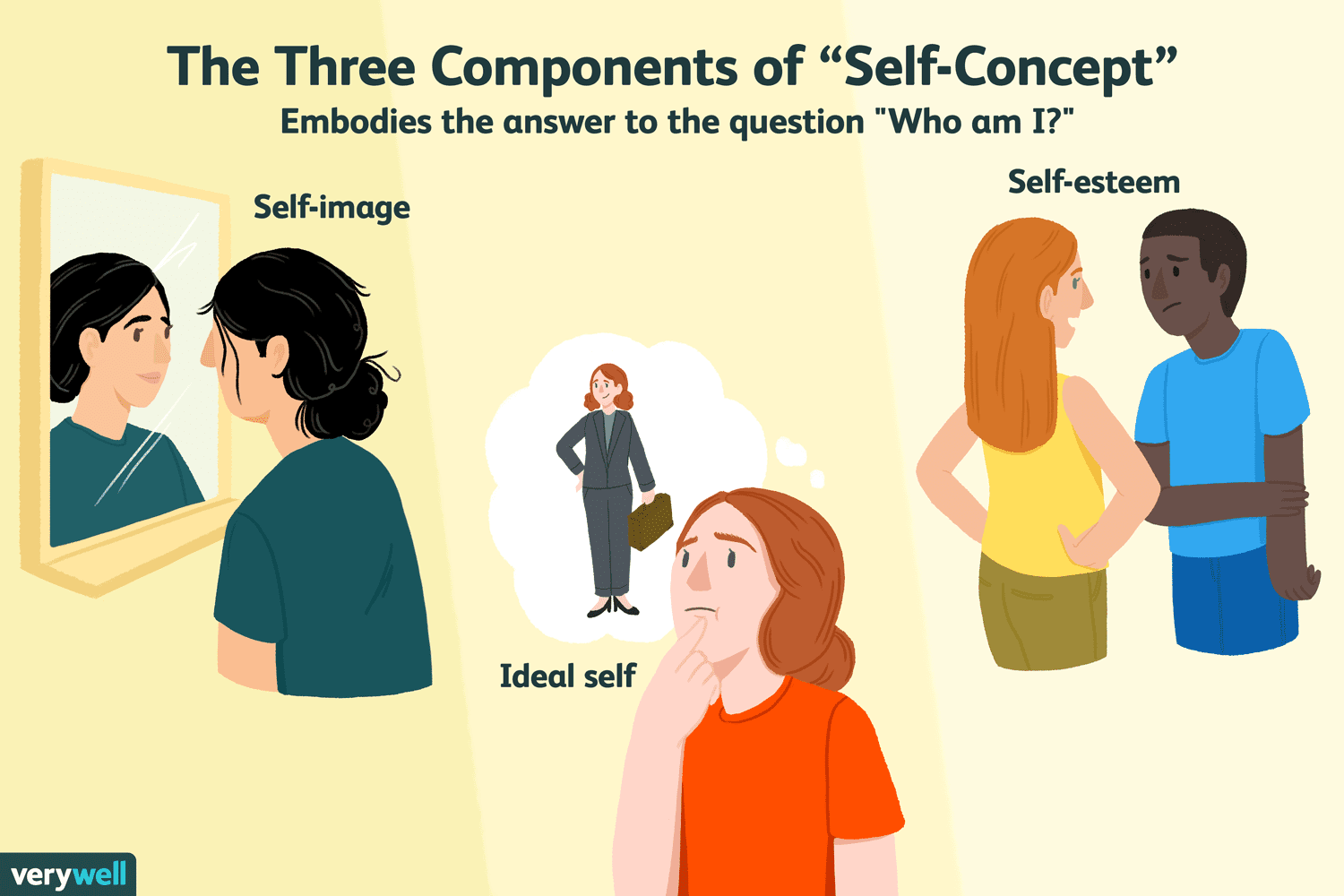
Few psychological questions are as deceptively simple as the question of where the self begins. In everyday life, the answer seems obvious. A person points to their body, their memories, their personality, or their thoughts and says: this is me. Yet once the question is examined more carefully, its simplicity dissolves. The boundary between the self and everything outside of it becomes increasingly difficult to define. The mind, the body, and the surrounding world appear less like separate entities and more like interdependent systems. The deeper the question is pursued, the more uncertain the starting point of the self becomes.
The experience of being a self feels immediate and unquestionable. Individuals do not typically wake each morning wondering whether they exist as distinct psychological agents. Instead, the sense of identity operates quietly in the background, organizing perception and behavior without demanding conscious attention. This continuity creates the impression that the self is a stable core, something that persists unchanged beneath the shifting details of life.
However, psychological investigation suggests that this impression may be misleading. The self is not a single structure located in one specific region of the mind or body. Rather, it appears to emerge from the interaction of multiple processes that operate across perception, memory, emotion, and social cognition. Each of these processes contributes to the experience of identity, yet none of them alone fully explains it.
One of the earliest components of the developing self is bodily awareness. Even before language or complex memory emerges, human infants begin to distinguish between sensations that originate from their own bodies and those that originate from the external world. Movements of the limbs, the rhythm of breathing, and the sensation of touch all contribute to an early sense of physical ownership.
This bodily awareness forms the foundation of what psychologists often describe as the minimal self. The minimal self is not a narrative identity or a conceptual understanding of who one is. Instead, it is the immediate feeling of being located somewhere, of occupying a body that interacts with the surrounding environment.
Yet even this seemingly basic form of identity is not entirely stable. Experiments in perception have shown that the brain can be surprisingly flexible in determining what belongs to the body. Under certain conditions, individuals can begin to experience external objects as if they were parts of their own bodies. These experiments reveal that the sense of bodily ownership is not fixed but constructed through the integration of sensory signals.
As cognitive development progresses, memory begins to expand the boundaries of identity beyond the immediate present. Experiences accumulate and become connected through patterns of recall. Over time, individuals begin to recognize themselves as continuous beings whose past actions and experiences belong to the same person who exists in the present.
This continuity gives rise to what might be called the autobiographical self. Through memory, people develop narratives about who they are, where they have been, and how they arrived at their current circumstances. These narratives provide a framework for interpreting new experiences and anticipating future possibilities.
However, autobiographical memory is not a perfect archive of past events. Psychological research has demonstrated that memory is reconstructive rather than purely reproductive. Each act of remembering involves interpretation, selection, and sometimes distortion. As a result, the story individuals tell about themselves may shift over time, even if the underlying events remain the same.
This reconstructive quality suggests that identity is not simply discovered within memory but actively shaped by it. The self that emerges through narrative is partly the result of ongoing interpretation. Individuals choose which experiences to emphasize, which meanings to assign to them, and how they connect them to one another.
Emotion further complicates the formation of identity. Emotional experiences influence how events are encoded in memory and how they are later interpreted. Moments associated with strong emotion—whether joy, fear, shame, or pride—tend to occupy a central place in personal narratives.
These emotionally charged experiences often become reference points for understanding the self. A single event may shape the way individuals perceive their abilities, their relationships, or their sense of worth. Yet because emotional interpretations can change over time, the significance of these events may also evolve.
Social interaction adds another dimension to the development of identity. Humans do not construct their sense of self in isolation. Instead, identity emerges through ongoing interaction with others. From early childhood onward, individuals receive feedback about their behavior, abilities, and personality traits.
This feedback gradually becomes internalized. Over time, people begin to anticipate how others might evaluate their actions, even when those others are not physically present. The internalization of social perspectives becomes a key component of self-awareness.
Through this process, the self becomes partially composed of internalized relationships. Individuals carry within their minds the expectations, judgments, and emotional responses of others. These internalized perspectives influence decision-making and shape how individuals interpret their own experiences.
Language plays a crucial role in organizing these influences into a coherent sense of identity. Words allow individuals to categorize experiences, describe emotions, and construct narratives that link past events to present circumstances. Without language, the ability to form complex self-concepts would be severely limited.
Yet language also introduces abstraction. When individuals describe themselves using categories such as intelligent, shy, confident, or creative, they reduce complex patterns of behavior into simplified labels. These labels can be useful for communication and reflection, but they may also obscure the dynamic nature of identity.
The question of where the self begins becomes even more complicated when considering the relationship between perception and interpretation. Every moment of conscious experience involves a continuous exchange between the individual and the environment. Sensory information flows inward while attention and expectation shape how that information is interpreted.
In this sense, perception itself may be partly self-related. The way individuals perceive the world reflects their prior experiences, emotional states, and cognitive patterns. Two people observing the same event may interpret it in dramatically different ways because their internal frameworks differ.
This observation challenges the idea that the self is confined within the boundaries of the body or mind. Instead, identity appears to extend outward into patterns of interaction with the surrounding environment. The self is not merely an observer of the world but an active participant in shaping how the world is experienced.
Psychological disturbances sometimes reveal the fragility of this system. In certain conditions, individuals may experience disruptions in their sense of identity. They may feel detached from their own thoughts or actions, as though observing themselves from a distance. Alternatively, they may experience confusion about their personal continuity or their sense of agency.
These experiences demonstrate how dependent identity is on the integration of multiple psychological processes. When perception, memory, emotion, and social cognition fail to align properly, the sense of self can become unstable or fragmented.
At the same time, these disruptions provide insight into the constructed nature of identity. If the self can shift, weaken, or temporarily dissolve, it suggests that it is not a fixed entity but an emergent phenomenon.
Philosophical perspectives often reach similar conclusions through different reasoning. Some traditions argue that the self is not an independent substance but a process that arises from ongoing activity. According to this view, identity is less like a solid object and more like a pattern that persists through change.
This perspective aligns with observations from neuroscience and psychology. The brain consists of numerous interacting networks rather than a single central controller. These networks coordinate perception, memory, decision-making, and emotional regulation. The sense of a unified self may emerge from the cooperation of these systems rather than from a single source.
The implications of this view are profound. If the self is an emergent pattern rather than a fixed core, then the boundaries of identity may be more flexible than previously assumed. Personal identity may evolve continuously as experiences accumulate and interpretations change.
This flexibility can be both empowering and unsettling. On one hand, it suggests that individuals are not permanently defined by past experiences. They have the capacity to reinterpret events, reshape narratives, and develop new patterns of behavior.
On the other hand, it raises questions about stability and continuity. If the self is constantly evolving, what ensures that the person who exists today is meaningfully connected to the person who existed years ago?
One possible answer lies in patterns rather than permanence. Identity may persist not because its components remain unchanged, but because the relationships between those components maintain a recognizable structure. Just as a melody remains identifiable even when played in a different key, the self may remain recognizable even as its details change.
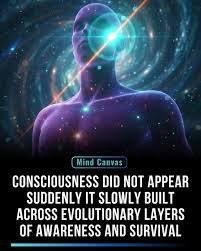
Ultimately, the question Where does the sense of self actually begin? may not have a single definitive answer. The self appears to arise gradually through layers of bodily awareness, memory, emotional interpretation, and social interaction. Each layer contributes to the overall experience of identity, yet none of them alone defines it.
Instead of a clear starting point, the self may resemble a threshold—a point at which complex processes begin to produce the feeling of being someone rather than something. This threshold is not fixed but dynamic, shaped by the continuous interaction between mind, body, and environment.
In this way, the self becomes less a location and more an activity. It is the ongoing process through which experiences are integrated, interpreted, and connected across time. The question of where the self begins may therefore lead not to a boundary, but to a deeper appreciation of the intricate processes that make the experience of being human possible.