In most psychiatric frameworks, guilt is understood as an affective state—painful, heavy, emotionally charged. It is commonly linked to depression, anxiety disorders, or obsessive–compulsive pathology. Yet a rarely described phenomenon exists in which guilt persists after emotion has disappeared. This condition, which may be termed Non-Affective Guilt, involves the experience of moral responsibility without accompanying emotional distress, remorse, or self-punishment.
Individuals experiencing non-affective guilt do not feel sad, anxious, ashamed, or self-critical. Instead, they report a cold, persistent sense of having done something wrong or of being morally misaligned, even when no clear transgression can be identified. The guilt is not felt in the chest or gut; it is felt as a fact. Patients often say, “I know I’m guilty, but I don’t feel bad,” or “The guilt is there, but it has no emotion attached to it.”
This phenomenon differs fundamentally from psychopathy or lack of conscience. Moral reasoning remains intact, sometimes even heightened. The individual understands ethical norms, recognizes responsibility, and may behave conscientiously. What is missing is the affective signal that normally accompanies guilt. This creates a disturbing split: moral cognition persists without emotional reinforcement, leaving the individual trapped in a state of unresolved responsibility.
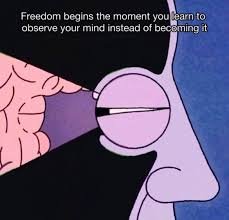
Non-affective guilt also differs from obsessive guilt, where anxiety drives compulsive reassurance or confession. Here, there is no urgency to neutralize the guilt, no panic, no intrusive fear. The guilt does not escalate—it simply remains. Its persistence is what makes it distressing. Patients describe it as “static,” “background,” or “structural,” as if guilt has become part of the architecture of consciousness rather than a passing feeling.
Phenomenologically, this state can erode identity. Emotion normally allows guilt to resolve—through remorse, apology, forgiveness, or self-compassion. Without emotion, resolution becomes impossible. The individual may repeatedly review past actions, not to relieve anxiety, but to locate the source of an ever-present moral imbalance. When no source is found, the guilt becomes existential rather than situational.
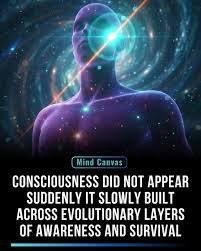
Neuropsychologically, non-affective guilt may reflect a decoupling between moral evaluation systems and affective processing networks. The brain continues to generate judgments of responsibility but fails to translate them into emotional experience. This decoupling can occur after prolonged depression, emotional numbing, trauma, or certain pharmacological interventions, yet it often persists even after mood and anxiety symptoms resolve.
Clinically, non-affective guilt is frequently misunderstood or ignored. Because patients do not appear distressed in conventional ways, clinicians may assume the guilt is mild or philosophical. In reality, the suffering lies in moral paralysis. The individual cannot feel absolution, relief, or closure, because these experiences are emotionally mediated. Guilt becomes infinite not because it is intense, but because it cannot complete its cycle.
Treatment poses a unique challenge. Cognitive reassurance fails, as the person already understands that their guilt may be irrational or unfounded. Emotional processing techniques may also fail, because the emotional channel is inaccessible. Some emerging approaches focus instead on embodied moral repair—action, restitution, and ethical alignment in the present rather than emotional resolution of the past. The aim is not to feel forgiven, but to live in a way that gradually dissolves guilt through lived coherence.
Non-Affective Guilt challenges a core psychiatric assumption: that moral suffering requires emotional pain. This condition demonstrates that guilt can survive the disappearance of feeling and continue to shape consciousness as a silent, unresolved weight. It suggests that morality is not only emotional, but structural—and that healing may sometimes require restoring the emotional dimension, not to intensify guilt, but to allow it to finally end.