Psychiatry usually links attention to interest. We attend to what attracts us, threatens us, or promises reward. Loss of interest is often assumed to lead to distractibility. Yet there exists a lesser-known condition in which attention remains intact—sometimes even sharpened—while interest itself is absent. This phenomenon can be described as Attention Without Interest.
Individuals in this state can concentrate for long periods. They read, listen, analyze, and complete complex tasks without difficulty. There is no mental fog, no distractibility, no restlessness. What is missing is investment. Attention operates, but it feels hollow—detached from curiosity, concern, or care. People often say, “I can focus perfectly, but I don’t care about what I’m focusing on.”
This condition differs from ADHD, where attention is unstable, and from depression, where concentration is often impaired. It also differs from boredom, which usually carries agitation or desire for stimulation. Here, attention is calm, sustained, and empty.
Phenomenologically, experience feels flat but clear. Objects of attention are perceived in detail, yet they fail to register as meaningful. Reading does not pull the reader forward; listening does not invite response. The mind stays with the object, but nothing leans toward it. Focus becomes mechanical rather than intentional.
Neurocognitively, attention without interest may involve a decoupling between attentional control networks and motivational valuation systems. The brain allocates cognitive resources efficiently, but does not tag the content as significant. As a result, awareness is present without salience.
Clinically, this state is easy to misinterpret as emotional detachment or excessive self-control. Because productivity may remain high, it is often overlooked or even rewarded. Internally, however, individuals may experience a quiet erosion of meaning. Activities feel interchangeable. Focus no longer indicates preference.
Attempts to “find something interesting” often fail. Novelty does not help, because the issue is not stimulation but valuation. Even personally important topics may receive attention without interest. The individual knows something should matter, but that knowledge does not generate pull.
Some observations suggest that interest may re-emerge indirectly when attention is allowed to wander inefficiently—through idle drifting, daydreaming, or purposeless engagement. Interest, when it returns, often does so unpredictably, attaching itself to something trivial rather than important.
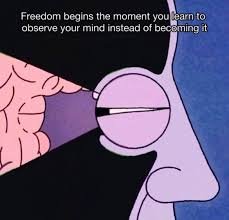
Attention Without Interest challenges the assumption that focus equals engagement. It reveals a psychological state in which the mind is present but uninvolved. Suffering arises not from distraction, but from the loss of aboutness—the sense that attention is directed because something matters.
Recovery is often first noticed as irritation or attraction—a moment when attention resists neutrality. The return of interest does not announce itself as passion, but as bias: a slight preference, a minor pull. In that pull, attention becomes alive again.