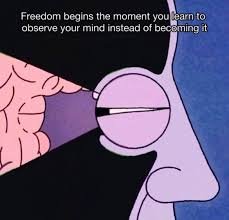
Mnemonic Self-Discontinuity Disorder is a psychological condition in which memory functions remain structurally intact while the subjective sense of personal continuity across remembered events gradually weakens. Individuals affected by this condition can recall facts, narratives, and sequences from their past with accuracy and detail, yet experience these memories without the felt sense of having lived them. The past is known, but it no longer feels personally owned.
Those experiencing this disturbance do not suffer from amnesia, confusion, or memory gaps. Recall is often vivid, temporally ordered, and linguistically precise. What is altered is not access to memory, but identification with it. Recollections arise as complete representations, yet feel curiously impersonal, as if they belong to a version of the self that is recognized but no longer inhabited. The individual understands that the memories are theirs, but does not feel psychologically continuous with the person who experienced them.
This disruption produces a subtle fracture in self-experience. The present self feels intact and coherent, yet loosely tethered to its own history. Individuals often report that their past feels archived rather than lived, observed rather than remembered. Childhood, adolescence, and even recent experiences may appear emotionally flattened, stripped of immediacy. Unlike trauma-related detachment, there is no defensive avoidance or emotional overwhelm. The disconnection is neutral, quiet, and persistent.
Emotionally, affect remains responsive in the present moment. Individuals feel joy, sadness, concern, and curiosity in real time. However, emotions linked to remembered events feel displaced. Recalling a joyful or painful experience does not reliably recreate the original emotional tone. Feelings arise as abstract acknowledgments rather than embodied states. This creates a temporal asymmetry in emotional life, where the present is felt vividly while the past is emotionally inert.
Identity remains logically coherent but experientially thinned. Individuals can describe their personality traits, values, and life trajectory, yet these descriptions feel conceptual rather than lived. The self becomes a narrative construct rather than an ongoing presence. This often leads to an unsettling realization that personal identity depends not only on memory content, but on the felt continuity between remembering and being.
The disturbance is especially evident during autobiographical reflection. When prompted to recall significant life events, individuals may produce detailed accounts while simultaneously feeling like an observer of their own history. The question is not “did this happen?” but “why does this not feel like it happened to me?” This experiential gap can provoke existential unease, though it is rarely accompanied by panic or despair.
Neurocognitive models suggest that Mnemonic Self-Discontinuity Disorder may involve a disruption in integrative mechanisms linking episodic memory with self-referential processing. In typical cognition, remembered events are implicitly tagged with a sense of personal ownership, allowing the past self and present self to feel continuous. In this condition, the tagging mechanism appears weakened. Memories retain informational integrity but lose their self-binding quality.
Behaviorally, individuals often compensate by repeatedly revisiting their past through photographs, journals, or conversations. These actions are not compulsive but grounding, serving as attempts to restore a sense of personal linkage. Some report that external confirmation of their history temporarily increases familiarity, while solitary reflection intensifies detachment. Excessive analysis of memory, however, tends to deepen the sense of distance rather than resolve it.
The condition is frequently misinterpreted as depersonalization or emotional numbing. However, unlike depersonalization, the present self does not feel unreal or distant. Unlike depression, emotional responsiveness in the present remains intact. The disturbance is selective, affecting the relationship between memory and identity rather than global affect or perception. Because individuals can articulate their experiences clearly and function adaptively, the condition often goes unrecognized.
There is no established pharmacological treatment. Interventions focused on mood regulation show limited benefit, as emotional distress is secondary. Therapeutic approaches emphasizing embodied recollection—such as sensory-based memory retrieval and action-oriented narrative reconstruction—appear more promising than purely reflective techniques. Methods that encourage lived engagement with memory, rather than analytical inspection, may partially restore continuity.
Mnemonic Self-Discontinuity Disorder challenges the assumption that memory automatically sustains identity. It reveals that remembering is not sufficient for feeling continuous with oneself across time. When the experiential bridge between past and present weakens, the individual remains cognitively intact yet subtly unmoored, living fully in the present while quietly estranged from the life that led there.