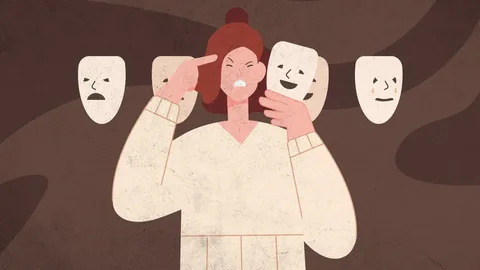
Hopelessness is one of the most difficult psychological experiences to explain because it changes not only how a person feels, but also how they interpret themselves, other people, and the future. When someone experiences intense hopelessness, the problem may no longer appear to be a particular difficulty that can be solved. Instead, life itself may begin to seem unchangeable, personal effort may appear meaningless, and possibilities that once seemed available may become almost impossible to imagine.
A person experiencing this state may continue performing everyday responsibilities while feeling internally disconnected from the future. They may speak to others, complete necessary tasks, and maintain familiar routines, yet experience a persistent sense that nothing meaningful will improve. From the outside, their distress may remain largely invisible.
Hopelessness is not simply sadness. Sadness can coexist with the expectation that circumstances may eventually improve. Hopelessness, by contrast, often involves a diminished expectation that improvement is possible at all.
This distinction matters because a person can experience profound hopelessness without crying, expressing despair, or appearing visibly distressed. Some individuals become emotionally exhausted rather than openly emotional. Others continue searching for solutions long after their confidence in those solutions has weakened.
Understanding hopelessness requires examining how it develops, why it can become self-reinforcing, what happens when a person feels psychologically trapped, and how recovery can begin even when the individual cannot yet imagine a better future.
The central question is not merely why people lose hope. It is how the mind comes to regard suffering as permanent, and how that conclusion can gradually be reconsidered.
The Psychology of Hopelessness
Hopelessness can be understood as a negative expectation about the future, particularly the expectation that important difficulties will not improve despite one’s efforts.
It can arise in response to identifiable circumstances, including bereavement, relationship breakdown, financial instability, chronic stress, social isolation, or repeated experiences of failure. It may also occur alongside depression, anxiety, trauma-related difficulties, or other mental health conditions.
However, hopelessness is not itself sufficient to establish a psychiatric diagnosis. Its meaning depends on its intensity, duration, context, and effects on everyday functioning.
One of the most important features of hopelessness is the way it influences interpretation.
When people feel hopeful, they may regard a setback as temporary. They can acknowledge a problem while retaining the belief that circumstances may change. Under severe hopelessness, the same setback may be interpreted as evidence that future efforts will also fail.
A person who has experienced several disappointments may begin to think, “Nothing ever works out for me.” Another may conclude, “Even if I try again, the result will be the same.”
These conclusions can feel convincing because they are supported by painful memories. Yet they extend beyond the evidence of past experiences by treating previous outcomes as reliable predictions of every future possibility.
This is one way hopelessness can narrow psychological perspective.
The person does not necessarily lose the ability to reason. Rather, their reasoning may become increasingly organized around negative expectations, while alternative outcomes become harder to consider.
The future begins to resemble the past, not because change is impossible, but because the mind has difficulty generating credible alternatives.
When the Future Becomes Difficult to Imagine
Human motivation depends partly on the ability to imagine that present actions may lead to meaningful future outcomes.
People study because they expect knowledge to create opportunities. They maintain relationships because they expect connection to remain valuable. They work toward goals because they believe effort can influence results.
When hope weakens, the perceived relationship between action and outcome can weaken as well.
A person may ask, “Why should I try if nothing will change?”
This question can become especially painful when the individual has already made repeated attempts to improve their circumstances. Advice to work harder, think positively, or remain patient may sound empty when previous efforts have not produced the desired results.
It is important to acknowledge that some problems genuinely involve limited control. Poverty, discrimination, illness, caregiving responsibilities, unsafe environments, and other external pressures can restrict the options available to a person.
Psychological recovery should not depend on pretending that these circumstances are insignificant or that every difficulty can be overcome through determination.
At the same time, a lack of complete control does not necessarily mean that no meaningful change is possible.
Sometimes the available change is substantial. At other times, it is smaller: obtaining accurate information, reducing an unnecessary burden, asking for assistance, improving one aspect of a daily routine, or finding a safer way to manage an ongoing problem.
Hopelessness can make these smaller possibilities difficult to recognize because they may appear inadequate compared with the scale of the suffering.
Yet the first step toward recovery does not always need to resolve the entire problem. It may simply need to create one credible alternative to the belief that nothing can change.
The Point at Which Exhaustion Resembles Defeat
Severe hopelessness is often accompanied by exhaustion.
This exhaustion may be physical, emotional, cognitive, or a combination of all three. A person may find it increasingly difficult to concentrate, make decisions, organize responsibilities, or respond to ordinary demands.
When energy is limited, even manageable tasks can begin to feel overwhelming.
The individual may stop engaging in activities that previously provided satisfaction. They may avoid conversations, postpone decisions, neglect personal interests, or reduce contact with other people.
These changes can be misunderstood as laziness or indifference. In reality, they may reflect significant psychological strain.
When someone has spent a long time coping with stress, they may have fewer resources available for planning and problem-solving. The very actions that could help improve their circumstances may therefore become more difficult to initiate.
This creates a painful contradiction: the person needs support and change, yet may have little energy to seek either.
At this point, demanding a complete transformation can increase feelings of inadequacy.
A more realistic approach begins with the person’s actual capacity. Instead of asking them to reorganize their entire life, it may be more useful to identify one necessary task, one source of support, or one pressure that can be reduced.
Small steps are not a denial of the seriousness of the situation. They are a way of making action possible when psychological resources are limited.
Learned Helplessness and the Loss of Agency
Repeated experiences of uncontrollable adversity can influence a person’s expectations about whether their actions matter.
The concept of learned helplessness emerged from psychological research examining how experiences of uncontrollability can affect later behavior. Subsequent research has refined the understanding of these processes, and the concept should not be treated as a complete explanation for every instance of passivity or despair.
Nevertheless, it offers a useful framework.
Imagine a person who repeatedly attempts to resolve a difficult problem but encounters barriers they cannot overcome. After enough unsuccessful attempts, they may begin to expect that further effort will be equally ineffective.
Eventually, they may stop attempting solutions even when circumstances change or new options become available.
The problem is not necessarily a lack of ability. It may be an expectation that effort has little value.
This expectation can become self-reinforcing. When the person stops trying, they have fewer opportunities to discover whether a different approach might work. The absence of improvement then appears to confirm their original belief.
Breaking this cycle requires careful attention to agency.
Agency does not mean controlling every circumstance. It means recognizing where one’s actions can influence an outcome, even when complete control is impossible.
For example, someone who cannot immediately leave a stressful environment may still be able to identify a trusted person, obtain information about available resources, or develop a longer-term plan.
Such actions may not solve the central problem immediately. However, they can help restore the experience that decisions remain possible.
It is also important to distinguish genuine helplessness from situations in which a person has been led to believe they have no options. When another person controls resources, restricts movement, threatens harm, or systematically undermines independence, the problem may require external protection and practical assistance rather than an exclusively psychological intervention.
The responsibility for recovery should not be placed entirely on the person experiencing distress.
Why Negative Thoughts Become So Convincing
Hopelessness can influence how people process information.
When someone expects failure, they may pay greater attention to experiences that support that expectation. Successful moments may be dismissed as temporary, accidental, or irrelevant, while disappointing events may be interpreted as evidence of a permanent pattern.
Consider a person who applies for several jobs without receiving an offer.
They might conclude, “These applications have not succeeded, so I need to reconsider my approach.”
Under more severe hopelessness, they might conclude, “Nobody will ever employ me because I have nothing valuable to offer.”
The first interpretation identifies a problem and leaves room for adjustment. The second transforms a series of disappointing outcomes into a global judgment about the self and the future.
This distinction is relevant to cognitive models of depression and other forms of psychological distress. Negative beliefs can influence attention, memory, interpretation, and expectations, although the strength and direction of these effects vary among individuals.
The goal is not to insist that negative thoughts are always inaccurate. Sometimes they identify genuine problems that need attention.
Instead, the objective is to examine whether a conclusion is proportionate to the available evidence.
A useful question is: “What do I know, and what am I predicting?”
For example, “I have not found a solution yet” describes the present situation. “I will never find a solution” predicts the entire future.
The second statement may feel like a fact, particularly when the person is exhausted. Nevertheless, it remains a prediction.
Recognizing this distinction does not instantly restore hope. It can, however, create a small amount of distance between an emotionally compelling thought and an established fact.
That distance can become an important starting point for change.
The Loneliness of Hopelessness
Hopelessness can become more difficult when people feel unable to communicate what they are experiencing.
Some individuals worry that others will dismiss their suffering, offer simplistic advice, criticize their choices, or become uncomfortable with the intensity of their emotions. They may therefore conceal their distress.
Others may have attempted to seek help before and felt misunderstood.
Over time, silence can become a protective strategy. The person avoids explaining their experience because the effort seems unlikely to produce meaningful support.
However, isolation may also reduce access to emotional connection, practical assistance, and alternative perspectives.
When people are alone with persistent negative thoughts, those thoughts can become increasingly dominant. There may be fewer opportunities for someone to notice changes in their condition, offer practical help, or gently challenge an overly absolute interpretation of the future.
Social support does not automatically resolve severe psychological distress. Some people remain hopeless even when others care deeply about them. Nevertheless, supportive relationships can reduce the burden of coping alone.
The quality of support matters.
Statements such as “Other people have worse problems” or “You just need to be positive” may increase shame because they imply that the person’s distress reflects a failure of perspective or effort.
A more helpful response might be, “I may not fully understand what this feels like for you, but I want to listen.”
Sometimes people need practical assistance more than advice. They may need someone to accompany them to an appointment, help organize a difficult task, or remain present while they make a decision.
Support becomes more effective when it responds to the person’s actual needs rather than assuming that every difficulty can be resolved through conversation alone.
Is Hopelessness Always a Sign of Depression?
Hopelessness can occur during depression, but it does not always indicate a depressive disorder.
People may feel hopeless in response to prolonged stress, grief, interpersonal conflict, uncertainty, physical illness, or circumstances that appear impossible to change. They may also experience hopelessness alongside anxiety or trauma-related symptoms.
Clinical depression involves a broader pattern of symptoms, which may include persistent low mood or loss of interest, changes in sleep or appetite, fatigue, difficulties concentrating, feelings of worthlessness, and other symptoms. The duration, severity, and effect on functioning are important in clinical assessment.
Not everyone with depression experiences hopelessness in the same way, and not everyone who experiences hopelessness has depression.
This distinction matters because different causes may require different responses.
If hopelessness is primarily connected with an unresolved practical problem, addressing the problem may be essential. If it is associated with a depressive episode, professional mental health treatment may be needed. If it occurs alongside trauma-related symptoms, treatment may need to account for the person’s experiences of threat and safety.
In many situations, several factors interact.
A person may experience a genuine external difficulty that produces stress, develop negative expectations as the stress continues, withdraw from supportive relationships, and then become increasingly depressed.
There is no reason to choose between acknowledging external circumstances and examining psychological processes. Both can matter.
When hopelessness is persistent, severe, or interfering with everyday functioning, a qualified mental health professional can help assess what may be contributing to it and identify an appropriate treatment plan.
How Can Someone Begin to Escape Hopelessness?
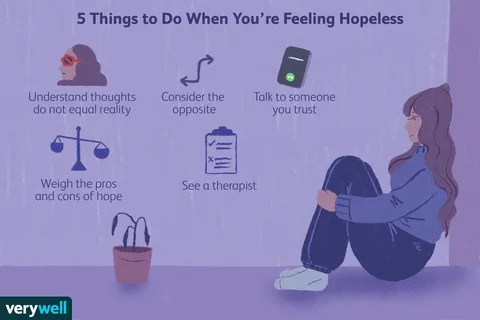
One of the most important principles is that a person does not need to feel hopeful before taking the first step toward recovery.
This may initially seem contradictory. If someone cannot imagine improvement, how can they act toward it?
The answer is that action and hope do not always occur in a fixed sequence. Sometimes hope motivates action. At other times, a small action produces evidence that change is possible, and hope develops afterward.
The first objective is therefore not to force a positive emotional state. It is to create conditions in which improvement becomes more plausible.
1. Reduce the Size of the Problem
When life feels overwhelming, people may attempt to solve several major difficulties simultaneously.
They may try to repair relationships, improve their finances, change their work situation, restore their health, and understand their entire psychological history at once.
This can create a sense that progress is impossible because every individual task appears connected to the whole problem.
A more manageable approach is to distinguish between the immediate problem and the larger situation.
Ask:
What requires attention today?
What can wait?
Which part of the problem is within my influence?
What assistance would make the next step easier?
The objective is not to pretend that the larger situation is unimportant. It is to prevent the size of the entire problem from making every possible action seem meaningless.
A person who cannot solve everything today may still be able to complete one useful action.
2. Separate Facts From Predictions
Hopelessness often involves conclusions about what will happen in the future.
Writing down the thought can help make its structure more visible.
For example:
Fact: I have tried several approaches, and none has worked so far.
Prediction: Nothing I do will ever work.
Alternative possibility: My previous approaches have not worked, but I may need different information, additional support, or more time to evaluate other options.
The alternative statement does not promise success. It simply avoids treating the worst possible outcome as certain.
This distinction is particularly useful because forced optimism can feel dishonest to someone experiencing severe distress.
A realistic alternative is more credible than an exaggerated reassurance.
Instead of saying, “Everything will be fine,” one might say, “I do not know how this will turn out, but I do not yet have enough evidence to conclude that improvement is impossible.”
Hope can begin with uncertainty rather than certainty.
3. Restore Basic Physical Stability
Psychological distress and physical functioning influence one another.
Poor sleep, inadequate nutrition, dehydration, physical inactivity, and prolonged exhaustion can make emotional regulation and concentration more difficult. Conversely, severe psychological distress can interfere with sleep, appetite, and daily routines.
When someone is overwhelmed, maintaining basic physical needs may feel unimportant compared with solving the central problem.
Yet physical stabilization can help preserve the resources needed to address that problem.
This does not mean that a walk, a meal, or a better night’s sleep will cure severe hopelessness. Such claims would be simplistic.
It means that basic care can support psychological recovery by reducing additional sources of strain.
A manageable starting point might include eating something nourishing, drinking water, getting some daylight, or allowing time for rest.
If persistent fatigue, sleep disturbance, or other physical symptoms are significant, medical assessment may also be appropriate.
4. Reintroduce Small Sources of Meaning
Hopelessness can reduce interest in activities that once felt meaningful.
A person may stop reading, listening to music, meeting friends, learning new skills, or participating in activities that previously provided satisfaction.
They may reason that these activities are pointless because they do not solve the main problem.
However, meaningful activities do not need to resolve every difficulty to have value.
A short conversation, a familiar song, a few pages of reading, or a small task completed with care may provide moments of connection, engagement, or relief.
The goal is not to demand happiness. It is to prevent the person’s entire experience from becoming organized around suffering.
In psychological treatment, behavioral activation is one approach used to address patterns of withdrawal and reduced engagement, particularly in depression. It involves gradually increasing meaningful or potentially rewarding activities rather than waiting for motivation to return spontaneously.
The activities should be realistic and suited to the individual’s circumstances. If someone is severely exhausted, an ambitious schedule may be counterproductive.
Consistency with small actions may be more useful than occasional attempts at dramatic change.
5. Stop Treating Every Difficult Emotion as a Problem That Must Be Solved Immediately
When people feel anxious, ashamed, lonely, or sad, they may become desperate to eliminate the emotion.
They might repeatedly analyze what caused it, seek reassurance, distract themselves compulsively, or criticize themselves for experiencing it.
Sometimes these strategies help. At other times, they create additional distress.
An emotion can be painful without requiring an immediate solution.
A person may acknowledge, “I feel hopeless right now,” without adding, “Therefore, my life is hopeless.”
The distinction allows the emotional experience to be recognized without turning it into a complete judgment about reality.
Mindfulness-based approaches and acceptance-oriented therapies can help some people develop a different relationship with difficult internal experiences. Rather than attempting to eliminate every uncomfortable feeling, the individual learns to notice the experience, understand its context, and choose an appropriate response.
This does not mean passively accepting harmful circumstances. It means distinguishing between accepting the presence of an emotion and accepting every conclusion the emotion produces.
6. Rebuild a Sense of Agency Through Small Decisions
When hopelessness becomes severe, even ordinary decisions may feel difficult.
The person may begin to believe that they have no meaningful influence over their circumstances.
Small decisions can provide opportunities to practise agency again.
This might involve choosing one task to complete, asking a specific question, setting a reasonable boundary, or seeking information about an available service.
The importance of these actions lies not only in their immediate outcomes. They can also help the person observe that they remain capable of making choices.
It is essential to avoid turning this principle into a demand that the person take responsibility for circumstances beyond their control.
The purpose is to identify genuine areas of influence, not to blame the individual for every difficulty.
Sometimes the most effective exercise of agency is recognizing that a situation requires outside assistance.
7. Seek Support Before the Situation Becomes Unbearable
People sometimes postpone seeking help because they believe their distress is not serious enough, because they feel embarrassed, or because they expect that nobody will understand.
Others wait until they have exhausted their own attempts to solve the problem.
However, support does not need to be a last resort.
A trusted person may provide emotional connection or practical assistance. A mental health professional can help assess persistent hopelessness, identify contributing factors, and discuss treatment options.
Psychotherapy can be particularly helpful when hopelessness is associated with repetitive negative thinking, avoidance, depression, trauma-related difficulties, or entrenched beliefs about the self and future.
Depending on the assessment, treatment may involve cognitive behavioral therapy, behavioral activation, problem-solving approaches, or other evidence-based methods. Medication may also be considered by a qualified clinician when an underlying condition warrants it.
Seeking help is not proof that a person has failed to manage their life independently. It is one way of responding to a problem that may be difficult to address alone.
If one source of support is unhelpful, it may be worth considering another appropriate professional or service rather than concluding that help itself is impossible.
When Hopelessness Becomes a Crisis
Although hopelessness can occur without suicidal thinking, severe or persistent hopelessness can be associated with increased suicide risk.
Warning signs may include expressing a desire to die, feeling that others would be better off without oneself, believing that there is no reason to continue living, making preparations for suicide, or experiencing an escalating sense of being trapped.
These signs should be taken seriously, especially when they represent a change from the person’s usual behavior.
If someone is experiencing suicidal thoughts, they deserve direct, compassionate support rather than judgment. Asking clearly about suicidal thoughts does not create those thoughts. It can provide an opportunity to understand the person’s immediate needs and help them access appropriate care.
If there is an immediate risk of suicide or self-harm, the priority is immediate safety. The person should contact local emergency services or go to the nearest emergency department. Where possible, they should reach out to a trusted person who can stay with them and help them obtain professional assistance. If they may act on an immediate urge to harm themselves, they should move away from anything they could use to do so and avoid remaining alone while urgent help is arranged.
In Azerbaijan, emergency medical assistance can be contacted through 103; 112 is also an emergency number.
A person does not need to wait until they are certain that a crisis is imminent before seeking help.
Can Hope Return After a Long Period of Despair?
One of the most painful features of hopelessness is that it can make recovery itself seem unbelievable.
Someone may hear that people can recover from depression, rebuild their lives after loss, or develop new ways of coping, yet feel unable to imagine that such change could apply to them.
This is understandable. The ability to imagine the future is influenced by one’s present psychological state. When distress is intense, positive possibilities may feel emotionally distant even when they remain objectively possible.
The absence of hope in the present does not establish the absence of future possibilities.
Recovery is not always a sudden transformation. It may begin with reduced distress, improved sleep, a more manageable routine, a supportive conversation, or a gradual return of interest in something previously valued.
Progress may be uneven. A difficult day does not necessarily erase previous improvement, and a temporary return of hopelessness does not prove that recovery has failed.
The relevant question is not whether a person can guarantee that the future will be better. Nobody can guarantee that.
The question is whether there are reasonable steps that can improve the person’s circumstances, reduce suffering, or increase access to support.
Sometimes the first evidence of recovery is not a feeling of optimism but a change in behavior: making an appointment, accepting help, returning to a neglected activity, or allowing someone else to share the burden.
Hope may develop gradually from these experiences.
Conclusion: Hope Does Not Have to Begin as a Feeling
Hopelessness can become so powerful that it appears to describe reality rather than an experience of reality.
The person may feel certain that nothing will change, that previous failures predict every future outcome, or that their present suffering defines the limits of their life.
Yet psychological states, however convincing, do not provide complete information about the future.
This does not mean that suffering is imaginary or that external difficulties can be resolved through positive thinking. Some circumstances are genuinely painful, unfair, or difficult to change. Recovery may require practical intervention, social support, professional treatment, or substantial changes in the person’s environment.
What hopelessness can obscure is the distinction between a situation that is difficult and a situation in which no meaningful possibility remains.
The way forward is rarely to demand that someone immediately believe in a better future.
It may be more realistic to begin with one manageable action, one honest conversation, one source of support, or one conclusion that is slightly less absolute than the thought that nothing can ever improve.
A person does not need to feel strong to ask for help. They do not need to feel optimistic to take a useful step. They do not need to understand their entire life before addressing the problem in front of them.
Sometimes hope begins as a possibility that the person cannot yet feel.
Sometimes it begins when another person takes their suffering seriously.
And sometimes it begins with the recognition that not being able to imagine a way forward is not the same as proving that no way forward exists.