Psychopathy is typically described through behavioral criteria — lack of empathy, superficial charm, impulsivity, manipulativeness — but these traits emerge from a deeper and less discussed phenomenon: the absence or profound diminishment of inner dialogue. While most people navigate their world through a constant stream of internal speech — evaluating choices, empathizing with others, weighing consequences, imagining emotional outcomes — the psychopathic mind moves through life with a striking internal quietness. This silence is not peace; it is vacancy. The absence of inner dialogue eliminates the psychological space in which guilt, doubt, foresight, and emotional resonance normally arise.
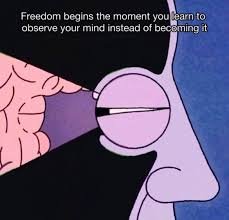
Inner dialogue is the medium in which humans interpret themselves. It is the ongoing negotiation between desire and restraint, impulse and reflection. It gives shape to morality by forcing the self to confront its own intentions. In psychopathy, this reflective layer is either drastically reduced or structurally different. Instead of an internal conversation, the psychopathic mind operates with immediate, unfiltered cognition. Thoughts appear as conclusions rather than dialogues, decisions arise without deliberation, and desires emerge without the friction of ethical consideration. The individual does not ask themselves whether an action is wrong; the question itself does not arise.
This absence of internal discourse profoundly affects emotional processing. Inner dialogue acts as a container for feelings — a space to name, interpret, and evaluate them. Without it, emotions become shallow, transient signals rather than complex experiences with meaning. Psychopaths do not lack emotion entirely, but their emotions do not reverberate within a narrative self. Fear does not transform into caution; anger does not transform into moral outrage; desire does not transform into longing. Feelings remain raw and momentary, lacking the introspective echoes that generate empathy, remorse, or moral learning.
Neuroscientifically, this phenomenon can be traced to abnormalities in the default mode network (DMN), the system responsible for self-referential thinking and autobiographical reflection. Functional MRI studies reveal reduced connectivity within regions that support internal narrative processing — particularly the medial prefrontal cortex and posterior cingulate cortex. Without a robust DMN, the psychopathic individual has difficulty imagining themselves through time or imagining others as conscious beings with subjective experiences. Moral emotions such as guilt require the ability to simulate one’s own mind from an outside perspective. In psychopathy, that simulation is minimal or absent.
This internal silence also disrupts the formation of moral intuition. Most moral behavior does not arise from explicit rules but from internalized emotional narratives — the accumulated stories one tells oneself about harm, responsibility, and belonging. These stories require inner speech to form and maintain. The psychopathic mind, lacking this narrative process, treats moral information as external rather than internal. Rules become obstacles, not principles. Consequences become tactical considerations, not ethical truths. The absence of inner dialogue thus produces an ethical vacuum in which moral reasoning becomes instrumental rather than empathic.
Interpersonally, this internal silence manifests as an uncanny emotional detachment. The psychopath understands people cognitively but not affectively. They can analyze expressions, predict responses, and manipulate reactions, yet they cannot feel the emotional landscape they navigate. Their understanding is computational, not experiential. Conversations are strategic exchanges rather than moments of shared subjectivity. This is why psychopaths can be so charming: without the interference of inner insecurity, shame, or moral hesitation, their behavior becomes a smooth performance, guided by external cues rather than internal conflict.
From a developmental perspective, the absence of inner dialogue can be seen as a failure of internalization. Children develop inner speech through repeated interactions with caregivers who mirror and model emotional language. Through these interactions, the child gradually turns outer speech into inner thought. In psychopathy, this process appears truncated. Whether due to genetic predisposition or early environmental disruptions, the child does not fully absorb the emotional language of others. They learn behavior without internalizing the underlying emotional logic. The result is a mind skilled at imitation but lacking depth — a self that knows expressions but not meanings.
The existential dimension of psychopathy is perhaps the most striking: what does it mean to have a self without an inner voice? Without inner dialogue, the sense of identity remains flat, unlayered. The psychopath exists more as a functional entity than a reflective self. They are defined by action rather than introspection, impulse rather than intention. Life becomes a series of stimuli and responses without the narrative continuity that gives existence a moral direction. Their silence is not meditative but empty — a missing dimension of consciousness that most people take for granted.
Understanding psychopathy as an absence of inner dialogue reframes the disorder not as malevolence but as a form of inner poverty. It is not that psychopaths cannot choose to care; it is that the psychological mechanisms that produce caring are underdeveloped or absent. Moral emotions require an internal voice to translate perception into meaning, action into responsibility. When that voice is silent, morality becomes an external construct rather than an internal compass.
Ultimately, psychopathy reveals how deeply human morality depends on the capacity for internal conversation. Empathy is not only an emotion but a narrative ability — the ability to imagine the feelings of another inside one’s own inner speech. Guilt is not a reflex but a dialogue between the self that acted and the self that reflects. Without this dialogue, the moral universe collapses into a flat landscape where only desire and opportunity remain. Psychopathy is not merely the absence of empathy; it is the absence of the inner narrator who makes empathy possible.