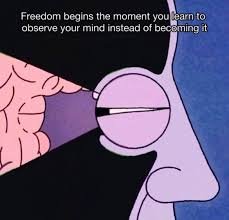
The human self is typically experienced as a continuous thread—stable across time, coherent across situations, and unified across internal states. Yet in some individuals, the self does not function as a single organism but as a shifting constellation of incompatible parts. This fragmentation is not merely dissociation, nor simple mood variability. It is a structural disruption of selfhood—a fundamental failure of psychological integration. Modern psychiatry encounters this phenomenon in severe trauma disorders, borderline personality organization, dissociative identity disorder, chronic neglect syndromes, and some forms of psychosis, where the self becomes an unstable parliament of conflicting sub-agencies.
Fragmented identity begins as an adaptive process. In early development, children rely on caregivers to help them integrate emotional states. If caregivers are unpredictable, abusive, or absent, the child cannot metabolize overwhelming affect. As a result, painful states become split off into isolated mental compartments. Over years, these compartments become autonomous clusters of emotion, memory, and perception. Fragmentation emerges not from weakness, but from extraordinary psychological survival mechanisms.
Clinically, fragmented identity presents as radical fluctuations in self-perception. One moment the individual feels competent and connected; the next, they feel worthless or alien. These states are not merely moods but distinct self-configurations with unique beliefs, relational expectations, and action tendencies. Patients often describe themselves as “switching into another person,” “watching myself from outside,” or “losing the thread of who I am.” Yet to them, this is normal—they have never known a continuous self.
In borderline personality structure, fragmentation manifests as unstable identity, rapid shifts between idealization and devaluation, and contradictory self-images. Under stress, the patient may lose access to entire emotional systems, becoming briefly like a different person. This instability fuels impulsivity, rage, and intense fear of abandonment, as each self-state operates with different relational logic.
In dissociative disorders, fragmentation becomes more literal: discrete identity states may hold different memories, traumas, or roles. These parts are not hallucinations but dissociated self-structures created by overwhelming early experiences. Therapy must treat not only symptoms but the internal relationships among these parts, fostering cooperation instead of conflict.
In psychosis, fragmentation takes a more surreal quality. The self may feel invaded, duplicated, controlled, or dissolved. Thoughts, emotions, and bodily sensations lose their sense of ownership. Patients report experiences such as “This isn’t my thought,” or “I feel like I disappeared and someone else took my place.” Here, fragmentation is not defensive but the result of cognitive-perceptual disintegration.
Neurobiologically, fragmented identity correlates with impaired integration across regions responsible for autobiographical memory, affect regulation, and self-referential processing. Trauma disrupts the brain’s capacity to create unified self-representations, leaving behind a mosaic of disconnected self-fragments that activate depending on context or sensory cues.
Interpersonally, fragmentation is devastating. Relationships collapse because each self-state relates differently—some cling, some withdraw, some attack, some seduce, some numb out. To others, the person appears inconsistent or manipulative; internally, the experience is chaotic, frightening, and exhausting.
Treatment requires an unusually delicate approach. Confrontation can deepen fragmentation by triggering defensive splits. Instead, therapy must build cohesion slowly by strengthening reflective capacity and linking isolated emotional states. The therapist acts as an external integrator, offering stable mirroring and consistent emotional presence until the patient’s internal world can begin to unify. Integration does not mean erasing parts but creating permeability and dialogue between them.
Ultimately, fragmented identity challenges psychiatry’s most basic assumption: that there is a singular “self” to heal. Instead, there may be a fractured ecosystem of self-states, each carrying burdens the person could not bear as a child. Healing is not the merging of these states but the transformation of an internal battlefield into a cooperative community. Integration is achieved not by force but by compassion—by meeting each fragment with the respect it never received.