Inner dialogue — the silent conversation we carry with ourselves — is one of the most fundamental yet invisible pillars of psychological life. It is through inner speech that we reflect, regulate emotion, evaluate choices, narrate experience, and maintain continuity of self. When this dialogue breaks down, the mind does not merely become quiet; it becomes structurally impaired. The self loses its internal mediator. Thought fragments lose coordination. Experience becomes unprocessed. The person remains conscious, but the mind can no longer talk itself through existence.
The breakdown of inner dialogue is not the same as mental calm, mindfulness, or the absence of rumination. It is not silence chosen, but silence imposed. In this state, the individual does not experience a peaceful mind, but an unresponsive one. Thoughts may still arise, but they do not connect, comment, or contextualize. The inner narrator — the voice that explains, questions, reassures, or argues — disappears or becomes inaccessible.
This phenomenon appears in severe depression, catatonia, schizophrenia-spectrum disorders, advanced dissociation, prolonged trauma states, and extreme burnout. Across diagnoses, the subjective experience converges: “There is nothing inside to respond.” The mind registers stimuli, emotions, and impulses, but cannot internally address them. Without inner dialogue, psychological digestion stops.
Normally, inner dialogue serves as a regulatory system. When emotion surges, inner speech names it, tempers it, or redirects it. When conflict arises, inner dialogue negotiates. When uncertainty appears, it reasons. When this system collapses, emotions remain raw, impulses remain unchecked or frozen, and experiences remain unintegrated. The individual may feel overwhelmed by vague internal pressure or, conversely, profoundly empty — not because nothing is happening, but because nothing is being processed.
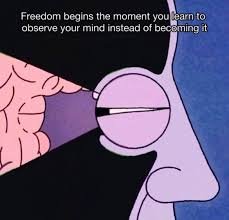
From the inside, breakdown of inner dialogue feels deeply disorienting. People often say, “I can’t think,” but cognition is still present. What is missing is the meta-layer — the reflective voice that observes thinking. Decisions feel impossible because evaluation requires inner speech. Moral judgment weakens. Self-soothing disappears. The mind becomes reactive rather than reflective.
In schizophrenia-spectrum conditions, the breakdown of inner dialogue can externalize. When internal speech loses its sense of ownership, it may be experienced as voices coming from outside. Hallucinated voices are not excess speech, but displaced inner dialogue. The mind still speaks — but no longer recognizes the voice as its own. In this sense, auditory hallucinations represent a catastrophic failure of inner dialogue containment rather than an overactive imagination.
In trauma-related disorders, inner dialogue often collapses because speaking internally once led to danger. If inner reflection intensified pain, triggered panic, or led to emotional flooding, the psyche learned to shut it down. Silence became safer than commentary. Over time, this protective muting generalized, leaving the person without an internal guide.
Neuropsychologically, inner dialogue depends on coordinated activity between language networks, executive function, and self-referential processing systems. Chronic stress, trauma, or neurodevelopmental vulnerability can disrupt this coordination. When predictive and integrative functions fail, the mind loses its ability to narrate itself in real time. Experience becomes raw data without interpretation.
The loss of inner dialogue has profound implications for identity. The self is not only what we experience, but what we say to ourselves about experience. Without this narration, identity thins. The person may feel undefined, passive, or unreal. They may struggle to answer questions like “What do you think?” or “How do you feel?” not because answers are hidden, but because there is no inner voice to articulate them.
Interpersonally, breakdown of inner dialogue creates distance. Conversation requires translating inner experience into language. When inner speech is absent, external speech becomes effortful or empty. The person may speak minimally, mechanically, or not at all. Others may misinterpret this as withdrawal, resistance, or lack of interest, when in fact the internal machinery of expression is offline.
Clinically, this state is often overlooked. Therapy relies heavily on verbal reflection, assuming the presence of inner dialogue. When it is absent, asking the patient to “explore thoughts” or “challenge beliefs” can feel impossible or even cruel. The patient is not avoiding reflection — they cannot access it.
Treatment must therefore aim first at restoring the capacity for inner speech, not analyzing its content. This involves stabilizing the nervous system, reducing cognitive overload, and reintroducing gentle reflective processes. External dialogue can temporarily substitute for inner dialogue: the therapist’s voice functions as an auxiliary inner narrator, modeling reflection, naming states, and organizing experience. Over time, this voice can be internalized.
Somatic grounding, rhythmic activity, and simple narrative exercises can also help reawaken inner dialogue. The return is often subtle: a brief comment inside the mind, a small evaluative thought, a moment of self-address. These moments may feel unfamiliar or even intrusive at first, but they signal recovery.
As inner dialogue returns, anxiety often increases. Reflection brings awareness. Awareness brings emotion. This is not deterioration, but reactivation. The task of therapy is to help the patient tolerate having a mind that speaks again without being overwhelmed by what it says.
Ultimately, the breakdown of inner dialogue reveals that thinking is not just cognition — it is relationship. The self relates to itself through language. When that relationship collapses, the mind becomes alone with its experiences. Healing is the slow restoration of this inner companionship — the return of a voice that can say, “I am here with you,” inside one’s own mind.