Which invisible structure shapes every decision we make, colors every emotion we feel, and quietly determines the stories we tell about ourselves? Memory is not merely a storage system for past events; it is the architecture of identity. Without memory, there is no continuity, no sense of growth, no narrative thread connecting childhood to adulthood. Yet we live in an era paradoxically saturated with information and threatened by forgetfulness. We record everything, archive endlessly, and rely on devices to remember for us. In doing so, we risk altering the very function and meaning of human memory.
Memory is not a passive container. It is dynamic, interpretive, and selective. Neuroscience suggests that recalling an event does not retrieve a perfectly preserved file; instead, the brain reconstructs the experience, reshaping it subtly each time it is remembered. Emotion influences which details remain vivid and which fade. Trauma can sharpen certain images while erasing context. Joy can transform ordinary moments into treasured milestones. Memory, therefore, is not objective history but living interpretation.
In earlier centuries, memory served as a crucial survival tool. Before written language became widespread, oral traditions preserved culture, law, and history. Communities relied on collective memory to transmit knowledge across generations. Stories were repeated, refined, and ritualized. Forgetting was not merely inconvenient; it threatened continuity. The capacity to remember names, routes, medicinal plants, and alliances had tangible consequences.
The invention of writing transformed this relationship. Information could now exist outside the human mind. Libraries became repositories of collective memory. Over time, the burden on individual recall lessened. The digital revolution accelerated this shift dramatically. Today, search engines function as external memory systems. Photographs automatically store daily experiences. Contacts lists replace memorized phone numbers. Cloud storage preserves conversations, documents, and images indefinitely.
This technological support appears beneficial. Cognitive resources once devoted to memorization can be redirected toward analysis and creativity. However, dependence on external memory raises subtle questions. When facts are instantly retrievable, motivation to internalize them may diminish. The effort required to remember strengthens neural connections; ease of access can weaken that process. The brain adapts to its environment. If remembering becomes unnecessary, will memory itself change?
Research on “digital amnesia” suggests that individuals are less likely to remember information they believe is stored elsewhere. The knowledge that data is accessible online reduces the impulse to encode it deeply. This does not indicate declining intelligence but shifting cognitive strategy. We remember how to find information rather than the information itself. The mind becomes a navigator rather than a warehouse.
Yet memory’s significance extends beyond data retention. It shapes emotional resilience. Personal narratives influence self-perception. A person who remembers overcoming hardship may develop confidence. Someone who fixates on failure may internalize limitation. Therapy often involves reframing memory—reinterpreting past events to reduce shame or fear. The stories we tell ourselves about our experiences determine how we move forward.
Cultural memory operates on a larger scale. Nations construct identities through shared remembrance of triumphs and tragedies. Monuments, holidays, and textbooks reinforce collective narratives. Disputes over history are rarely about facts alone; they concern identity and power. Which events are emphasized? Which are minimized? Forgetting can be as politically potent as remembering. Erased histories marginalize communities. Selective memory shapes public consciousness.
In a fast-paced digital environment, cultural memory faces new challenges. News cycles move rapidly. Outrage surges and fades within days. Complex issues are reduced to headlines. The constant influx of information compresses attention spans. Significant events risk being overshadowed before their implications are fully understood. Archiving does not guarantee reflection. Data abundance can paradoxically produce historical amnesia.
Personal memory, too, becomes fragmented. Social media platforms encourage documentation of highlight moments—vacations, celebrations, achievements. These curated archives may distort perception of one’s own life. Difficult periods, unless publicly shared, recede from visible memory. Over time, scrolling through polished images can create an illusion of uninterrupted happiness. The contrast between documented joy and lived complexity may foster dissatisfaction.
At the same time, digital records preserve voices previously excluded from official archives. Marginalized communities can document experiences directly, bypassing traditional gatekeepers. Online testimonies, blogs, and videos contribute to a more diverse historical record. Memory becomes democratized, though also vulnerable to manipulation and misinformation. The permanence of digital footprints complicates the notion of forgetting. Past statements can resurface years later, detached from context.
Forgetting itself plays a vital role in mental health. The brain naturally filters information to prevent overload. Painful memories may soften over time, allowing healing. Total recall would be overwhelming. Individuals with certain rare conditions who remember nearly every detail of their lives often describe the experience as burdensome. Selective forgetting enables adaptation. It allows individuals to prioritize present needs over past minutiae.
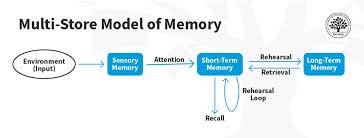
Sleep contributes significantly to memory consolidation. During rest, the brain organizes experiences, transferring them from short-term to long-term storage. Chronic sleep deprivation impairs this process. Modern lifestyles characterized by late-night screen exposure and irregular schedules may disrupt natural rhythms. Thus, the culture of constant availability indirectly influences memory formation. Protecting cognitive health requires respecting biological limits.
Education systems increasingly emphasize critical thinking over rote memorization. This shift acknowledges that information is accessible, but interpretation remains uniquely human. Nevertheless, foundational knowledge still matters. Creativity often emerges from connecting stored concepts in novel ways. A well-stocked internal memory provides raw material for insight. Balancing memorization with analysis becomes essential.
Aging introduces further complexity. Memory decline is often feared as an inevitable loss of self. Conditions such as dementia highlight the profound connection between memory and identity. When recollection fades, relationships shift. Families grieve not only physical changes but altered recognition. Yet aging does not uniformly erase memory. Emotional memory can remain strong even when factual recall weakens. Music, scents, and familiar environments can evoke powerful responses long after names are forgotten.
The ethics of memory technology present emerging dilemmas. Advances in neuroscience explore the possibility of enhancing or even altering memory. Pharmacological interventions might reduce traumatic recall. Brain-computer interfaces could one day augment storage capacity. While such innovations offer therapeutic promise, they raise questions about authenticity. If memories can be modified, what defines genuine experience? Identity anchored in altered recollection becomes philosophically complex.
Literature and art have long grappled with memory’s fragility. Novels explore unreliable narrators whose recollections blur truth and imagination. Paintings capture fleeting moments, preserving them beyond physical time. Diaries and letters serve as intimate memory capsules. Artistic expression recognizes that remembering is both preservation and creation. Each retelling reshapes the original event.
Rituals reinforce memory through repetition. Birthdays, anniversaries, and commemorations anchor time. Religious practices often revolve around remembrance—of teachings, sacrifices, or origins. These structured acts counteract forgetfulness by embedding memory into communal rhythm. In increasingly secular and fast-moving societies, rituals may decline, potentially weakening shared continuity.
Mindfulness practices encourage attention to present experience, yet paradoxically strengthen memory. When individuals engage fully with a moment, encoding becomes deeper. Multitasking, by contrast, fragments attention and reduces retention. The quality of attention determines the durability of memory. Thus, cultivating focus is not merely about productivity but about shaping personal history.
Language influences memory encoding. Experiences described verbally become more structured. Journaling can clarify emotion and solidify insight. Conversely, events lacking narrative framework may fade. Children learn to remember partly through storytelling. Caregivers who discuss daily activities help young minds organize experience chronologically and emotionally.
The relationship between trauma and memory is particularly intricate. Traumatic events may be remembered with intense sensory detail yet fragmented sequence. Survivors sometimes struggle to articulate experiences coherently. Therapeutic approaches aim to integrate these fragments into narrative form, reducing their disruptive power. Memory healing does not require erasure but integration.
In contemplating the future, one must consider how artificial intelligence may interact with human memory. Personalized digital assistants already remind users of appointments and preferences. Future systems might anticipate needs based on historical data. While convenience increases, reliance deepens. Preserving internal cognitive capacity amid external augmentation becomes a conscious choice.
Ultimately, memory defines continuity. It anchors identity, informs decision-making, and shapes moral responsibility. Forgetting can liberate, but excessive outsourcing may erode introspection. The challenge of the modern era is not merely to store more information but to remember wisely. This requires intentional attention, reflection, and balance between digital tools and biological processes.
To remember is to affirm existence. Each recollection reweaves the tapestry of self. In a world where data multiplies endlessly, cultivating meaningful memory becomes an act of resistance. It insists that human experience is more than archived pixels. It is lived, interpreted, and integrated within the quiet architecture of the mind.