Psychiatry traditionally treats time distortion as a secondary symptom—something that appears in depression, mania, trauma, or psychosis. Slowed time in melancholia, accelerated time in mania, or frozen time in trauma are well documented. Far less examined, however, is a phenomenon in which time itself becomes the primary object of anxiety. This condition, which may be called Temporal Disintegration Anxiety, arises when an individual loses implicit trust in the continuity, reliability, and coherence of subjective time.
Temporal Disintegration Anxiety is not simply fear of the future or regret about the past. Rather, it is a persistent unease that the flow of time is unstable, fragile, or liable to collapse. Patients often describe sensations such as “time feels thin,” “the present doesn’t hold,” or “moments don’t connect properly.” The distress is not tied to a specific event but to the experience of temporality itself. Everyday transitions—finishing a sentence, walking from one room to another, waiting for a response—can provoke subtle panic because the mind no longer assumes seamless continuity between moments.
This condition differs from depersonalization and derealization, although overlap exists. In depersonalization, the self feels unreal; in derealization, the world feels unreal. In Temporal Disintegration Anxiety, both self and world may feel intact, yet the bridge between moments feels unreliable. The individual remains oriented, logical, and often highly articulate, but experiences a constant background fear that the present will dissolve before it can stabilize. This creates a state of hyper-attention to “nowness,” which paradoxically disrupts the natural flow of time.
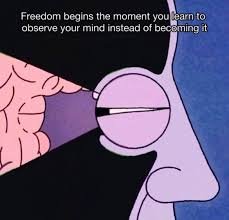
Neurocognitively, Temporal Disintegration Anxiety may involve dysfunction in predictive timing mechanisms. The brain normally operates by anticipating the immediate future—milliseconds to seconds ahead—allowing experience to feel continuous. When this predictive buffering weakens, the present becomes effortful rather than automatic. Each moment must be consciously “held together.” This effort is exhausting and often misinterpreted as generalized anxiety or early psychosis, though reality testing typically remains intact.
A striking feature of this condition is the patient’s language. Many struggle to describe their distress using conventional emotional terms. Instead, they speak in metaphors of physics or mechanics: slipping, gaps, discontinuities, breaks. Clinicians unfamiliar with phenomenological psychiatry may dismiss these reports as abstract or intellectualized, missing the intense somatic fear beneath them. The anxiety is real, but its object—time itself—is unconventional.
Over time, Temporal Disintegration Anxiety can lead to behavioral adaptations that further entrench the problem. Individuals may rely heavily on routines, clocks, recordings, or external markers to reassure themselves that time is moving properly. Others avoid stillness, silence, or unstructured situations where temporal flow becomes more noticeable. Ironically, attempts to control time-awareness often amplify it, reinforcing the sense that time is something that must be monitored.
Treatment remains challenging. Purely cognitive approaches often fail because the fear is not propositional; it is pre-reflective. Reassuring the patient that time is continuous does little to restore the felt sense of continuity. Pharmacological interventions may reduce arousal but do not address the core disturbance. Therapeutic approaches that emphasize embodied rhythm—walking, breathing, music, coordinated movement—appear more promising, as they help re-anchor time in the body rather than in abstract monitoring.
Temporal Disintegration Anxiety highlights a crucial but neglected dimension of mental health: the human mind does not merely exist in time; it actively constructs time as a lived experience. When that construction becomes unstable, suffering emerges in forms that evade standard diagnostic categories. This phenomenon suggests that some psychiatric distress is not about thoughts, emotions, or identity, but about the very framework that allows experience to unfold.
Understanding such conditions may require psychiatry to move beyond symptom checklists and return to careful phenomenological listening—paying attention not only to what patients think or feel, but to how reality itself is structured in their experience.