After the Post-Irreversible Adaptation Void, some individuals enter a phase that is almost never recognized as recovery, because it does not feel like recovery at all. This stage, which can be called Silent Reversibility Reconstruction, is defined not by relief, insight, or emotional return, but by something far quieter: the gradual reappearance of change itself, unnoticed and unobserved.
The defining feature of this phase is that nothing dramatic happens. There is no moment of “coming back,” no emotional breakthrough, no realization that the crisis is over. In fact, individuals who closely monitor themselves often believe that nothing is improving. Yet beneath conscious awareness, the mind begins to tolerate transitions again. States shift without triggering alarm. Thoughts arise and pass without being checked for permanence. This happens not because the person trusts reversibility, but because the mind stops asking whether reversibility exists.
Phenomenologically, experience regains micro-mobility. Small variations in mood, attention, and energy occur without being framed as threats. The present moment no longer feels hardened or final; it becomes slightly porous. Importantly, this porosity is not perceived as safety—it is perceived as normality, which is why it is easy to miss. Patients often report, in retrospect, that they were already improving before they realized improvement was possible.
This stage differs sharply from insight-based recovery. Understanding what happened, naming the condition, or making sense of the past may still feel impossible or even dangerous. But meaning is no longer required for stabilization. The nervous system relearns what the mind cannot yet believe: that internal states change on their own. This learning is procedural, not conceptual.
A key characteristic of Silent Reversibility Reconstruction is the return of unmonitored engagement. The individual becomes absorbed in tasks without checking how they feel during them. Time passes without being measured. Conversations end without post-analysis. These moments are brief at first and often dismissed as irrelevant, yet they are structurally decisive. Each unmonitored transition weakens the memory of irreversibility.
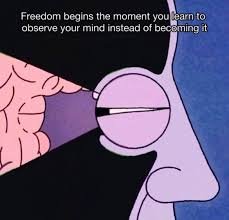
Neuropsychologically, this phase likely reflects the reactivation of state-switching mechanisms that were suppressed during existential threat. Once the brain no longer treats internal change as catastrophic, it allows variability again. However, because this occurs below reflective awareness, attempts to observe or accelerate the process can interfere with it. The mind that watches too closely reintroduces rigidity.
Clinically, this phase is often misunderstood or interrupted. Patients may return to therapy seeking the “return of self,” only to be confused when no such moment arrives. Clinicians may push for emotional exploration or narrative integration too early, inadvertently pulling the person back into monitoring. In some cases, improvement stalls not because recovery is impossible, but because it is being demanded to appear.
The risk in this stage is subtle: impatience. The individual may conclude that this muted functioning is the final form of life, unaware that flexibility is already reassembling itself in the background. Conversely, fear of relapse may cause avoidance of novelty, slowing the reconstruction process. What is required instead is tolerance of ambiguity—living without confirming whether one has returned.
Silent Reversibility Reconstruction reveals a counterintuitive truth: the mind does not regain reversibility by proving that return is possible. It regains it by forgetting to ask. Recovery, here, is not a destination but a fading of vigilance—a disappearance of the very question that once dominated consciousness.
This stage marks the point at which the psyche quietly resumes its most fundamental capacity: to move, to shift, and to leave states without ceremony. Not everything comes back, and not everything needs to. What returns first is not identity or emotion, but flow. And in that flow, life begins again—without announcing that it has done so.