Psychiatry often treats responsibility as a marker of intact agency and maturity. Taking care of duties, honoring commitments, and acting reliably are usually interpreted as signs of psychological health. Yet there exists a subtle condition in which responsibility is performed flawlessly while the subjective sense of ownership over those responsibilities is absent. This phenomenon can be described as Responsibility Without Ownership.
Individuals in this state meet expectations consistently. They work, maintain relationships, keep promises, and handle crises competently. However, internally, these actions feel assigned rather than chosen. The phrase “my responsibility” feels foreign, even when the task is clearly self-initiated. People often say, “I do what needs to be done, but it doesn’t feel like it belongs to me.”
This condition differs from avoidance or defiance. There is no resistance to responsibility. It also differs from burnout, as energy may be adequate and resentment minimal. The absence lies in personal claim. Responsibility is executed, but never inhabited.
Phenomenologically, life feels externally structured. Obligations appear as objective facts rather than extensions of the self. Success brings relief rather than satisfaction; failure brings concern rather than guilt. Emotional reactions are appropriate but curiously impersonal.
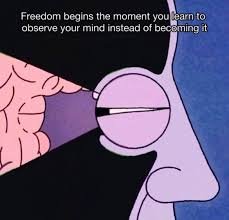
Neurocognitively, responsibility without ownership may reflect a decoupling between executive functioning and self-referential valuation. The brain recognizes what must be done and performs it efficiently, but the self does not integrate these actions into identity. As a result, agency exists without authorship.
Clinically, this condition is easy to miss. Individuals are often praised as reliable or dependable. Internally, however, they may feel interchangeable—as if anyone else could occupy their role without loss. Over time, this can lead to a quiet erosion of self-worth, not from failure, but from replaceability.
Attempts to increase motivation or pride often fall flat. Encouragement to “take ownership” feels abstract or moralizing. The problem is not unwillingness, but inability to experience authorship over action.
Some therapeutic observations suggest that ownership may emerge through selective refusal. When individuals allow themselves to not fulfill certain nonessential obligations—and tolerate the discomfort that follows—they may begin to feel the boundary of what is truly theirs. Ownership arises not from doing everything, but from choosing what not to carry.
Responsibility Without Ownership challenges the idea that fulfilling duties guarantees agency. It reveals a state in which life is carried competently but anonymously. Psychological health requires not only responsibility, but the felt sense of being the one who carries it.
Recovery, when it happens, often begins with a small, unjustified preference—something done not because it is required, but because it feels personally claimed. In that moment, responsibility stops being an assignment and starts becoming a choice.