Modern psychiatry places great emphasis on insight, self-reflection, and narrative coherence. Patients are encouraged to understand their past, articulate their emotions, and construct meaningful personal stories. Yet an underrecognized pathological state emerges when this process becomes excessive, rigid, and involuntary—a condition that can be described as Narrative Saturation Syndrome. This phenomenon occurs when the individual’s mental life becomes overfilled with self-explanatory narratives to the point that spontaneous experience, emotional immediacy, and psychological flexibility begin to erode.
Narrative Saturation Syndrome is not simply overthinking or rumination. It is characterized by a chronic compulsion to explain oneself internally: why one feels a certain way, what a reaction “means,” how a thought fits into a broader life story, or what psychological mechanism must be responsible. The individual no longer experiences thoughts and emotions as transient mental events but as narrative obligations that must be interpreted, contextualized, and justified. Silence of interpretation becomes intolerable. Every inner state demands a story.
Clinically, this condition is most often seen in highly introspective individuals, patients with prolonged exposure to psychotherapy, or those who have extensively consumed psychological or philosophical content. Importantly, intelligence and insight do not protect against it; they may even intensify it. The person may speak fluently about attachment styles, defense mechanisms, trauma models, or cognitive distortions, yet report feeling increasingly distant from authentic experience. Emotional life becomes mediated by explanation rather than lived directly.
Unlike depersonalization, where experience feels unreal or detached, Narrative Saturation involves over-reality. Feelings are intensely analyzed but paradoxically less felt. Joy, sadness, anger, or desire are quickly transformed into interpretive objects: “This joy is a defense,” “This sadness is unresolved grief,” “This desire reflects a childhood lack.” Over time, emotional spontaneity collapses under interpretive weight. Patients often describe feeling “psychologically full,” “mentally cluttered,” or unable to encounter the present moment without commentary.
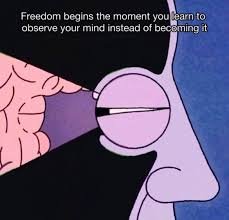
From a cognitive perspective, Narrative Saturation may reflect a failure of meta-cognitive inhibition. The mind loses its ability to stop explaining itself. This creates a recursive loop in which awareness observes itself observing itself, generating an infinite regress of self-monitoring. Unlike psychosis, reality testing remains intact. Unlike obsessive–compulsive disorder, the narratives do not feel alien or intrusive; they feel justified, even necessary. This makes the condition difficult to recognize as pathological.
The existential cost of Narrative Saturation is significant. Identity becomes rigid rather than flexible. The self is no longer something that evolves implicitly through experience, but a fixed object constantly under review. Many individuals report a sense of being “psychologically trapped inside my own explanation of myself.” This can lead to chronic fatigue, anhedonia, and a subtle despair rooted not in meaninglessness, but in meaning overload.
Standard therapeutic approaches can unintentionally worsen this condition. Insight-oriented therapy may reinforce narrative compulsion, while excessive emotional labeling can further distance patients from raw affect. Treatment requires a counterintuitive shift: reducing the centrality of self-explanation. Interventions may focus on cultivating non-narrative modes of experience—physical sensation, action without interpretation, creative expression without analysis. The goal is not to eliminate understanding, but to restore the ability not to understand everything.
Narrative Saturation Syndrome exposes a blind spot in contemporary mental health culture. While meaning-making is essential for psychological health, there exists a threshold beyond which meaning becomes oppressive. The mind requires not only coherence, but also silence—spaces where experience is allowed to exist without explanation. When those spaces disappear, the self does not become clearer; it becomes exhausted.
This phenomenon suggests a broader implication for psychiatry: psychological suffering can arise not only from confusion or lack of insight, but from an excess of insight that has lost its stopping mechanism. In such cases, healing may involve learning how to let parts of the self remain unexplained.