Psychiatry often assumes that psychological suffering arises from confusion, lack of meaning, or unresolved conflict. Far less attention is given to a paradoxical condition in which distress emerges from the opposite state: excessive coherence. This phenomenon, which may be described as Meaning Saturation Fatigue, occurs when the individual experiences life as already fully explained, interpreted, and understood—leaving no psychological space for vitality.
Individuals experiencing meaning saturation fatigue do not report emptiness in the classic depressive sense. They often say that life does make sense. They understand their history, their personality, their relationships, and even their symptoms. Nothing feels mysterious or unresolved. Yet alongside this clarity comes a profound fatigue, not of the body, but of existence itself. Patients often say, “I know why everything is the way it is—and that’s the problem.”
This condition differs from anhedonia. Pleasure may still be accessible, and activities can be enjoyed momentarily. What is missing is existential propulsion. There is no felt reason to move forward, not because meaning is absent, but because it feels complete. The future appears as a repetition of already-known explanations. Curiosity collapses, not from apathy, but from saturation.
Phenomenologically, meaning saturation fatigue is experienced as temporal flattening. The past explains the present too well, and the present explains the future too easily. Surprise becomes rare. Events are immediately categorized, contextualized, and neutralized. The mind responds to experience with instant comprehension, leaving no residue of uncertainty. This produces a quiet exhaustion, as if life has been prematurely summarized.
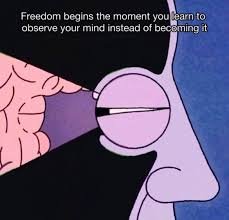
This state is often seen in highly reflective individuals, long-term therapy patients, or those who have intensely analyzed their inner life for years. Insight, which is normally protective, becomes oppressive. The individual may feel trapped inside their own understanding. Importantly, this is not narcissistic certainty; doubt may still exist, but it lacks generative power. Doubt no longer opens possibilities—it only refines explanations.
Neurocognitively, meaning saturation fatigue may involve overactivation of narrative and interpretive networks at the expense of exploratory systems. The brain becomes efficient at integrating experience into existing models, but inefficient at allowing novelty to disrupt those models. As a result, experience loses friction. Without friction, there is no psychological spark.
Clinically, this condition is often misdiagnosed as low-grade depression or burnout. Standard interventions aimed at increasing insight or reframing meaning may worsen the problem by adding further explanation. Patients may feel increasingly tired after therapy sessions, not relieved. What they need is not more meaning, but less immediate meaning.
Therapeutic approaches that show promise focus on restoring openness rather than coherence. Activities that resist interpretation—improvisation, sensory immersion, creative acts without evaluation—can help reintroduce uncertainty. The goal is not to destroy understanding, but to loosen its grip, allowing experience to exceed explanation again.
Meaning Saturation Fatigue challenges a central assumption of mental health culture: that understanding oneself is always healing. This phenomenon shows that when meaning becomes total, it can suffocate vitality. Mental health requires not only coherence, but unfinishedness—spaces where life is allowed to remain unclear.
In this state, recovery does not arrive as insight, but as renewed ignorance: the return of not knowing what something means, and feeling alive because of it.