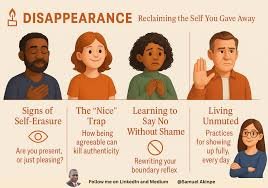
Altruistic Self-Neglect Pattern (ASNP) is a hidden psychological state in which individuals consistently prioritize the needs, emotions, and comfort of others while quietly neglecting their own inner world. It is not simple generosity or empathy. Instead, it is a learned survival strategy that equates personal worth with usefulness to others.
People with ASNP are often described as kind, reliable, and selfless. They listen, help, and support without complaint. Yet internally, they may feel invisible, exhausted, or emotionally unfulfilled. Their identity becomes tied to how much they give, not to who they are.
This pattern usually forms in early environments where approval was conditional. When love was earned through caretaking, compliance, or emotional maturity, the child learned that their needs were secondary. Over time, this belief becomes internal law: to be valued, I must serve.
ASNP does not eliminate desire, but it pushes it aside. The individual may feel guilt when resting, setting boundaries, or choosing themselves. Self-care feels selfish. Saying no feels dangerous.
Emotionally, ASNP creates chronic depletion. Giving becomes a duty rather than a choice. Resentment may grow silently, even as the person continues to help others.
In relationships, ASNP leads to imbalance. Others may depend on the individual without realizing the emotional cost. The giver feels unseen, yet fears losing connection if they stop giving.
Healing begins with redefining worth. When individuals learn that they deserve care without earning it, they slowly reclaim their own emotional space.
ASNP shows that kindness should not require self-disappearance.