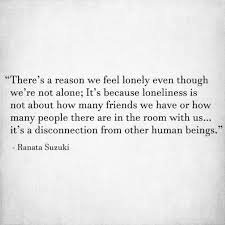
A person can sit at a crowded table, laugh at the right moments, respond to messages all day, attend meetings, family gatherings, celebrations, and still feel profoundly alone. This kind of loneliness is confusing because it does not match the visible reality. There are people everywhere. There is noise, conversation, interaction. Yet internally there is distance. A quiet separation. A sense that no one truly sees what is happening inside.
Loneliness is often misunderstood as physical isolation. In reality, it is emotional disconnection. It is the gap between what we experience internally and what we are able to share externally. When that gap widens, the feeling of being alone intensifies, regardless of how many people are physically present.
Many individuals learn early in life to filter themselves. They adapt to expectations. They adjust their tone, humor, opinions, even emotional expression depending on the environment. At first, this flexibility seems like social intelligence. Over time, however, constant adaptation can create fragmentation. If someone is always performing a version of themselves, they may lose contact with their authentic internal world. And when authenticity is hidden, connection becomes superficial.
Superficial connection is not meaningless, but it does not satisfy deeper emotional needs. Conversations remain safe, predictable, polite. Vulnerability is avoided. Real fears, insecurities, and uncertainties stay unspoken. Others may know facts about the person—where they work, what they enjoy, what they achieved—but not the emotional landscape beneath those facts. Without emotional exposure, intimacy cannot fully develop.
Modern communication intensifies this paradox. Technology allows constant contact. Messages are exchanged instantly. Social media creates the illusion of closeness through likes, comments, and shared content. Yet digital interaction often lacks emotional depth. It rewards presentation rather than presence. People curate their lives carefully, sharing highlight moments while concealing confusion or pain. Observers compare their unfiltered internal struggles to others’ polished images, deepening feelings of isolation.
Loneliness in social settings can also stem from fear of burdening others. Many people hesitate to express vulnerability because they do not want to appear weak or demanding. They tell themselves that others have their own problems. They minimize their struggles. They become the supportive friend, the reliable partner, the stable colleague. Externally, they seem strong. Internally, they feel unseen.
Attachment patterns shape this dynamic. Individuals with avoidant tendencies often maintain independence at the cost of intimacy. They may value self-sufficiency and feel uncomfortable relying on others. Even in relationships, they keep emotional distance. This protects them from rejection but limits closeness. On the other hand, those with anxious tendencies may seek reassurance constantly yet still feel alone if reassurance does not address deeper insecurities. In both cases, physical proximity does not guarantee emotional security.
There is also the experience of existential loneliness—the awareness that no one can fully access another person’s consciousness. Each individual carries memories, perceptions, and internal narratives that are uniquely theirs. Even in loving relationships, there are moments when this separateness becomes visible. Recognizing this can feel unsettling. It reminds us that complete merging with another person is impossible.
Cultural expectations often discourage emotional honesty. In environments where strength is equated with stoicism, individuals suppress sadness and doubt. In competitive spaces, vulnerability may feel risky. If someone reveals insecurity, they fear losing status or credibility. So they smile, perform competence, and hide uncertainty. Over time, this concealment builds emotional walls.
Loneliness also appears when personal growth outpaces social circles. As individuals evolve—changing values, beliefs, interests—they may feel increasingly different from their surroundings. Conversations that once felt engaging may now feel limiting. Shared humor may no longer resonate. This subtle misalignment creates distance even without conflict. Growth can be isolating before new connections form.
The nervous system responds to loneliness as it would to physical threat. Studies show that chronic loneliness activates stress responses similar to those triggered by danger. The body releases stress hormones. Sleep quality declines. Mood becomes unstable. Over time, persistent loneliness can impact physical health, immune function, and cognitive clarity.
Yet loneliness is not solely negative. It is also information. It signals a need for deeper connection, authenticity, or alignment. The discomfort is a call to examine where emotional expression has been restricted. It invites reflection: Where am I hiding? Where am I afraid to be known?
Addressing loneliness requires gradual risk. Authentic connection cannot occur without some exposure. This does not mean oversharing indiscriminately. It means choosing safe people and offering pieces of the internal world honestly. Saying “I’ve been feeling disconnected lately” or “I don’t always feel understood” opens doors. Vulnerability invites reciprocity. Often, others are waiting for permission to express similar feelings.
Listening is equally important. True connection forms not only when we speak authentically but when we receive others without judgment. Emotional presence—the ability to stay with someone’s discomfort without immediately fixing or dismissing it—builds trust. When people feel heard, loneliness softens.
Self-connection is foundational. Some loneliness arises not from others’ absence but from disconnection from oneself. Constant distraction—through work, media, obligations—can prevent introspection. Without self-awareness, it becomes difficult to articulate needs. Practices like journaling, mindfulness, or reflective walks strengthen internal clarity. The more someone understands their own emotions, the more effectively they can communicate them.
Boundaries also reduce loneliness. Paradoxically, saying no can increase connection. When individuals overextend themselves to please others, resentment builds. Authenticity requires limits. Expressing preferences and constraints fosters relationships based on reality rather than performance.
Community plays a role beyond individual relationships. Shared purpose—volunteering, creative collaboration, learning environments—creates bonding experiences that transcend surface-level interaction. Humans evolved in cooperative groups. Contribution fosters belonging.
It is important to distinguish between chosen solitude and painful loneliness. Solitude can be nourishing. It allows integration, creativity, restoration. Loneliness, in contrast, feels involuntary and heavy. Learning to enjoy solitude reduces desperation in relationships and supports healthier bonds.
Therapeutic support can be transformative for chronic loneliness. A safe therapeutic relationship models emotional attunement. Experiencing consistent, nonjudgmental presence can reshape internal expectations about connection. It challenges beliefs such as “I am too much” or “No one would understand.”
Ultimately, loneliness among others reveals a mismatch between outer interaction and inner truth. Closing that gap requires courage. It means tolerating the discomfort of being seen. It means accepting that not everyone will resonate. Genuine connection is selective, not universal.
There will always be moments of separateness in human life. Complete emotional transparency is neither possible nor necessary. What reduces loneliness is not constant exposure but meaningful exchange. A few relationships grounded in honesty outweigh many superficial interactions.
When someone dares to reveal a hidden fear and is met with empathy, something shifts. The nervous system relaxes. The internal wall softens. The room may look the same. The number of people may not change. But the experience transforms.
Loneliness in a crowd is not proof of personal deficiency. It is often a sign that the heart is asking for depth rather than volume. And depth begins with one honest moment, offered and received.