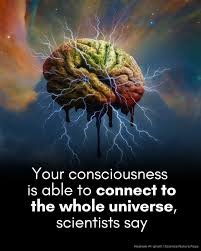
Is consciousness merely an emergent property of neural computation, or does it represent something fundamentally irreducible within biological systems? This question has occupied philosophers, neuroscientists, and cognitive theorists for centuries, yet recent advances in neuroimaging, computational modeling, and systems neuroscience have intensified rather than resolved the debate. As empirical tools increasingly allow us to map the correlates of subjective experience onto measurable neural activity, a deeper paradox emerges: if every conscious state corresponds to a specific pattern of neuronal firing, is subjective awareness simply an epiphenomenal byproduct of electrochemical processes? Or does consciousness exert causal influence within the brain’s dynamic architecture? The hypothesis that consciousness may be, in some sense, a neural illusion forces us to reconsider foundational assumptions about perception, agency, and the self.
At the most fundamental level, the nervous system operates through electrochemical signaling. Neurons communicate via action potentials and synaptic transmission, forming vast networks of excitatory and inhibitory interactions. These interactions give rise to complex oscillatory patterns measurable through electroencephalography (EEG), magnetoencephalography (MEG), and functional magnetic resonance imaging (fMRI). From a strictly reductionist perspective, conscious experience should be fully explainable in terms of these interactions. Yet the “hard problem” of consciousness, as articulated in contemporary philosophy of mind, highlights a persistent explanatory gap: how do objective neural processes generate subjective phenomenology—the qualitative “what it is like” aspect of experience?
One approach to this question emerges from the Global Workspace Theory (GWT), which proposes that consciousness arises when information becomes globally available across distributed neural networks. According to this framework, numerous unconscious processes operate in parallel, but only a subset of information enters a “global workspace,” allowing integration, reporting, and flexible decision-making. Neuroimaging studies support this model by demonstrating widespread frontoparietal activation during conscious perception, particularly under conditions of attentional amplification. However, critics argue that global availability does not explain phenomenality itself; it merely describes functional accessibility. The neural broadcasting of information may correlate with consciousness without constituting it.
Integrated Information Theory (IIT) offers a different perspective, positing that consciousness corresponds to the degree of integrated information—quantified as phi (Φ)—within a system. According to IIT, any system with sufficiently high integration possesses some level of experience. This theory reframes consciousness not as a binary property but as a graded phenomenon. The human brain, with its densely interconnected thalamocortical networks, achieves high levels of integration, whereas simpler systems achieve lower levels. Yet IIT has faced methodological challenges, particularly regarding the practical calculation of Φ in complex biological networks. Furthermore, critics question whether mathematical integration alone suffices to account for subjective quality.
The illusion hypothesis gains traction when examining predictive processing frameworks. Contemporary neuroscience increasingly conceptualizes the brain as a prediction engine. Rather than passively receiving sensory input, the brain actively constructs models of the external world, continuously generating hypotheses and minimizing prediction error through feedback loops. Perception, under this model, is a controlled hallucination constrained by sensory data. If perception itself is fundamentally inferential, then the sense of a unified, stable self may likewise be a constructed narrative. The feeling of agency—the experience of initiating voluntary action—can be experimentally dissociated from actual motor causation, as demonstrated in Libet-style experiments and subsequent refinements. Neural readiness potentials often precede conscious awareness of intention, suggesting that conscious will may follow rather than initiate action.
Such findings have profound implications. If conscious intention arises after neural processes are already underway, then the subjective experience of authorship may be a post hoc reconstruction. From this vantage point, consciousness appears less as a driver of behavior and more as a commentator—an interpretive overlay imposed upon unconscious computation. This aligns with modular models of cognition in which numerous specialized subsystems operate semi-independently, with consciousness serving to integrate or narrativize their outputs.
Nevertheless, dismissing consciousness as mere illusion risks conceptual oversimplification. An illusion, by definition, is itself an experience. To claim that consciousness is illusory presupposes the existence of experiential content. Thus, the illusion hypothesis may be self-undermining. More plausibly, what is illusory is not consciousness per se but certain assumptions about its nature—particularly the notion of a centralized, immutable self.
Neuropsychological evidence from pathological conditions further illuminates this issue. Patients with hemispatial neglect, resulting from parietal lobe damage, may fail to consciously perceive stimuli in one half of their visual field despite intact sensory pathways. Similarly, blindsight patients can respond behaviorally to visual stimuli without conscious awareness. These dissociations indicate that perception and consciousness are not identical processes. Conscious awareness appears to require additional integrative mechanisms beyond primary sensory processing.
Split-brain research provides another compelling dimension. In patients who have undergone corpus callosotomy, the two hemispheres can function semi-independently, each capable of distinct perceptual and cognitive operations. Under certain conditions, conflicting responses from each hemisphere suggest the presence of parallel conscious streams. If unity of consciousness depends on interhemispheric integration, then the singular self may be contingent rather than fundamental.
Neurochemical modulation further complicates the picture. Anesthetic agents such as propofol selectively disrupt thalamocortical connectivity, leading to loss of consciousness without necessarily abolishing all neural activity. Psychedelic compounds, in contrast, appear to decrease activity within the default mode network (DMN), correlating with ego dissolution and altered self-boundaries. These findings imply that consciousness is not merely about overall neural activation but about specific patterns of connectivity and network organization.
From a developmental perspective, consciousness emerges gradually. Neonates exhibit primitive awareness, yet higher-order self-reflective capacities develop over time, paralleling cortical maturation. This ontogenetic trajectory supports the notion that consciousness is constructed through neural complexity rather than instantiated as a fixed entity.
Computational neuroscience introduces additional considerations. Artificial neural networks can simulate aspects of perception, language, and decision-making with remarkable sophistication. However, whether such systems possess phenomenological awareness remains contested. If consciousness requires specific biological substrates—perhaps involving recurrent connectivity, temporal binding, or quantum-level dynamics—then computational replication alone may be insufficient. Conversely, if consciousness arises from information integration regardless of substrate, advanced artificial systems could theoretically achieve experiential states.
The evolutionary dimension cannot be ignored. Consciousness likely conferred adaptive advantages, enhancing flexible behavior, social coordination, and long-term planning. Social neuroscience suggests that self-awareness and theory of mind share overlapping neural circuits, particularly within medial prefrontal regions. The capacity to model one’s own mental states may have evolved alongside the capacity to model others. Thus, consciousness may function as a social interface rather than a purely introspective phenomenon.
Critically, the illusion hypothesis often conflates metaphysical and epistemological concerns. To describe consciousness as illusory may reflect limitations in our conceptual framework rather than ontological absence. Neuroscience excels at identifying neural correlates of consciousness (NCCs), yet correlation does not equal identity. The explanatory gap persists because subjective experience is accessible only from the first-person perspective, whereas neuroscience operates primarily from the third-person vantage.
Some theorists propose that resolving this gap requires abandoning strict materialism in favor of neutral monism or panpsychism. These perspectives suggest that consciousness may be a fundamental property of reality, analogous to mass or charge. While such views challenge conventional neuroscience, they highlight the possibility that the illusion resides not in consciousness but in our assumptions about matter.
Empirical research continues to refine our understanding of minimal neural conditions necessary for consciousness. Studies involving patients in vegetative or minimally conscious states demonstrate that covert awareness can persist despite absence of behavioral responsiveness. Advanced neuroimaging techniques have revealed command-following via neural activation patterns, challenging simplistic behavioral definitions of consciousness.
The temporal dynamics of consciousness also merit attention. Oscillatory synchronization, particularly in gamma frequency bands, appears associated with perceptual binding and unified awareness. Temporal coherence across distributed cortical regions may enable the integration required for conscious states. Disruption of such synchrony correlates with disorders of awareness, reinforcing the importance of dynamic coordination.
Ultimately, labeling consciousness as a neural illusion may oversimplify a multidimensional phenomenon. The self, as commonly conceived—a continuous, centralized agent—may indeed be a constructed narrative generated by distributed processes. Yet narrative construction does not negate experiential reality. The brain’s capacity to model itself, to generate recursive representations, may create the impression of a homunculus where none exists. But the absence of a central controller does not imply absence of consciousness; it implies decentralization.
In conclusion, contemporary neuroscience suggests that many aspects of subjective experience—unity, agency, continuity—are emergent and constructed rather than fundamental. Predictive coding, modular processing, and post hoc rationalization all support the view that the self is interpretive. However, to reduce consciousness entirely to illusion risks overlooking its causal and adaptive significance. Consciousness may not be an illusion, but our intuitions about its structure and origin may be.
The future of this inquiry depends on integrative methodologies bridging phenomenology, computational modeling, and empirical neurobiology. Only by synthesizing first-person reports with third-person measurements can the explanatory gap narrow. Whether consciousness ultimately proves reducible, emergent, or fundamental, the investigation itself reveals the extraordinary complexity of the neural systems that give rise to experience. If consciousness is a neural illusion, it is an illusion of unparalleled depth—one capable of questioning its own origins.