Human psychological stability depends not only on memory, identity, or emotion, but on a largely invisible assumption: the belief that one can return. Return to a previous mental state, return to normality, return to oneself. In Irreversibility Anxiety, this assumption collapses. The individual becomes haunted not by what is happening, but by the felt certainty that what is happening cannot be undone.
Irreversibility Anxiety is not simply fear of permanence or aging, nor is it equivalent to catastrophic thinking. It is a deep, pre-reflective disturbance in which the mind loses confidence in its own reversibility. Patients often describe the experience as “crossing a line,” “going too far,” or “having seen something that cannot be unseen.” Importantly, this sense of irreversibility may arise without any dramatic external event. A thought, realization, altered state, or subtle shift in consciousness can be enough to trigger it.
Unlike panic disorder, where fear peaks and resolves, Irreversibility Anxiety is sustained and existential. The anxiety does not ask, “What if something bad happens?” but rather, “What if I am already past the point of return?” The distress is not about future consequences, but about a perceived loss of psychological undo-function. The person may remain fully rational, oriented, and articulate, yet feel trapped in a state that feels qualitatively final.
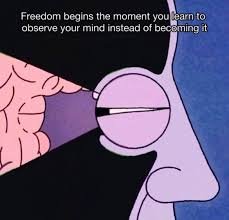
Phenomenologically, this condition is marked by a collapse of temporal elasticity. Normally, mental states are experienced as fluid and revisable. In Irreversibility Anxiety, the present hardens. Thoughts and perceptions feel locked in place, as if consciousness itself has become brittle. This can lead to hyper-monitoring of mental states, as the individual constantly checks whether they are “back yet,” paradoxically reinforcing the sense that return is impossible.
This phenomenon differs from depersonalization and derealization. In those conditions, experience feels unreal or distant. In Irreversibility Anxiety, experience feels too real, too fixed. The problem is not detachment, but entrapment. The self feels fully present but unable to retreat. Patients may say, “I am still me, but I can’t step away from this version of me.”
Neurocognitively, Irreversibility Anxiety may involve dysfunction in neural systems responsible for contextual updating and state-switching. The brain normally signals that internal states are temporary. When this signaling weakens, transient experiences are misclassified as permanent transformations. This misclassification generates intense fear, even when no objective deterioration is occurring.
Behaviorally, individuals may seek reassurance compulsively—asking whether others have recovered from similar states, rereading past memories to confirm continuity, or testing emotions repeatedly to see if change is still possible. Others may avoid introspection entirely, fearing that further self-observation will deepen the sense of irreversibility. Both strategies tend to fail, as the core disturbance lies beneath conscious control.
Clinically, Irreversibility Anxiety is often misunderstood as obsession, generalized anxiety, or early psychosis. Yet it does not center on content, belief, or fear of harm. Its object is structural: the perceived loss of mental reversibility itself. This makes standard reassurance ineffective. Telling the patient “this will pass” often fails, because the capacity to believe that things pass is precisely what has been compromised.
Therapeutic approaches remain tentative. Interventions that emphasize time, rhythm, and physiological state-shifting may be more effective than insight or reassurance. Sleep, bodily regulation, and non-reflective engagement can gradually restore the felt sense that states change without requiring proof. The goal is not to convince the mind that return is possible, but to allow the nervous system to experience change directly.
Irreversibility Anxiety reveals a fragile foundation of mental health: the implicit belief that consciousness is reversible. When this belief collapses, suffering emerges even in the absence of delusion, mood disorder, or cognitive impairment. The condition suggests that one of the mind’s deepest needs is not control or meaning, but the quiet assurance that no mental state is final.