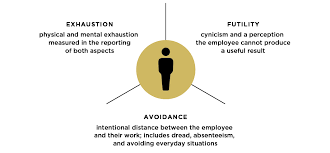
Intentional exhaustion is not apathy, not laziness, and not the simple absence of motivation. It is a far deeper psychological failure: the collapse of the mind’s capacity to generate intention itself. In this state, the individual does not merely lack desire for specific goals; they lack the internal mechanism that produces wanting. The question “What do you want?” becomes unanswerable not because options are unclear, but because the act of wanting no longer occurs.
Human action depends on intention — the internal signal that converts perception into movement, choice into behavior. When this signal weakens, life continues mechanically, but without inner propulsion. The person may still function, fulfill obligations, and respond to demands, yet feel internally inert. Actions happen, but they are not initiated from within.
Clinically, intentional exhaustion appears in severe depression, schizophrenia-spectrum disorders (particularly negative-symptom presentations), complex trauma, prolonged burnout, and states of extreme learned helplessness. It often develops after long periods in which intention was punished, ignored, overridden, or rendered meaningless. When wanting repeatedly leads to frustration, danger, or loss, the psyche adapts by shutting down the wanting system itself.
From the inside, this condition is profoundly confusing. The person may say, “I don’t want anything,” but this is not peaceful neutrality. It is experienced as a disturbing void. The absence of desire is not relieving; it is disorienting. Without intention, time stretches endlessly. Decisions feel arbitrary. Life feels stalled, not because of resistance, but because of internal silence.
This state differs from anhedonia. In anhedonia, pleasure is diminished. In intentional exhaustion, direction is lost. The person may still enjoy small sensory experiences when they occur, yet feel incapable of initiating movement toward anything. Desire has lost its generative power.
Neuropsychologically, intentional exhaustion reflects disruption in motivational and executive networks that translate valuation into action. Chronic stress and trauma impair dopaminergic signaling related to anticipation and effort. Over time, the brain learns that initiating action carries high cost with low reward. The safest option becomes non-initiation.
Psychodynamically, intentional exhaustion often functions as a defense. Wanting exposes vulnerability. Desire implies hope. Hope risks disappointment. By eliminating intention, the psyche reduces exposure to pain. However, this protection comes at a steep cost: without intention, agency collapses.
Interpersonally, this condition is often misunderstood. Others may interpret the individual as passive, unambitious, or resistant. Pressure to “try harder” or “find motivation” only deepens the collapse, reinforcing the belief that intention is demanded but not internally available. The individual may experience shame for something they cannot produce.
Existentially, intentional exhaustion erodes the sense of being alive. To live is not merely to exist, but to lean toward something. Without leaning, existence becomes static. The person may describe life as something they are enduring rather than inhabiting. This state is a major but often hidden contributor to passive suicidal ideation — not the desire to die, but the inability to want to live.
Therapeutically, intentional exhaustion cannot be treated through goal-setting or motivational techniques alone. Asking the person to identify desires presupposes the very capacity that has collapsed. Treatment must instead focus on restoring the safety of wanting. This begins with reducing demand, minimizing pressure, and validating non-initiation as a state rather than a failure.
Small, externally supported intentions are often the first step. The therapist may temporarily hold intention on behalf of the patient, offering gentle structure without expectation. “We will meet again,” “Let’s notice what happens,” become acts of shared intention. Over time, the patient may begin to feel flickers of internal movement — not strong desires, but slight preferences or inclinations.
As intention begins to return, anxiety often follows. Wanting reintroduces vulnerability. The patient may fear disappointment, loss, or responsibility. Therapy must help the individual tolerate desire without immediately collapsing into avoidance or exhaustion.
Recovery is not marked by ambition or passion at first. It is marked by the quiet reappearance of wanting: choosing one thing over another, initiating a small action, feeling pulled rather than pushed. These moments are fragile but profound. They signal the return of agency.
Ultimately, intentional exhaustion reveals a fundamental truth of psychological life: desire is not a luxury — it is a structural function. To want is to move toward existence. When wanting collapses, life stalls. Healing does not require grand purpose; it requires the restoration of the simplest intention — the capacity to lean, however slightly, toward something and feel that the leaning comes from within.