Human consciousness contains a curious paradox. It has the capacity to observe, analyze, and question nearly every aspect of experience, yet it often fails to notice its own mechanisms. The mind can investigate the external world with remarkable precision, but when attention turns inward, certain patterns remain strangely invisible. Individuals may repeat the same emotional reactions, interpret events through identical assumptions, and construct familiar narratives about themselves without recognizing that these processes are occurring. This raises a deeper psychological question: how does the mind hide from itself?
At first glance, the idea seems contradictory. If consciousness allows people to reflect on their thoughts and behaviors, then why would certain mental processes remain concealed? The answer lies in the structure of cognition itself. The human mind did not evolve primarily to achieve perfect self-transparency. Instead, it developed mechanisms that prioritize efficiency, stability, and survival. In many situations, complete awareness of every cognitive process would be unnecessary or even disruptive.
One of the most fundamental mechanisms through which the mind conceals itself is automatic processing. A significant portion of mental activity occurs without deliberate awareness. Perception, language comprehension, and motor coordination operate through highly refined systems that function rapidly and reliably without requiring conscious supervision.
This automation allows individuals to navigate complex environments without becoming overwhelmed by details. Yet the same efficiency that enables smooth functioning also creates blind spots. When a process operates automatically, the individual experiences only the result, not the underlying steps that produced it.
Consider the act of forming an opinion. A person may feel certain that a conclusion has been reached through careful reasoning, yet psychological research suggests that many judgments arise from rapid, intuitive evaluations. Only afterward does the mind construct explanations that make the decision appear deliberate and logical. In this way, the narrative of reasoning can obscure the actual processes that shaped the judgment.
Another mechanism that enables the mind to hide from itself is selective attention. At any given moment, the brain receives an enormous amount of sensory and cognitive information. Because it is impossible to process all of this information simultaneously, attention functions as a filter, highlighting certain elements while ignoring others.
This filtering is essential for functioning in complex environments, but it also limits awareness. When attention focuses on a specific task or idea, other relevant information may remain outside conscious perception. As a result, individuals may overlook patterns in their own behavior simply because their attention is directed elsewhere.
Selective attention also influences emotional awareness. People often notice emotions that are intense or disruptive, yet subtler emotional states may remain unrecognized. A persistent sense of tension, dissatisfaction, or unease may influence decisions and interactions without ever becoming fully articulated.
The phenomenon of cognitive framing further illustrates how the mind shapes its own perspective while concealing that process. When individuals interpret events, they do so through mental frameworks that provide structure and meaning. These frameworks are shaped by prior experiences, cultural influences, and personal beliefs.
Once a particular framework becomes established, it guides perception in subtle ways. Events that confirm the framework are easily noticed and remembered, while contradictory information may be dismissed or forgotten. Over time, the framework becomes so familiar that it appears self-evident, making it difficult for the individual to recognize that alternative interpretations are possible.
Memory also contributes to the mind’s ability to obscure its own workings. Although memory is often experienced as a reliable record of past events, psychological studies have shown that it is reconstructive rather than purely reproductive. Each act of remembering involves the reconstruction of experiences using fragments of stored information combined with current beliefs and emotions.
Because this reconstruction occurs automatically, individuals rarely notice that their memories are being reshaped. A remembered event may feel vivid and certain even when its details have shifted significantly over time. In this way, memory can reinforce existing narratives about the self while concealing the processes that modified those narratives.
Emotional regulation provides another example of hidden mental processes. Human beings constantly adjust their emotional responses in order to maintain psychological balance and social functioning. Some of these adjustments occur consciously, such as when individuals attempt to calm themselves during stressful situations.
However, many forms of emotional regulation occur outside deliberate awareness. The mind may subtly redirect attention away from distressing thoughts or reinterpret events in ways that reduce emotional discomfort. These processes help preserve stability, yet they also make it difficult to recognize how emotions are being managed internally.
Defense mechanisms represent a more complex form of psychological concealment. These mechanisms operate to protect the individual from thoughts or feelings that might threaten their sense of identity or emotional equilibrium. Rather than confronting such material directly, the mind may distort, displace, or reinterpret it.
For example, an individual who experiences strong frustration may unconsciously attribute that frustration to external circumstances rather than acknowledging internal conflict. Similarly, a person who feels vulnerable may present an outward image of confidence that conceals deeper uncertainty.
These defensive processes do not necessarily involve deliberate deception. Instead, they reflect the mind’s attempt to maintain coherence and stability. By altering how experiences are interpreted, defense mechanisms can reduce immediate psychological discomfort, even if they obscure underlying issues.
Language plays a particularly subtle role in shaping self-awareness. The words individuals use to describe their experiences influence how those experiences are understood. Labels such as success, failure, strength, or weakness can create simplified categories that shape self-perception.
While these categories provide useful structure, they can also obscure complexity. A person who identifies strongly with a particular label may interpret events primarily in ways that reinforce that identity. Over time, the label becomes a lens through which experience is filtered, limiting awareness of alternative perspectives.
Social interaction further complicates the relationship between consciousness and self-understanding. Humans are deeply influenced by the expectations and evaluations of others. From early childhood onward, individuals learn to adjust their behavior in response to social feedback.
This process leads to the development of social identities—roles and personas that facilitate interaction within different contexts. While these identities can be adaptive, they may also create distance between public behavior and private experience. The effort to maintain a particular image can obscure aspects of the self that do not align with that image.
The mind’s tendency to hide from itself becomes especially evident during periods of psychological stress. When individuals encounter situations that challenge their existing beliefs or identities, the resulting tension can be difficult to confront directly. Rather than revising deeply held assumptions, the mind may reinterpret the situation in ways that preserve those assumptions.
This tendency contributes to cognitive rigidity. Beliefs become increasingly resistant to change because acknowledging contradictory evidence would require significant restructuring of the individual’s internal framework. As a result, the mind may unconsciously avoid information that threatens its existing structures.
Despite these mechanisms of concealment, the mind is not completely opaque to itself. Moments of insight occasionally occur when individuals recognize patterns in their thoughts or behaviors that had previously gone unnoticed. Such insights often emerge during reflection, dialogue, or therapeutic exploration.
These moments can feel transformative because they reveal connections that were previously hidden. An individual might suddenly realize that certain emotional reactions stem from earlier experiences, or that recurring conflicts follow a consistent pattern. Once these patterns become visible, new possibilities for change may emerge.
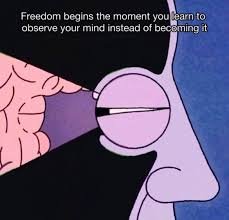
Mindfulness practices offer another pathway toward greater self-awareness. By directing attention toward present-moment experience without immediate judgment, individuals can observe thoughts and emotions as they arise. This observational stance can gradually reveal habitual patterns that typically operate automatically.
However, even sustained self-reflection does not guarantee complete transparency. The complexity of the mind ensures that some processes will remain outside conscious awareness. Instead of achieving total self-knowledge, individuals may gradually develop a more flexible relationship with their own mental activity.
Philosophical perspectives have long grappled with the question of whether complete self-understanding is possible. Some traditions suggest that the mind’s attempts to fully grasp itself resemble an eye trying to see itself without a mirror. Because consciousness is both the observer and the observed, certain aspects of it may always remain elusive.
From this perspective, the mind’s tendency to hide from itself is not merely a flaw but an inherent feature of consciousness. The processes that enable reflection also create limitations on what can be observed. Complete transparency may therefore be unattainable.
Nevertheless, the pursuit of greater awareness remains valuable. Each increase in understanding can expand the range of choices available to individuals. When previously hidden patterns become visible, behavior that once seemed inevitable may become open to change.
This gradual expansion of awareness can also foster humility. Recognizing the limits of self-knowledge encourages individuals to approach their own beliefs and interpretations with greater caution. Instead of assuming complete understanding, they may become more open to reconsideration and dialogue.
Ultimately, the question How does the mind hide from itself? leads to a broader appreciation of the complexity of human consciousness. The mechanisms that obscure certain processes are often the same mechanisms that enable efficient thinking, emotional balance, and social adaptation.
Rather than eliminating these mechanisms, psychological growth may involve learning to navigate them more skillfully. By cultivating curiosity about one’s own experience, individuals can gradually uncover patterns that were previously hidden while accepting that some aspects of the mind will remain beyond immediate awareness.
In this way, the mind’s ability to hide from itself becomes both a challenge and an invitation—an invitation to explore the intricate processes through which human experience is constructed, interpreted, and continually reshaped.