Consciousness remains one of the most challenging phenomena investigated within neuroscience. Despite remarkable progress in understanding the structure and function of the nervous system, the emergence of subjective awareness from neural processes continues to resist simple explanation. Electrical activity, synaptic signaling, and large-scale network dynamics can be measured with increasing precision, yet the transition from biological mechanisms to lived experience remains conceptually difficult. The central problem is not merely identifying which brain regions are active during conscious states but understanding how coordinated neural activity gives rise to the internal sense of being aware.
Neural tissue operates through electrochemical signaling among billions of neurons. Each neuron communicates with others through synapses, forming networks capable of producing highly complex patterns of activity. At a microscopic level, the behavior of individual neurons follows well-described physiological principles. Ion channels regulate electrical potentials across membranes, neurotransmitters influence synaptic transmission, and intracellular signaling pathways modify synaptic strength. However, consciousness does not appear to arise from the behavior of single neurons. Instead, it seems to depend on the interactions of vast populations of neurons organized into distributed circuits.
One approach to understanding this phenomenon examines large-scale neural integration. The brain contains numerous specialized regions responsible for processing different forms of information, including sensory input, motor control, emotional evaluation, and abstract cognition. These systems operate simultaneously, each generating patterns of activity related to specific aspects of experience. Consciousness may emerge when these distributed processes become integrated into a unified pattern that allows information to be shared across multiple neural systems.
This integration requires communication across distant cortical and subcortical regions. Neural pathways linking frontal, parietal, temporal, and limbic structures create networks capable of coordinating information over large distances. When activity within these networks becomes synchronized, information processed in one region can influence processing in another. Such coordination allows sensory perception, memory retrieval, emotional responses, and decision-making to interact within a single coherent experience.
Temporal dynamics play an important role in this coordination. Neural oscillations occur at multiple frequencies throughout the brain, reflecting rhythmic fluctuations in neuronal excitability. These oscillations may help organize communication between regions by providing temporal windows during which neural signals are more likely to influence downstream circuits. When oscillations across different regions align in phase, the efficiency of information transfer can increase significantly.
Certain frequency bands appear particularly relevant to conscious processing. Gamma oscillations, which occur at relatively high frequencies, are often observed when neural populations coordinate activity related to perceptual binding and attention. Slower oscillations such as theta rhythms may facilitate communication between cortical and hippocampal structures during memory-related processing. The interaction between these oscillatory patterns may contribute to the dynamic coordination necessary for conscious awareness.
Another perspective emphasizes the role of thalamocortical loops. The thalamus acts as a central relay structure that connects many cortical regions with one another. Rather than serving merely as a passive conduit for sensory signals, the thalamus participates actively in regulating cortical activity. Reciprocal connections between thalamic nuclei and cortical layers form loops capable of sustaining reverberating patterns of neural activity.
These loops may help maintain stable representations of sensory information long enough for higher-order processing to occur. When sensory signals reach the cortex, thalamocortical circuits can amplify or suppress specific patterns depending on attentional demands and behavioral context. Through this modulation, certain stimuli become prominent within conscious awareness while others remain below the threshold of perception.
The distinction between conscious and unconscious processing further highlights the complexity of neural mechanisms underlying awareness. The brain constantly processes vast amounts of information that never reach conscious perception. Visual systems detect features across the visual field, auditory systems analyze sound patterns, and somatosensory networks monitor bodily states. Much of this processing occurs automatically and influences behavior without generating explicit awareness.
For information to become conscious, it must appear to undergo a form of global availability. Neural activity representing that information becomes accessible to multiple cognitive systems simultaneously. Attention, working memory, language networks, and decision-making circuits can all interact with the representation once it enters this globally available state. Some theoretical models describe this process as the broadcasting of information across a widespread neural workspace.
Within such a workspace, information initially processed in localized sensory areas gains access to distributed cortical networks. This transition may correspond to a sudden amplification of neural activity and synchronization across regions. Electrophysiological studies sometimes reveal late bursts of widespread activity associated with conscious perception, suggesting that global coordination emerges after initial sensory processing has already occurred.
The role of attention is closely linked to this process. Attention does not merely enhance sensory signals but also shapes which information becomes integrated into conscious experience. By biasing neural competition among stimuli, attentional mechanisms influence which representations gain access to large-scale networks. This selection process helps prevent consciousness from becoming overwhelmed by the enormous volume of sensory input constantly arriving at the brain.
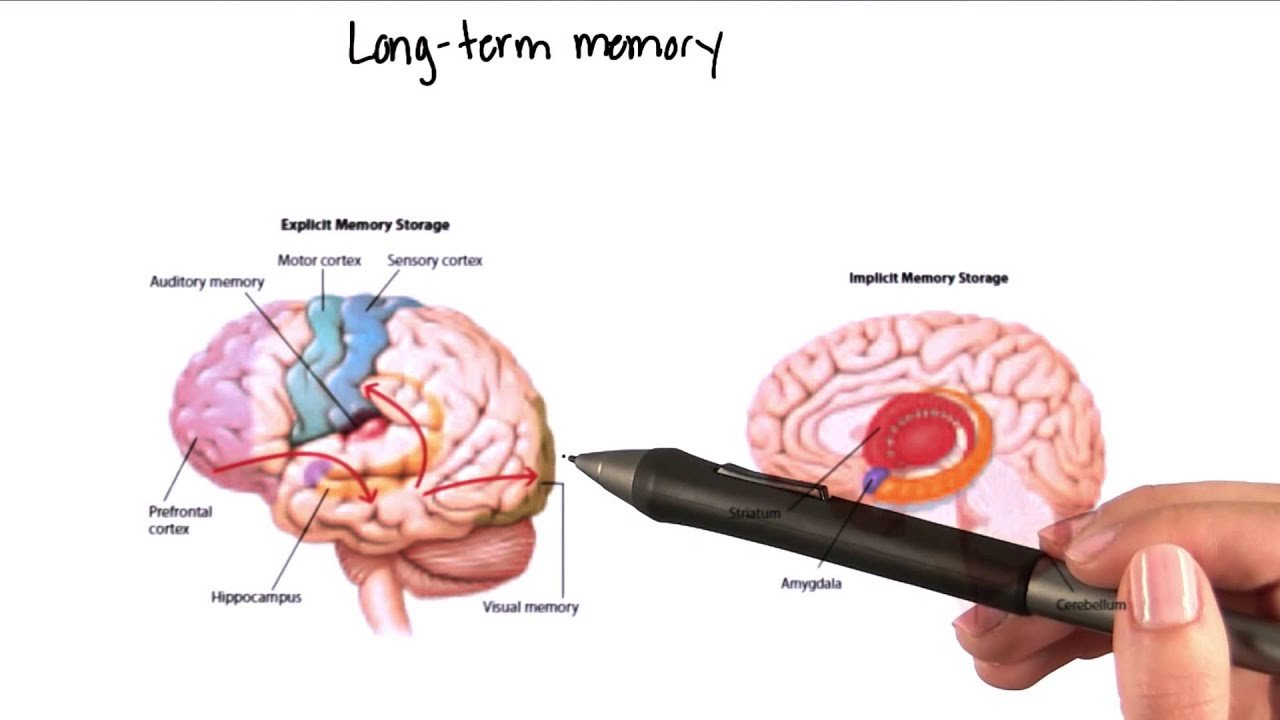
Memory systems also contribute to conscious experience by providing context and continuity. The hippocampus and associated medial temporal lobe structures help integrate ongoing perception with stored knowledge about past events. Through this integration, present experiences become embedded within a broader narrative framework. Conscious awareness therefore extends beyond immediate sensory processing to include recollection and anticipation.
Working memory plays a particularly important role in maintaining information within consciousness over short periods. Neural circuits within prefrontal and parietal cortex sustain activity patterns representing currently relevant information. These sustained patterns allow individuals to manipulate concepts, compare alternatives, and guide complex reasoning. Without such maintenance mechanisms, conscious thought would fragment into isolated sensory impressions.
Emotional systems further influence the structure of conscious awareness. Limbic structures evaluate the motivational significance of stimuli and modulate cortical processing accordingly. Experiences associated with strong emotional relevance often capture attention more readily and remain within consciousness longer than neutral stimuli. This prioritization reflects the adaptive importance of detecting threats, opportunities, and social signals.
The emergence of consciousness also depends on the structural architecture of neural networks. Certain network configurations promote efficient information integration. Highly interconnected hub regions within the cortex link multiple functional systems, allowing information to travel through relatively short pathways. These hubs contribute to the formation of large-scale networks capable of supporting complex cognitive operations.
Damage to such hub regions can disrupt conscious processing in ways that extend beyond localized deficits. For example, lesions affecting parts of the frontal or parietal cortex may impair attention, awareness of sensory stimuli, or the ability to integrate information across modalities. These disruptions illustrate how consciousness depends on coordinated activity rather than isolated regions.
Neurochemical modulation further shapes the conditions under which consciousness arises. Neurotransmitter systems originating in subcortical structures regulate the overall excitability of cortical networks. Systems involving acetylcholine, norepinephrine, dopamine, and serotonin influence attention, arousal, and cognitive flexibility. Changes in these systems can alter the clarity and stability of conscious experience.
States such as sleep, anesthesia, and coma demonstrate how alterations in neuromodulatory activity affect consciousness. During deep sleep, large portions of the cortex enter synchronized slow-wave patterns that limit long-range communication among regions. Under general anesthesia, pharmacological agents disrupt the neural interactions necessary for integrated processing. In both cases, sensory input may still reach early processing areas, yet the global coordination associated with conscious awareness is diminished.
The relationship between neural complexity and consciousness suggests that awareness emerges when the brain maintains a balance between integration and differentiation. Integration allows information from diverse systems to interact, while differentiation preserves the specialized processing capabilities of individual regions. Too little integration would prevent coherent experience, whereas excessive uniformity would eliminate the diversity of representations necessary for meaningful cognition.
Mathematical approaches to neural dynamics attempt to quantify this balance. Some frameworks propose that conscious systems exhibit high levels of informational richness combined with extensive connectivity among components. According to these ideas, consciousness corresponds to patterns of activity that cannot be reduced to independent subsystems because the interactions among elements generate new informational properties.
Although such models remain theoretical, they emphasize the importance of considering the brain as a dynamic system rather than a collection of isolated modules. Consciousness may emerge from the ongoing interaction of multiple processes operating across different spatial and temporal scales.
Another important dimension involves the brain’s predictive architecture. Neural systems constantly generate expectations about incoming sensory signals based on prior experience. These predictions help interpret ambiguous input and guide perception toward coherent interpretations of the environment. Conscious awareness may reflect the continuous updating of these predictive models as new information arrives.
When predictions align with sensory input, perception feels stable and coherent. When discrepancies arise, neural systems generate signals indicating prediction error. These signals trigger adjustments in internal models and may draw attention to unexpected events. In this way, consciousness becomes closely tied to the brain’s effort to minimize uncertainty about the external world.
Self-awareness introduces an additional level of complexity. Beyond perceiving external stimuli, humans can direct attention toward their own mental states. This capacity appears to involve networks within medial prefrontal cortex, posterior cingulate cortex, and other regions associated with reflective thought. These structures contribute to the representation of the self as an entity distinct from the environment.
Through interactions among these networks, individuals can evaluate their beliefs, emotions, and intentions. Such meta-cognitive processes allow the mind to monitor its own activity and adjust behavior accordingly. Self-awareness therefore represents a specialized extension of the broader mechanisms supporting consciousness.
Despite extensive research, many aspects of conscious experience remain unexplained. Neural activity can be measured with increasing precision, yet the qualitative character of subjective experience—often described as the “what it feels like” aspect of awareness—remains difficult to capture through objective observation. Understanding how physical processes produce this subjective dimension continues to challenge both neuroscience and philosophy.
Nevertheless, ongoing advances in neuroimaging, electrophysiology, and computational modeling provide increasingly detailed insights into the mechanisms supporting conscious processing. By examining how neural networks coordinate activity across multiple scales, researchers gradually approach a more comprehensive understanding of how awareness emerges from biological systems.
Consciousness therefore appears not as a property localized within a single brain structure but as a dynamic phenomenon arising from the interaction of many neural processes. Integration of sensory information, synchronization of oscillatory activity, modulation by emotional and attentional systems, and continuous updating of predictive models all contribute to the emergence of conscious experience.
In this perspective, awareness becomes an emergent property of neural complexity. When billions of neurons interact through precisely timed patterns of activity, the resulting dynamics create conditions in which information can be integrated, interpreted, and reflected upon. Through these processes the nervous system transforms electrochemical signals into the rich and continuous experience known as consciousness.