The experience of having a self appears so immediate and natural that it often escapes detailed examination. Each moment of consciousness seems accompanied by the implicit awareness that perceptions, thoughts, and emotions belong to a particular subject. This sense of ownership gives continuity to experience and allows individuals to interpret events as occurring within the context of a personal existence. Yet neuroscience increasingly suggests that the self is not a fixed structure located in a single region of the brain. Rather, it emerges from complex interactions among multiple neural systems that collectively generate the impression of a unified personal identity.
Neural activity underlying perception, memory, emotion, and decision making unfolds continuously across distributed networks. At any moment the brain processes signals from the external environment, internal bodily states, and stored representations of past experiences. The sense of self may arise from the way these streams of information are integrated and interpreted. Instead of existing as a separate entity controlling the brain, the self appears closely linked to patterns of neural coordination that organize experience around a reference point.
One dimension of this process involves bodily awareness. Signals originating from sensory receptors in muscles, joints, and internal organs constantly inform the brain about the state of the body. These interoceptive and proprioceptive signals travel through ascending pathways toward cortical and subcortical regions responsible for integrating bodily information. The brain therefore maintains a continuous internal representation of bodily position, physiological condition, and movement.
This representation contributes to the feeling that perceptions occur from a specific physical perspective. Visual scenes appear oriented around the position of the eyes, sounds are localized relative to the head, and tactile sensations correspond to particular regions of the skin. Such spatial organization helps create the impression that experiences belong to an embodied subject occupying a defined location in space.
The integration of bodily signals occurs through networks that combine information from multiple sensory modalities. Within these networks, neurons respond not only to visual or tactile stimuli but also to the relationship between these stimuli and the body. For example, some neurons respond strongly when visual events occur near a particular body part, suggesting that the brain maintains maps linking external space to bodily structure.
These maps support coordinated interaction with the environment. When reaching toward an object, the brain must transform visual information about the object’s position into motor commands guiding the movement of the arm. Such transformations require the nervous system to represent both the external world and the body’s configuration simultaneously.
Beyond basic bodily awareness, higher cognitive processes contribute additional layers to the construction of the self. Memories play an essential role in linking present experiences with past events. Autobiographical memory allows individuals to recall personal episodes and integrate them into narratives describing their lives. Through this narrative structure, experiences become interpreted as belonging to the same enduring person across time.
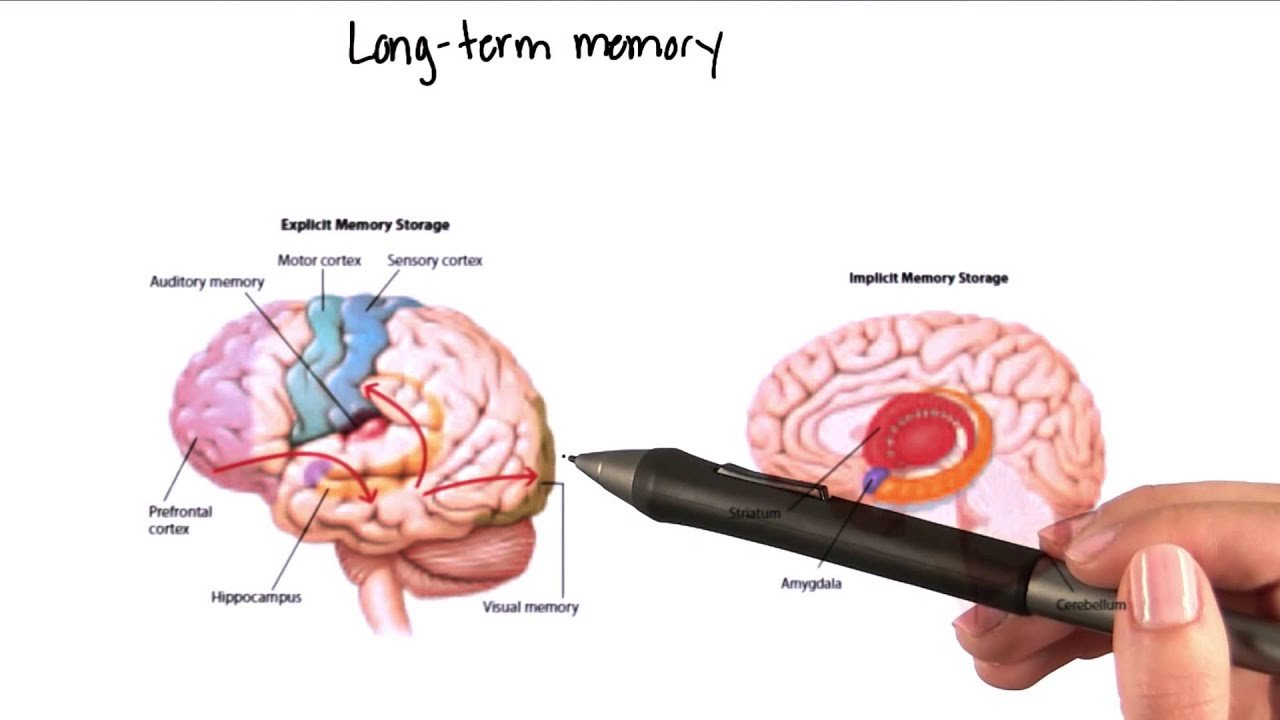
Neural systems supporting autobiographical memory involve interactions between hippocampal structures and cortical networks associated with conceptual knowledge. When recalling personal events, the brain reconstructs sensory details, emotional responses, and contextual information from distributed memory traces. These elements are assembled into coherent episodes that contribute to the continuity of identity.
However, the sense of self does not depend solely on explicit recollection of past experiences. Much of identity arises from implicit patterns learned over time. Preferences, habits, skills, and emotional tendencies influence behavior without necessarily entering conscious reflection. These patterns emerge from long-term modifications within neural circuits shaped by experience.
Decision-making systems also participate in shaping the self. Choices reflect the evaluation of potential outcomes in relation to goals and values. Neural networks within frontal and limbic regions contribute to weighing alternatives, predicting consequences, and selecting actions. Through repeated cycles of evaluation and behavior, these systems help define patterns that individuals recognize as characteristic of themselves.
Another component of self-related processing involves monitoring one’s own mental activity. Humans possess the ability to reflect upon their thoughts, beliefs, and intentions. This capacity for meta-cognition allows individuals to examine internal processes as objects of awareness. Neural circuits supporting such reflective processing appear to involve interactions among several cortical regions that contribute to internal evaluation and perspective-taking.
These networks become particularly active during moments of introspection, when attention shifts away from external tasks toward internal states. During such moments, individuals may evaluate personal goals, interpret emotional reactions, or consider how they appear from the viewpoint of others. The integration of these reflections contributes to the complexity of self-awareness.
Social cognition further enriches the construction of personal identity. Humans exist within networks of relationships, and the perception of oneself often includes awareness of how others perceive and respond to one’s actions. Neural systems involved in understanding intentions, emotions, and perspectives of others contribute to interpreting social interactions.
Through repeated social experiences, individuals develop expectations about how they are regarded within their communities. These expectations become incorporated into self-representation. For example, feedback from caregivers during childhood may influence beliefs about competence, trustworthiness, or belonging. Such beliefs influence behavior and emotional responses throughout later life.
The dynamic nature of these processes suggests that the self is not static. Neural plasticity allows representations of identity to change as individuals encounter new experiences. Learning new skills, forming relationships, or reevaluating personal beliefs can alter neural networks underlying self-related processing. Identity therefore evolves as neural systems reorganize in response to ongoing experience.
Emotional systems also contribute significantly to the feeling of selfhood. Emotions provide signals about the significance of events relative to personal goals and well-being. When emotional responses occur, they often involve coordinated changes in physiological state, neural activity, and subjective feeling. These responses help individuals interpret situations in relation to their own interests and values.
For example, feelings of pride may arise when actions align with internal standards or social expectations. Feelings of guilt may occur when behavior conflicts with moral principles or harms others. Through such emotional feedback, neural systems evaluate experiences in ways that reinforce or modify aspects of identity.
The continuity of self across time depends partly on the brain’s capacity to maintain stable representations while allowing flexibility. Neural networks supporting long-term memory preserve information about past experiences and personal traits. At the same time, ongoing neural activity updates these representations as new information becomes available.
Temporal integration plays a crucial role in maintaining this balance. Neural systems continuously link present experiences with both past memories and anticipated future events. Through these links, the brain constructs a narrative arc connecting previous experiences with current decisions and future goals. This narrative perspective strengthens the sense that life unfolds as a coherent story belonging to a particular individual.
Another dimension of self-related processing involves the differentiation between self-generated actions and external events. The brain must distinguish between movements initiated voluntarily and movements caused by external forces. This distinction relies on predictive mechanisms within motor systems.
When planning an action, the brain generates internal predictions about the sensory consequences of that action. If the predicted sensory feedback matches the actual outcome, the brain interprets the event as self-generated. If the outcome differs significantly from the prediction, the brain attributes the change to external causes. Through such mechanisms individuals maintain the sense that they are agents responsible for their own actions.
Disruptions in these predictive processes can alter the sense of agency. Certain neurological and psychiatric conditions illustrate how delicate these mechanisms may be. When neural systems fail to accurately predict or interpret the consequences of actions, individuals may experience unusual sensations regarding control over their behavior or thoughts.
The brain also integrates spatial information to maintain the perception that experiences occur from a consistent point of view. Neural networks combine visual, vestibular, and proprioceptive signals to represent the body’s position within space. These representations help orient perception relative to the body’s location and movement.
Experimental manipulations demonstrate how flexible this spatial representation can be. Under certain conditions the brain may temporarily adopt alternative perspectives when sensory signals conflict with usual expectations. Such findings indicate that the perceived location of the self depends on neural integration rather than on a fixed anatomical anchor.
Large-scale network dynamics contribute further to the stability of self-related experience. The brain contains multiple interacting networks that become active during different cognitive states. Some networks support externally directed attention and goal-oriented tasks, while others become active during rest and internal reflection.
The interplay between these networks influences whether attention focuses on the external environment or on internal thoughts and memories. Periods of quiet reflection often involve increased activity in networks associated with self-referential processing. These periods may allow individuals to review experiences, plan future actions, and maintain coherence in their personal narratives.
Neuromodulatory systems originating in subcortical regions regulate the overall balance of activity within these networks. Neurotransmitters such as dopamine, serotonin, and norepinephrine influence motivation, mood, and cognitive flexibility. Changes in these systems can alter how individuals interpret their experiences and evaluate aspects of their identity.
For instance, fluctuations in dopamine signaling may affect the salience attributed to particular thoughts or goals. Serotonergic modulation may influence emotional tone and the stability of mood states. Through these chemical pathways, physiological conditions interact with cognitive processes shaping self-perception.
The complexity of these mechanisms suggests that the sense of self emerges gradually from the integration of many neural operations. Bodily awareness, memory, social cognition, emotional evaluation, and predictive motor control all contribute to shaping the experience of being a particular individual.
Rather than existing as a discrete entity, the self appears to function as a dynamic process generated by ongoing neural interactions. As sensory signals, memories, emotions, and predictions converge within distributed networks, the brain constructs a reference frame that organizes experience around a personal perspective.
This perspective provides coherence to perception and action. Experiences become interpreted not merely as events occurring in the world but as events happening to someone. Through this interpretive framework the nervous system generates the continuous sense of identity that accompanies conscious life.
Understanding the neural construction of the self reveals that identity is deeply connected to the biological processes of the brain. Yet these processes remain flexible, adapting continuously as new experiences reshape neural networks. The self therefore represents an evolving pattern of organization rather than a permanent structure fixed within neural tissue.
In this way the brain transforms countless neural interactions into the enduring yet constantly changing experience of personal existence.