Psychopathology is usually described as a deficit: too little meaning, too little emotion, too little connection. Yet there exists a lesser-known and profoundly destabilizing condition characterized not by absence, but by excess. Existential saturation occurs when meaning accumulates beyond the mind’s capacity to metabolize it. In this state, reality is not empty or absurd; it is overwhelmingly significant. Every thought, action, object, and moment feels loaded with consequence. Life becomes too dense to inhabit.
Existential saturation is not philosophical curiosity or spiritual awakening. It is a pathological intensification of meaning in which the individual can no longer maintain psychological distance from existence. Nothing is neutral. Nothing is merely functional. Every experience feels weighted, symbolic, and consequential. The mind loses its ability to let things be ordinary.
From the inside, this state is exhausting. The individual may feel crushed by the seriousness of everything. Simple choices feel monumental. Everyday actions carry moral, cosmic, or existential weight. There is no rest from interpretation. The mind is constantly forced into significance-making, with no capacity for triviality or play.
Clinically, existential saturation appears in prodromal psychosis, certain forms of schizophrenia, severe anxiety disorders, melancholic depression, and some trauma-related conditions. It often emerges in highly introspective individuals with strong meaning-making tendencies who are exposed to prolonged stress, isolation, or existential threat. The psyche, in attempting to understand and control uncertainty, overproduces meaning.
This condition is easily misinterpreted as insight or depth. The individual may speak in abstract, philosophical, or symbolic language. They may appear intellectually sophisticated. Yet internally, they are drowning in significance. The problem is not that life lacks meaning, but that meaning has become inescapable.
Neuropsychologically, existential saturation reflects hyperactivation of salience networks. The brain flags too many stimuli as important. Nothing fades into the background. Normally, the mind filters relevance, allowing most of reality to remain neutral. When this filter fails, the world becomes painfully loud with meaning.
Existential saturation profoundly affects agency. Action requires a degree of emotional lightness. When everything matters too much, action becomes paralyzing. The individual may freeze, withdraw, or collapse under the weight of decision-making. In extreme cases, even breathing or moving feels symbolically charged, leading to psychomotor slowing or catatonic features.
Relationships suffer as well. Interpersonal interactions become overinterpreted. Words, glances, and silences are loaded with implication. Misattunement feels catastrophic. The individual may withdraw socially, not from lack of desire, but from the unbearable density of interpersonal meaning.
There is also a close relationship between existential saturation and suicidality. Unlike states driven by emptiness, this form of suicidality arises from overweight existence. The individual does not want life to end because it is meaningless, but because it is too much. Non-existence appears as relief from unbearable significance.
Therapeutically, existential saturation requires reducing meaning, not increasing it. Insight-oriented approaches can worsen the condition by adding further layers of interpretation. What is needed is a restoration of psychological lightness. This involves grounding, routine, sensory neutrality, and activities that reintroduce the ordinary and the trivial.
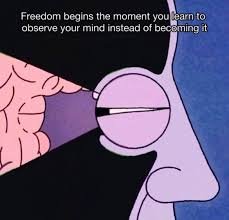
The therapist must actively normalize neutrality. Statements like “This does not have to mean anything” can be deeply therapeutic. Relearning that not every thought requires interpretation, and not every feeling requires existential framing, is a critical step in recovery.
As saturation decreases, patients often experience guilt or fear. Meaning had provided a sense of control or specialness. Letting go of significance can feel like betrayal of depth or truth. Therapy must address this ambivalence gently, validating the need for meaning while restoring proportion.
Recovery is marked by the return of banality — the ability to experience moments as simply moments. To drink water without symbolism. To speak without cosmic consequence. To exist without constant interpretation. This banality is not emptiness; it is freedom.
Ultimately, existential saturation reveals a paradox of psychological life: meaning is essential, but only in metabolizable doses. When meaning becomes total, life becomes unlivable. Mental health depends not on finding meaning everywhere, but on knowing where meaning is not required. To heal is to rediscover the right to exist lightly in a world that does not always demand interpretation.