Existential depression is not sadness, nor is it the emotional heaviness commonly associated with mood disorders. It is a collapse of the structures that make experience meaningful — a failure not of emotion, but of interpretation. In ordinary depression, feelings darken; in existential depression, the very framework through which feelings acquire significance dissolves. The world remains visible but hollowed, stripped of narrative coherence, moral gravity, and personal relevance. The individual does not simply feel bad; they feel absent from the meaning-making fabric of existence.
At the heart of existential depression lies a breakdown of ontological security — the normally unexamined assumption that life has a stable purpose, that the self is real and continuous, that time moves toward something. When these assumptions collapse, the psyche enters a freefall. Everyday actions lose justification. Decisions feel arbitrary. Values feel constructed and brittle. Goals once pursued with conviction now appear artificial, as though borrowed from a script everyone else is performing without question. The person sees through everything, but what they see is emptiness.
This collapse often arises in individuals with high introspective capacity, acute self-awareness, or a temperament inclined toward abstraction. Such minds tend to think not only about their feelings but about the architecture of meaning itself. When this reflective lens turns inward during periods of emotional vulnerability — loss, disillusionment, betrayal, or chronic stress — it can destabilize the scaffolding that supports a coherent worldview. What begins as questioning becomes unraveling. The mind, in its search for truth, strips reality of its comforting illusions and discovers not clarity but void.
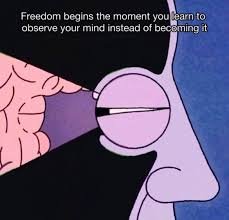
Neurologically, existential depression corresponds to hyperactivity in the default mode network — the system responsible for self-reflection, autobiographical memory, and internal narrative construction. When overactivated, the DMN generates loops of abstract rumination disconnected from embodied experience. These loops dissect meaning until nothing survives the scrutiny. Instead of grounding the individual, the reflective apparatus destroys the very foundations it is meant to stabilize. The mind becomes a self-consuming machine, generating thoughts that nullify themselves, leaving only an echoing intellectual wasteland.
Emotionally, existential depression is characterized less by pain and more by flattening. The individual does not mourn meaning; they feel as though meaning were never real. Joy appears counterfeit. Love seems contingent. Achievement feels irrelevant. Even suffering loses its drama. The absence of meaning numbs both pleasure and pain, creating a profound indifference that is often mistaken for apathy but is more accurately described as ontological exhaustion. Without meaning, emotion cannot attach to anything; it dissipates before fully forming.
The existentially depressed individual often feels estranged from others. Social rituals seem mechanical, driven not by authenticity but by mutually agreed illusions. The depressed person sees people chasing goals without understanding why, expressing values that feel culturally inherited rather than individually chosen. This perception creates a quiet but devastating isolation — not loneliness in the presence of others, but loneliness in the presence of their apparent certainty. To inhabit a world where everyone seems convinced of things that feel hollow is to exist as a ghost among believers.
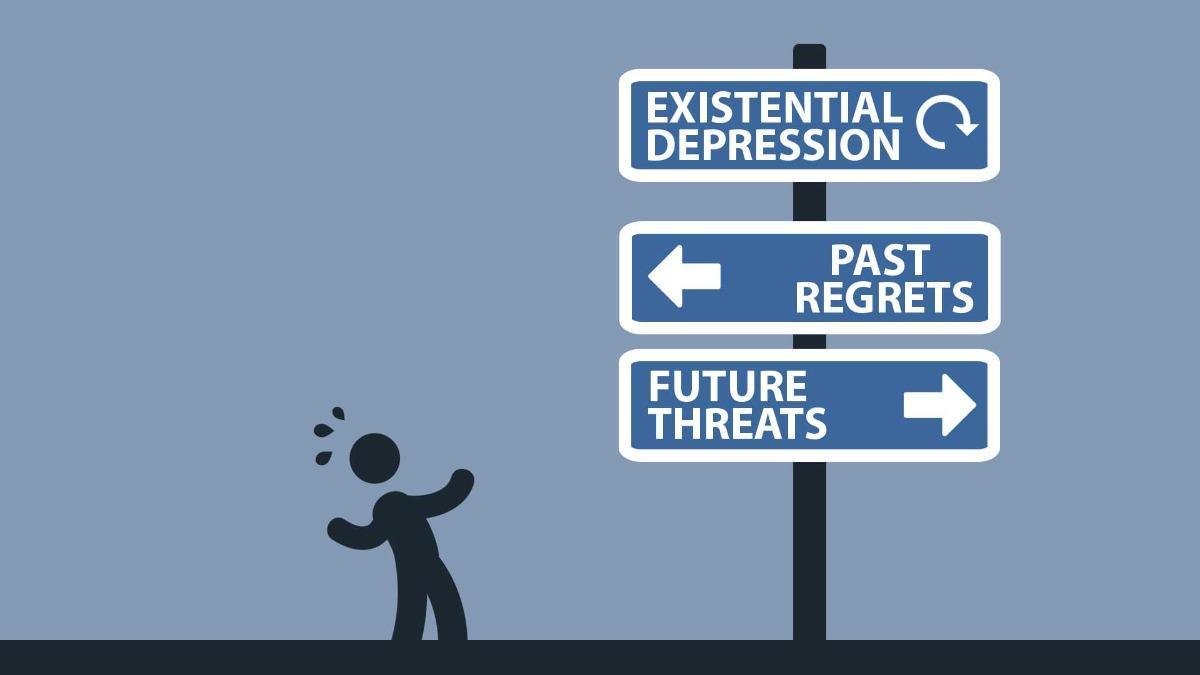
Temporal experience also distorts. Without meaning, the future collapses. Plans lose their motivational traction, and time becomes a series of interchangeable moments devoid of direction. The past, too, loses significance as memories no longer contribute to a coherent identity narrative. The self becomes suspended in a perpetual present — not in the meditative sense, but in a stagnant one. Life continues, but it no longer progresses.
One of the paradoxes of existential depression is that it often coexists with high intelligence. The capacity to analyze, to question, to deconstruct is a double-edged sword. When life is stable, this analytical depth enriches experience. But when a destabilizing event occurs, that same depth can dismantle foundational beliefs with ruthless precision. The mind becomes its own adversary, using its strengths to undermine its stability. Insight without meaning becomes corrosive.
Healing from existential depression requires more than restoring mood; it requires rebuilding meaning. This cannot be forced by positive thinking or superficial optimism. Meaning must be reconstructed from the ground up, through lived experience rather than abstract reasoning. Paradoxically, the way out is not more thinking but more being. Embodiment — sensory engagement, relational presence, creative activity — reconnects the self to the world before the intellect has the chance to nullify it. Meaning grows not from analysis but from involvement.
Therapeutically, the goal is not to provide answers but to help the individual tolerate meaninglessness long enough for new meaning to emerge organically. This requires patience, humility, and the acceptance that some questions cannot be answered intellectually. The existentially depressed person must learn to trust small experiences again: a conversation, a melody, a moment of connection, a fleeting curiosity. These micro-meanings accumulate, gradually reweaving the fabric of significance that abstraction had torn apart.
Ultimately, existential depression reveals the fragility of the structures that sustain human life. Meaning is not inherent, but constructed; not permanent, but maintained. When those structures collapse, the psyche confronts a terrifying freedom — the freedom to rebuild or to despair. Yet within this collapse lies a profound opportunity. To question meaning is also to have the capacity to create it. Existential depression is not the end of significance but the shadow of its rebirth — a silent, painful threshold through which the self must pass before discovering a meaning that belongs not to society, but to itself.