Emotional life is usually described in terms of presence or absence: feeling versus numbness. Yet there exists a far subtler and more disturbing condition in which emotions are neither absent nor inaccessible, but unarrived. In emotional muting without numbness, feelings continue to arise in the psyche, yet fail to reach the level of subjective ownership. The individual is not empty, not flat, and not devoid of affect — but emotions no longer land. They pass through the mind without impact, resonance, or consequence.
This state is often misidentified as emotional blunting, alexithymia, or depression. However, unlike true numbness, the emotional system here is active. Physiological arousal occurs. Emotional cues are cognitively recognized. The person may correctly identify what they are “supposed” to feel. What is missing is affective arrival — the moment when emotion becomes personally felt and integrated into the sense of self.
From the inside, this condition is deeply alienating. People often say, “I know I’m sad, but I don’t feel sad,” or “Something happened that should matter, but it didn’t reach me.” The emotional event is registered intellectually, sometimes even somatically, yet fails to become experientially meaningful. It is as if emotions knock, but no one answers the door.
Clinically, emotional muting without numbness appears in chronic trauma, prolonged dissociation, schizophrenia-spectrum disorders, severe burnout, and certain post-depressive states. It often follows periods of emotional overload. When feelings once overwhelmed the system — flooding the individual with fear, grief, or despair — the psyche learned not to eliminate emotion, but to disconnect from its impact. This is not emotional death, but emotional quarantine.
Psychodynamically, this condition represents a compromise. The psyche allows emotions to exist to maintain basic functioning and reality testing, but prevents them from being fully experienced to avoid destabilization. Feeling becomes informational rather than transformational. Emotions are known, not lived.
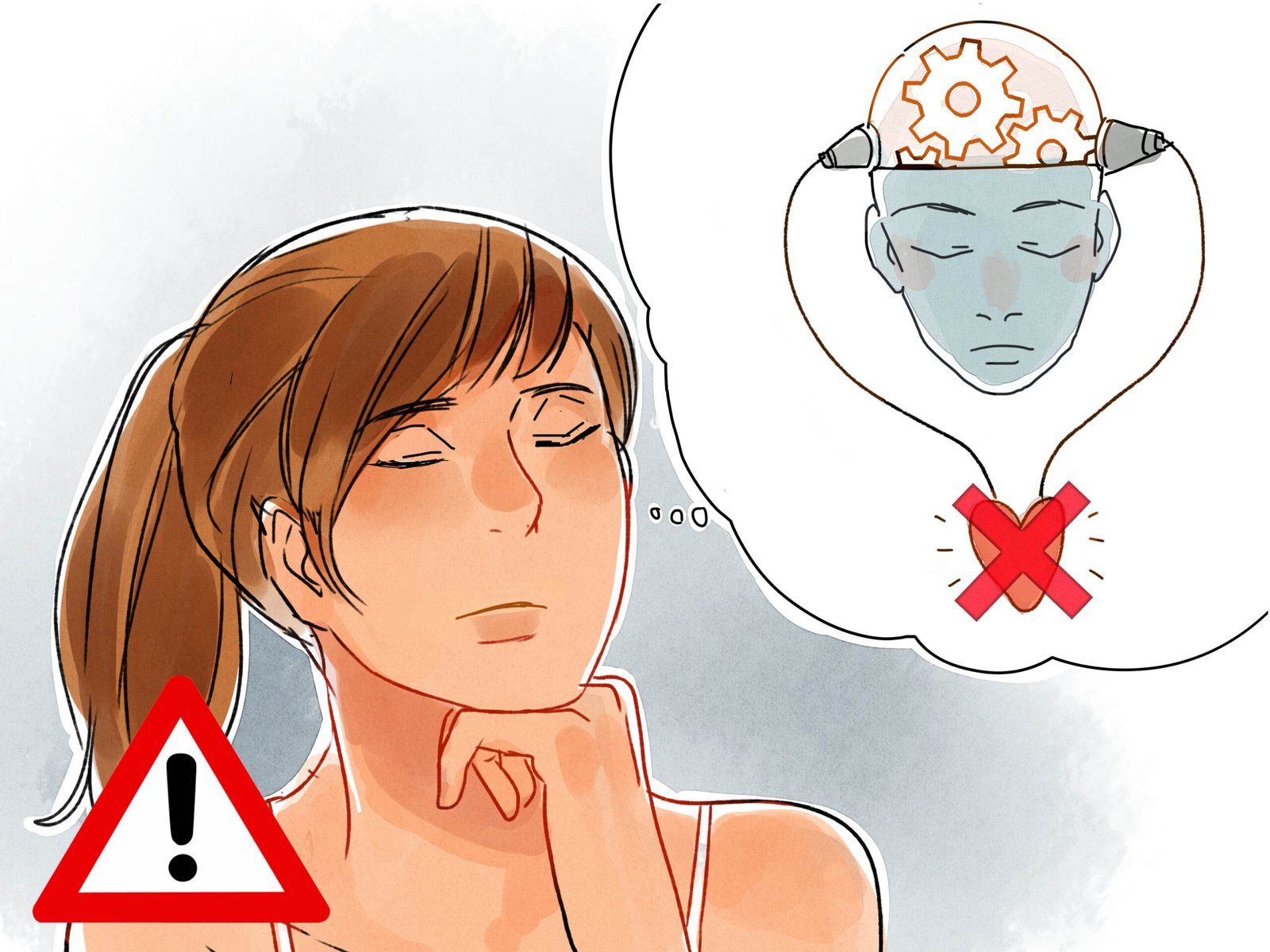
Neuropsychologically, this state reflects a disruption between limbic activation and self-referential integration. Emotional signals are generated, but fail to synchronize with networks responsible for personal relevance and autobiographical meaning. As a result, emotions remain unowned. They are processed as data rather than experience.
This has profound consequences for decision-making. Emotions normally guide priorities, values, and action. When emotions do not land, choices lose internal guidance. The person may appear indecisive or oddly indifferent, not because they do not care, but because caring no longer provides directional force. Motivation weakens, not from apathy, but from lack of emotional gravity.
Relationships are especially affected. Emotional muting disrupts resonance. The individual may respond appropriately, offer empathy, and behave correctly, yet feel internally detached. Intimacy requires emotional impact — being moved by another. Without this impact, connection becomes procedural. Others may feel subtly unheld or unseen, even when no overt coldness is present.
Existentially, this condition creates a peculiar emptiness. Life events occur — achievements, losses, changes — yet nothing seems to matter enough. The world feels distant not because it is unreal, but because it fails to penetrate. Over time, this leads to a quiet despair: a life filled with events that leave no trace.
Importantly, emotional muting without numbness is often adaptive in origin. It allows survival after prolonged affective injury. However, when it becomes chronic, it erodes vitality. The individual may function well externally while internally experiencing life as weightless and inconsequential.
Therapeutically, this state requires careful handling. Direct attempts to intensify emotion often fail or provoke shutdown. The issue is not insufficient emotion, but insufficient integration. Therapy must focus on safe emotional arrival. This involves slowing experience, anchoring emotion in the body, and linking feeling to personal meaning in tolerable doses.
The therapist’s emotional presence is crucial. When the therapist visibly registers and is affected by the patient’s emotional material, it models what emotional arrival looks like. Over time, the patient may begin to feel what was previously only known. These moments can be startling — even frightening — because emotional impact has been long absent.
As emotional muting lifts, grief often emerges: grief for years lived without being touched, for moments that should have mattered but did not. This grief is not regression; it is evidence that emotions are reaching the self again.
Recovery is not about becoming emotionally intense or overwhelmed. It is about restoring emotional consequence. Feeling again that emotions matter, move, and shape the self. When emotions regain their ability to land, life regains depth. Experiences begin to leave marks. Choices regain meaning.
Ultimately, emotional muting without numbness reveals a critical distinction in psychopathology: emotional life is not defined by whether feelings exist, but by whether they arrive. To feel fully is not merely to generate emotion, but to allow it to touch the self — to be changed by it. When this capacity returns, the individual does not simply feel more; they begin to live inside their own life again.