Most psychiatric models assume that emotions arise in close temporal proximity to events. Something happens, the feeling emerges, and the psyche responds. Yet there exists a little-described condition in which emotions do occur—but only after the moment in which they would have mattered. This phenomenon can be described as Emotional Latency, a state where affect is chronically delayed beyond lived relevance.
Individuals experiencing emotional latency often report that they understand situations intellectually in real time, but feel nothing during them. Hours, days, or even weeks later, an emotion appears—sadness, anger, tenderness—detached from its original context. The feeling is real, sometimes intense, but experientially useless. The moment has passed.
This differs from emotional suppression. There is no active inhibition at the time of the event. The emotional system simply does not respond on schedule. It also differs from emotional numbness, because feelings eventually do emerge. The issue is not absence, but mistiming.
Phenomenologically, life is experienced as emotionally asynchronous. Conversations, conflicts, achievements, and losses unfold without immediate affective color. The individual behaves appropriately, responds socially, and makes decisions, but from a neutral internal state. Later, often in isolation, emotion arrives like delayed mail—accurate, but no longer actionable.
This creates a peculiar form of suffering. The person is not disconnected from emotion, but constantly out of phase with life. They may grieve after resolution, feel anger after reconciliation, or experience joy after opportunity has closed. Emotions feel authentic yet obsolete.
Neurocognitively, emotional latency may reflect a delay in integration between appraisal systems and affective generation. The brain registers meaning, but the affective response requires prolonged processing or reduced stimulation to emerge. As a result, emotion is displaced into temporal solitude.
Clinically, emotional latency is often misunderstood as detachment, avoidance, or lack of insight. Others may describe the individual as “cold” or “unaffected,” while the individual privately experiences strong emotions later on. This mismatch can strain relationships, as emotional responses fail to coincide with shared moments.
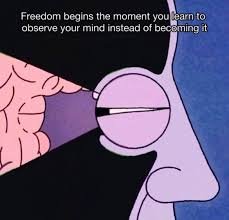
Attempts to “feel in the moment” often backfire. Heightened self-monitoring can further delay emotional emergence. Ironically, emotions tend to surface only when attention is withdrawn—during rest, repetition, or emotional irrelevance. Feeling requires safety, but safety arrives too late.
Therapeutic approaches are unclear. Emotional exploration may help articulate delayed feelings, but does not necessarily correct timing. Some observations suggest that slowing external response—pausing before action or speech—can sometimes allow emotion to catch up. The aim is not intensity, but synchronization.
Emotional Latency challenges the assumption that emotional health depends solely on depth or regulation. Timing matters. A perfectly appropriate emotion, arriving too late, can still produce suffering. Psychological life depends not only on what we feel, but when we feel it.
Recovery, when it occurs, is subtle. It begins with minor emotional interference—an unexpected hesitation, a flicker of feeling during an event. These small delays in action signal progress: emotion is no longer late, but arriving just in time to be lived.