Emotional extinction is not numbness in the ordinary sense, nor is it the temporary blunting seen in stress or fatigue. It is the progressive disappearance of the capacity to feel — a slow fading of affective life in which emotions do not merely dull, but cease to arise at all. Unlike depression, which still contains pain, or dissociation, which hides emotion behind distance, emotional extinction represents a deeper psychic event: the collapse of the emotional-generating system itself. The person does not feel sad, empty, or anxious. They feel nothing, and worse, they no longer expect to feel anything again.
This phenomenon develops gradually, often unnoticed, in individuals exposed to prolonged psychological overload — chronic trauma, sustained helplessness, severe melancholia, long-term institutionalization, advanced schizophrenia, or years of emotional suppression. At first, emotions weaken selectively. Joy disappears first, then curiosity, then anger, then grief. What remains is a flat internal silence. The emotional world does not hurt anymore because it no longer exists.
From the inside, emotional extinction feels like living after an internal winter has killed all growth. The individual may describe themselves as “hollow,” “blank,” or “dead inside,” but these metaphors are insufficient. It is not the presence of emptiness but the absence of affective possibility. Emotional events register cognitively but fail to resonate. A loss occurs, and the person knows it should matter, yet nothing moves inside. A loved one cries, and the individual recognizes the meaning without feeling empathy. The mind continues to function, but the emotional body has gone silent.
Emotion is not merely a reaction; it is a biological signal that assigns importance, value, and urgency. When emotions vanish, the world loses its hierarchy. Nothing stands out. Nothing pulls attention. Nothing demands action. This is why emotional extinction is closely tied to motivational collapse. Without affect, desire cannot form, and without desire, agency dissolves. Life becomes maintenance rather than engagement.
Neurobiologically, emotional extinction reflects severe dysregulation in limbic and paralimbic systems — particularly the amygdala, insula, and anterior cingulate cortex — combined with chronic suppression from higher cortical control. Over time, repeated inhibition of emotional response leads not just to dampening but to functional shutdown. The brain learns that feeling is dangerous, useless, or overwhelming, and gradually stops producing affect altogether. This is not a choice; it is neural adaptation to prolonged threat.
Psychodynamically, emotional extinction often emerges as the final defense when all others have failed. When expression leads to punishment, vulnerability leads to humiliation, and desire leads to loss, the psyche draws a brutal conclusion: feeling itself is unsafe. The solution is not repression — repression still contains energy — but eradication. The emotional system is starved into dormancy.
One of the most disturbing aspects of emotional extinction is the loss of suffering. While this may sound like relief, it is catastrophic. Suffering is a sign of life. When suffering disappears alongside joy, the person loses the capacity to signal distress, to seek help, or even to recognize their own deterioration. They may appear “stable,” “calm,” or “improved,” while internally they are vanishing. This makes emotional extinction particularly dangerous and often overlooked.
Interpersonally, emotional extinction creates a profound rupture. Relationships require affective reciprocity — subtle emotional exchange, resonance, responsiveness. Without emotion, the individual becomes opaque and unreachable. Loved ones may feel shut out, confused, or rejected. The emotionally extinct person may withdraw not out of hostility, but because connection no longer registers. Isolation deepens, reinforcing the extinction.
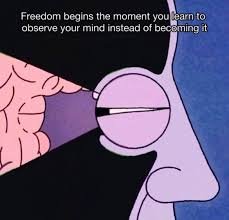
Existentially, emotional extinction is a form of psychological death. The person continues to exist biologically and cognitively, but the subjective richness that makes existence meaningful has evaporated. Time flattens. Memory loses emotional color. Identity becomes conceptual rather than lived. The individual often reports feeling like a “machine,” “observer,” or “empty container.” This is not metaphorical dissociation — it is affective annihilation.
Recovery from emotional extinction is possible but extraordinarily slow. Emotion cannot be forced to return; attempts to provoke feeling often increase shutdown. Treatment must focus on safety at the deepest level — safety to feel anything, even discomfort. Somatic approaches are often essential, as emotion must re-emerge through the body before it can be named. Relational warmth, consistency, and non-demanding presence are critical. The emotional system must relearn that activation will not lead to catastrophe.
The first returning emotions are rarely pleasant. Anxiety, grief, anger, or sorrow often emerge before joy. This can be terrifying for the patient, who has lived without affect for years. The task of therapy is to help them tolerate this return without retreating back into extinction. Slowly, with time, emotional signals regain strength. The world begins to register again. Meaning cautiously returns.
Emotional extinction teaches psychiatry a sobering truth: the deepest injury is not pain, but the loss of the ability to feel pain. Where emotion disappears, life becomes biologically present but psychologically absent. And yet, even in extinction, the system is not dead — it is dormant. With sufficient safety, patience, and care, affect can reawaken, and with it, the possibility of being fully alive again.