Does free will endure under the scrutiny of contemporary neuroscience, or does empirical investigation dissolve the very notion of autonomous agency? Few questions generate as much tension between scientific discovery and philosophical tradition as this one. For centuries, free will has occupied a central place in moral theory, law, theology, and personal identity. It underwrites responsibility, praise, blame, and the sense that one could have acted otherwise. Yet advances in neuroscience increasingly reveal the neural mechanisms underlying decision-making, suggesting that choices arise from processes operating prior to conscious awareness. If brain activity determines behavior before conscious intention emerges, can freedom remain anything more than an illusion?
The classical conception of free will presupposes that agents possess the capacity to initiate actions independent of deterministic chains of causation. In this libertarian framework, freedom entails genuine alternative possibilities. One is not merely the endpoint of prior causes but an originator of action. This view aligns with intuitive experience: when deliberating between options, individuals feel that they could choose differently. However, neuroscience challenges the reliability of this introspective certainty.
Experimental studies have demonstrated that neural activity predictive of a motor decision can be detected milliseconds before participants report conscious intention to act. Such findings suggest that the brain prepares actions prior to the subjective awareness of deciding. If conscious intention follows rather than precedes neural initiation, then conscious will may not be the causal driver it appears to be. Instead, awareness might function as a post hoc narrative, integrating actions already set in motion by unconscious processes.
Deterministic interpretations of these findings argue that free will is incompatible with neurobiological causation. According to this view, every decision results from prior neural states shaped by genetics, environment, and developmental history. The brain operates according to physical laws; therefore, human behavior is ultimately determined. The feeling of freedom may be a byproduct of complex information processing rather than evidence of metaphysical independence.
Yet the inference from neural precursors to the negation of free will is not straightforward. First, the temporal gap between neural preparation and conscious awareness does not necessarily imply that conscious processes are causally irrelevant. Conscious deliberation may occur earlier in the cognitive sequence, influencing neural configurations long before specific motor preparations are detectable. Moreover, milliseconds of precedence do not conclusively establish determinism; they merely reveal that conscious intention is embedded within broader neural dynamics.
Compatibilist philosophers argue that free will does not require exemption from causation. Instead, freedom consists in acting according to one’s reasons, values, and deliberative capacities without external coercion. On this account, the fact that decisions arise from neural processes does not undermine freedom, because those processes constitute the agent. The brain is not an alien force imposing actions upon the self; it is the biological substrate of the self. To say that neural mechanisms determine behavior is not to say that the agent is absent.
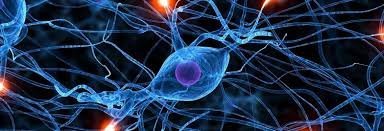
Neuroscience also reveals the complexity and plasticity of decision-making systems. The prefrontal cortex integrates information about goals, social norms, and long-term consequences. Damage to these regions can impair impulse control and moral reasoning, indicating that free agency depends upon intact neural circuits. Rather than eliminating free will, such findings underscore its embodied basis. Agency emerges from distributed neural networks coordinating perception, memory, and valuation.
Predictive processing theories further complicate simplistic determinism. The brain continuously generates predictions about sensory input and updates them through feedback. Decision-making involves evaluating competing predictions and minimizing error signals. This dynamic process includes both automatic and reflective components. Conscious deliberation may serve as a higher-level regulatory mechanism, modulating lower-level impulses. Even if underlying computations follow physical laws, the hierarchical organization of these processes can sustain meaningful forms of self-control.
Quantum indeterminacy is sometimes invoked to rescue libertarian freedom. If neural processes incorporate indeterminate events, perhaps choices are not strictly determined. However, randomness does not equate to freedom. Actions resulting from chance fluctuations would not be more autonomous than those determined by prior causes. The challenge is not merely to avoid determinism but to account for rational control and responsibility.
The legal and ethical implications of neuroscience are profound. If behavior is entirely determined by neural states beyond conscious control, retributive punishment loses justification. Responsibility might shift toward prevention and rehabilitation. Yet most legal systems operate under a compatibilist assumption: individuals are responsible when they possess the capacity for rational deliberation and are not subject to coercion or severe impairment. Neuroscience refines understanding of these capacities without necessarily abolishing them.
Some neuroscientists caution against overinterpreting experimental data. Laboratory tasks involving simple motor decisions differ substantially from complex moral choices. Pressing a button at an arbitrary moment may rely heavily on automatic neural processes, whereas deliberating about career changes or ethical dilemmas engages extended reflective reasoning. Generalizing from simplified paradigms to all forms of agency risks reductionism.
Furthermore, conscious intention may not function as a singular event but as an ongoing process distributed over time. Rather than a discrete moment of willing, agency may consist in sustained patterns of self-regulation. The brain’s readiness potentials could reflect preliminary fluctuations within a larger decision architecture shaped by prior commitments and goals. Conscious awareness might represent the culmination of earlier evaluative activity rather than an afterthought.
The phenomenology of freedom also warrants examination. The experience of choosing involves a sense of ownership and authorship. Even if neural events precede awareness, the integration of these events into coherent self-representation may constitute genuine agency. The self is not an entity separate from neural processes but a pattern instantiated by them. To dismiss agency because it arises from neural activity would be analogous to dismissing life because it arises from biochemistry.
Philosophical skepticism persists, however. If every choice can be traced to prior causes extending beyond individual control—genes inherited, environments encountered—then ultimate responsibility appears elusive. One did not choose one’s genetic endowment or early upbringing, yet these factors profoundly shape decision tendencies. The regress of causation challenges the notion of self-origination.
Compatibilism responds by redefining responsibility in relational terms. Moral evaluation concerns whether actions express the agent’s character and reasons, not whether they originate from an uncaused cause. The capacity to reflect, deliberate, and revise one’s motivations constitutes sufficient freedom for practical purposes. Neuroscience, rather than negating this capacity, elucidates its mechanisms.
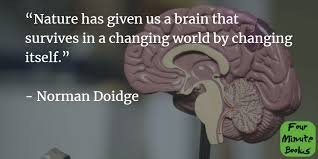
Emerging research on neuroplasticity introduces a dynamic dimension. Neural circuits are shaped by repeated behavior and conscious training. Practices such as cognitive behavioral therapy and mindfulness meditation demonstrably alter neural patterns associated with attention and emotion regulation. This bidirectional influence between reflection and neural structure suggests that agency operates within biological constraints yet retains transformative potential.
The debate ultimately hinges on conceptual clarity. If free will is defined as absolute independence from causation, neuroscience renders it implausible. If, however, free will denotes the capacity for rational self-governance within a causal framework, then neuroscience may illuminate rather than invalidate it. Determinism at the level of physical law does not necessarily negate autonomy at the level of personhood.
Does free will survive neuroscience? The answer depends on how freedom is construed. Empirical findings challenge simplistic notions of an uncaused will acting outside neural processes. They reveal that conscious intention is embedded within complex biological systems. Yet they do not compel the abandonment of agency altogether. Instead, they invite a reconceptualization of freedom as an emergent property of organized neural dynamics—an achievement of embodied cognition rather than a metaphysical exemption from causality.
In this light, neuroscience does not eradicate free will but reframes it. Agency becomes a natural phenomenon, rooted in the architecture of the brain yet capable of reflective self-modification. The enduring philosophical task is not to defend an illusion of independence from biology but to articulate how meaningful autonomy can arise within it.