In many discussions of psychopathology, attention is often directed toward visible symptoms: anxiety, depression, compulsive behaviors, or dramatic emotional disturbances. Yet some of the most profound psychological disruptions occur quietly, without obvious outward signals. One of the most complex among these is the gradual erosion of personal identity. Unlike acute psychological crises that demand immediate attention, identity disintegration can unfold slowly, almost invisibly, within the internal life of an individual. A person may continue working, communicating, and participating in daily routines while privately experiencing a growing sense that their internal structure—the sense of who they are—has begun to fragment or dissolve.
Identity, in psychological terms, refers to the organized system of beliefs, memories, values, roles, and emotional narratives that allow a person to experience themselves as a coherent and continuous individual. It provides stability across time. Even when circumstances change, identity allows the individual to feel that they remain fundamentally the same person. Without this sense of continuity, experiences become psychologically disorienting. The mind depends on identity to interpret the past, evaluate the present, and anticipate the future.
However, identity is not a fixed entity. It is a dynamic psychological construction that develops gradually through interaction with the social and emotional environment. Early childhood experiences, cultural expectations, interpersonal relationships, and personal achievements all contribute to shaping the internal narrative through which individuals understand themselves. Because identity is constructed through experience rather than simply inherited, it remains vulnerable to disruption.
The process through which identity weakens often begins subtly. Individuals may initially notice a vague sense of emotional disconnection from their own lives. Activities that once felt meaningful may appear strangely distant. Personal goals lose clarity, and decisions that previously felt intuitive become difficult to make. This state is not necessarily accompanied by intense distress; instead, it may resemble an ambiguous psychological emptiness. The individual continues to function outwardly, yet internally feels detached from their own motivations.
One of the psychological mechanisms underlying this phenomenon is narrative disruption. Human beings organize their sense of self through narrative structures—stories that connect past experiences with present identity and future aspirations. These narratives allow individuals to interpret events in ways that preserve a coherent sense of meaning. When the narrative structure becomes fragmented, the individual may struggle to understand how their experiences relate to one another. Life begins to feel like a series of disconnected episodes rather than a continuous personal journey.
Narrative disruption can arise from various sources. Traumatic experiences are among the most powerful. Trauma often overwhelms the brain’s capacity to integrate events into the normal autobiographical memory system. When an experience is too emotionally intense, it may be stored in fragmented forms—sensory impressions, emotional reactions, or isolated memories—rather than integrated into the broader life narrative. Over time, these unresolved fragments may create gaps in the psychological story that defines the self.
Chronic emotional invalidation can also weaken identity formation. When individuals grow up in environments where their thoughts, feelings, or perceptions are consistently dismissed or criticized, they may learn to distrust their internal experiences. Instead of developing confidence in their own perspective, they become dependent on external validation to determine what is real or acceptable. As this pattern continues, the boundary between internal identity and external expectations becomes increasingly blurred.
Another factor contributing to identity erosion involves prolonged role adaptation. In complex social environments, individuals frequently adopt different roles depending on context. A person may behave differently as a parent, employee, friend, or partner. Normally these roles remain integrated within a broader sense of identity. However, in certain circumstances individuals become so focused on meeting external expectations that their authentic preferences gradually disappear. The person becomes highly skilled at adapting to situations while losing contact with the internal motivations that once guided their behavior.
This phenomenon is particularly common in environments characterized by intense social evaluation or pressure. Individuals working in highly competitive professional fields, for instance, may gradually define their entire identity through performance and achievement. When external success becomes the primary measure of self-worth, the internal dimension of identity—values, emotional needs, personal meaning—may become neglected. The person continues functioning effectively but experiences increasing internal emptiness.
Psychopathology sometimes describes this condition as identity diffusion. Identity diffusion does not necessarily involve dramatic psychological symptoms; instead, it reflects the absence of a stable internal structure organizing the self. Individuals experiencing identity diffusion may describe themselves as feeling hollow, undefined, or psychologically invisible even to themselves. They may adopt beliefs, interests, or social attitudes that shift depending on the people around them.
Emotional detachment often accompanies identity erosion. When individuals lose clarity about who they are, emotional experiences may become muted or inconsistent. Feelings arise but lack clear connection to personal meaning. The individual may observe their own emotional reactions with a sense of distance, as if watching someone else’s life unfold. This state sometimes resembles depersonalization, a condition in which individuals feel detached from their own identity or physical presence.
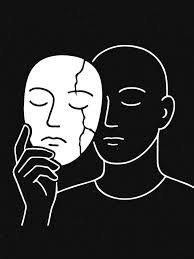
Modern social environments introduce additional complexities into identity formation. Digital communication and social media platforms encourage individuals to present curated versions of themselves to the world. These representations may highlight success, happiness, or particular personality traits while concealing vulnerability or uncertainty. Over time, maintaining a carefully constructed external persona can create tension between the public identity and the internal psychological reality.
When this gap widens, individuals may experience increasing alienation from the persona they present to others. The identity visible to the social world becomes more stable than the one experienced internally. The person may receive recognition or admiration for a version of themselves that no longer feels authentic. This dissonance can contribute to the quiet collapse of internal identity structures.
Philosophical questions also intersect with psychological identity. Human consciousness possesses the unique ability to reflect on itself. Individuals can observe their own thoughts, evaluate their motivations, and question the meaning of their experiences. While this reflective capacity enables intellectual growth and self-awareness, it can also destabilize identity when taken to extremes. Excessive self-analysis may fragment the sense of self into competing perspectives, each questioning the validity of the others.
For example, a person may simultaneously observe their emotional reactions, analyze them intellectually, and evaluate whether those reactions are justified. This layered self-awareness can create a sense that the self is not a single unified entity but rather a collection of internal observers and participants. When these layers lose integration, the experience of a coherent identity may weaken.
Another psychological dimension involves existential uncertainty. Identity often depends on broader systems of meaning—cultural traditions, moral frameworks, philosophical beliefs, and social roles. When these systems become unstable or contradictory, individuals may struggle to locate their identity within them. Modern societies frequently expose individuals to diverse and sometimes conflicting value systems. While this diversity offers freedom, it can also complicate the process of constructing a stable sense of self.
Individuals experiencing identity erosion may therefore confront questions that have no clear answers. What defines a person beyond their social roles? How much of identity originates internally versus being shaped by external influences? Can identity remain stable when life circumstances change repeatedly? These questions are not purely philosophical; they have profound psychological implications.
The silent nature of identity collapse makes it particularly difficult to recognize. Because individuals often maintain outward functionality, friends, colleagues, and even family members may remain unaware of the internal struggle. The person continues performing expected tasks while privately experiencing disorientation or emptiness. In some cases, the individual themselves may not fully understand what is happening. They may simply sense that something fundamental has shifted.
Psychotherapeutic approaches to identity reconstruction focus on restoring narrative coherence and internal awareness. One important step involves helping individuals reconnect with their personal history in a meaningful way. Rather than viewing past experiences as isolated events, therapy encourages individuals to explore how those experiences contributed to shaping their current perspectives and values.
Another essential component involves strengthening the connection between internal emotions and external behavior. Individuals learn to identify their own preferences, needs, and values independently of external expectations. This process can be challenging for those accustomed to defining themselves primarily through social roles or achievements. Gradually, however, the individual begins to rebuild an internal framework capable of supporting a stable identity.
Exploration of personal meaning also plays a crucial role. Identity becomes stronger when individuals engage with activities and relationships that reflect authentic values rather than purely external rewards. Creative expression, intellectual curiosity, and emotionally meaningful relationships often contribute to the restoration of a coherent self-concept.
From a broader psychological perspective, the possibility of unnoticed identity collapse highlights the delicate balance underlying human selfhood. Identity is not a permanent structure but an ongoing psychological achievement. It must be continuously maintained through reflection, emotional integration, and meaningful interaction with the world.
Yet the human mind also possesses remarkable resilience. Even when identity structures weaken, they rarely disappear entirely. Memories, emotional patterns, and personal values remain stored within the psychological system. With appropriate support and reflection, individuals can gradually reorganize these elements into a renewed sense of self.
The silent erosion of identity therefore represents both a vulnerability and a testament to the complexity of human consciousness. It reminds us that psychological wellbeing cannot be measured solely by visible behavior or social success. Beneath the surface of daily life, individuals maintain intricate internal narratives that define who they believe themselves to be. Protecting and nurturing these narratives may be one of the most essential tasks of psychological development.
Ultimately, the question of whether identity could collapse without anyone noticing invites deeper reflection on the nature of the self. It challenges the assumption that personal identity is stable simply because it appears consistent from the outside. In reality, identity is a living psychological structure, shaped continuously by experience, memory, and meaning. Recognizing this complexity allows both individuals and clinicians to appreciate the subtle ways in which the human mind constructs—and sometimes reconstructs—the story of who we are.