Most psychiatric models assume that personal continuity—the sense of being the same person over time—is inseparable from identity. Memory, personality traits, values, and emotional patterns are thought to bind the self into a coherent “someone.” Yet a rarely described disturbance exists in which continuity remains intact while identity quietly dissolves. This phenomenon can be described as Continuity Without Identity, a state in which the individual knows they are the same person as yesterday, yet no longer experiences themselves as a distinct “someone.”
Individuals in this state do not report confusion, amnesia, or fragmentation. Memory is continuous. Personal history is accessible. Decisions are made consistently with past values. Yet when asked who they are, the answer feels empty—not because nothing comes to mind, but because whatever comes to mind lacks personal gravity. Traits feel descriptive but not inhabited. The self exists as a record, not as a presence.
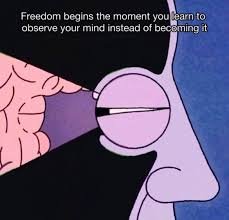
This condition differs from depersonalization. In depersonalization, the self feels unreal or detached. In continuity without identity, the self feels real but impersonal. There is no sense of watching oneself from outside. Instead, there is a sense that the center of “someone-ness” has gone missing. Patients often say, “I’m still here, but I don’t feel like a person,” or “There is continuity, but no character.”
Phenomenologically, this state produces a peculiar neutrality. Emotional responses can occur, but they feel generic rather than personal. Preferences exist, but they feel arbitrary. The individual may function socially, even convincingly, yet experience interactions as role-based rather than expressive. Life becomes procedural: one does what one does, without the feeling of being the one who does it.
Neurocognitively, this phenomenon may involve a dissociation between autobiographical continuity and self-referential affect. The brain maintains narrative identity—facts about the self—while losing affective ownership of those facts. As a result, the self persists as information but not as lived subjectivity. This is why insight does not resolve the condition; understanding that one has an identity does not restore the feeling of having one.
Clinically, continuity without identity is often overlooked or mistaken for emotional blunting, existential questioning, or personality change. Because functioning remains intact, distress may be minimized. Yet many individuals describe this state as deeply unsettling, not because of suffering, but because of impersonality. The fear is not of breakdown, but of becoming permanently generic.
Behaviorally, individuals may attempt to recover identity by intensifying self-definition—labeling traits, revisiting memories, emphasizing preferences. These efforts often backfire, reinforcing the sense that identity is something being assembled rather than lived. Others may abandon self-definition entirely, which can lead to passivity and loss of initiative.
Therapeutic approaches are uncertain. Narrative reconstruction may fail, as narrative already exists. Emotional activation may help in some cases, but forced emotionality often feels artificial. Emerging observations suggest that identity may re-emerge indirectly through commitment—actions taken repeatedly without self-analysis. Identity returns not as an answer to “Who am I?” but as a byproduct of what one keeps doing.
Continuity Without Identity challenges a core assumption of psychology: that selfhood is maintained by memory and coherence. This phenomenon suggests that identity is not merely continuity over time, but the felt sense of being a particular someone inhabiting that continuity. When that feeling disappears, the self does not vanish—but it becomes anonymous.
It reveals a quiet form of psychological suffering in which nothing is broken, yet something essential is missing: the warmth of particularity, the sense of being more than a sequence of correct actions. Recovery, when it occurs, is not a rediscovery of the past self, but the slow reappearance of someone-ness—often unnoticed until it is already back.