Cognitive emptiness with preserved intelligence is one of the most misunderstood states in psychopathology. It is not intellectual decline, dementia, confusion, or low intelligence. The individual can reason, calculate, speak fluently, and understand complex concepts. Yet internally, the mind feels empty, hollow, or uninhabited. Thought occurs, but it lacks density. Ideas arise, but they feel weightless. The mind works, yet no longer feels lived in.
This condition is often misinterpreted as laziness, lack of curiosity, depression, or even spiritual detachment. In reality, it is a profound disruption of mental presence. The architecture of cognition remains intact, but the subjective experience of thinking has thinned. The person may say, “My mind is blank,” even while actively solving problems or holding conversations.
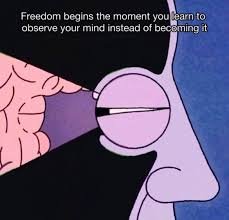
From the inside, cognitive emptiness is deeply unsettling. There is no chaos, no racing thoughts, no confusion. Instead, there is a smooth, sterile clarity devoid of inner texture. Thinking feels mechanical rather than experiential. The person does not struggle to think; they struggle to feel themselves thinking.
Clinically, this state appears in schizophrenia-spectrum disorders (especially negative-symptom and residual phases), severe dissociation, advanced burnout, post-traumatic shutdown states, and certain depressive conditions following prolonged cognitive overexertion. It often emerges after periods of extreme mental strain, emotional overload, or prolonged vigilance, where thinking became a survival tool rather than a lived process.
Neuropsychologically, cognitive emptiness reflects a dissociation between executive function and self-referential processing. The brain continues to generate and manipulate information efficiently, but the systems that imbue thought with personal relevance, emotional tone, and ownership are underactive. Thought becomes procedural rather than subjective.
This distinction is crucial. Intelligence is not lost. Creativity may still be accessible on command. Memory remains functional. What disappears is the spontaneous inner movement of thought — the sense that ideas arise organically from within. Instead, thinking feels externally prompted, reactive, or inert unless effortfully engaged.
Emotionally, cognitive emptiness often coexists with a peculiar neutrality. The individual may not feel sad or anxious, yet experiences a quiet distress rooted in absence. The absence is not of content, but of inhabitation. The mind feels like a well-lit room with no one inside.
Existentially, this state erodes identity. We often equate the self with the thinking mind. When thinking loses its felt presence, the self feels diluted. The person may fear that they are “disappearing,” “losing depth,” or “becoming less human,” despite outward functionality. These fears are not delusional; they reflect an authentic alteration of self-experience.
Interpersonally, cognitive emptiness is difficult to detect. The individual may appear articulate, rational, and composed. They can respond appropriately, even insightfully. Others may assume mental health because cognition appears intact. Meanwhile, the person may feel profoundly disconnected from their own mental life.
This condition differs from brain fog. Brain fog involves slowed processing and confusion. Cognitive emptiness involves clarity without presence. The mind is sharp, but silent in a deeper sense. There is no internal echo, no lingering thought, no mental aftertaste.
Psychodynamically, cognitive emptiness often functions as a protective withdrawal. When thinking became associated with pain, responsibility, or relentless demand, the psyche learned to strip thought of emotional investment. Thought continues, but without attachment. This reduces suffering at the cost of vitality.
Therapeutically, cognitive emptiness is often mishandled. Attempts to stimulate thinking, increase productivity, or enhance insight miss the core issue. The problem is not insufficient cognition, but insufficient self-connection to cognition. Therapy must aim to restore mental inhabitation rather than mental performance.
This often involves slowing down thought rather than accelerating it. Allowing ideas to linger. Attending to the felt sense of thinking. Linking thought to bodily sensation and emotion. The therapist’s curiosity about the patient’s inner experience — not just their conclusions — is critical. “What does it feel like when you think that?” becomes a central question.
As cognitive emptiness begins to lift, discomfort often emerges. Mental presence brings emotional consequence. The earlier emptiness may have protected the individual from grief, fear, or exhaustion. Re-inhabiting the mind means allowing thought to matter again. This transition must be paced carefully.
Recovery is marked by subtle changes: thoughts that linger, ideas that provoke feeling, moments of spontaneous reflection, mental wandering that feels personal again. These are not signs of inefficiency; they are signs of life returning to cognition.
Ultimately, cognitive emptiness with preserved intelligence reveals a vital truth: thinking is not merely computation. It is a lived experience. Mental health is not defined by how well the mind functions, but by whether the self is present inside it. When presence returns, intelligence regains depth, thought regains weight, and the mind becomes not just a tool, but a place where one truly exists.