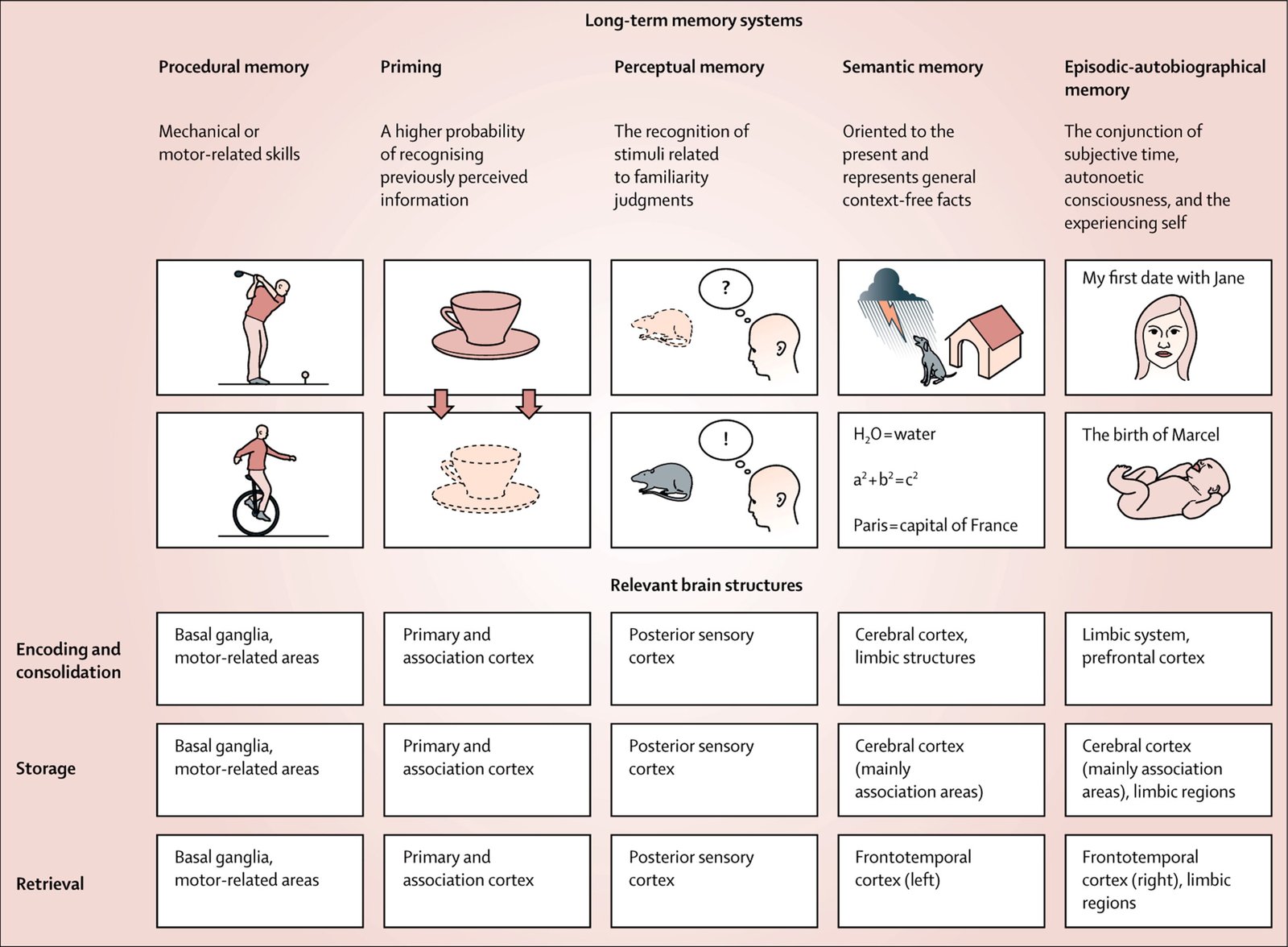
Chronotaraxis is an uncommon neuropsychiatric disturbance characterized by a profound disruption in the subjective ordering of time, in which past, present, and future lose their normal sequential structure. Unlike generalized memory impairment, chronotaraxis involves a selective breakdown in temporal coherence while episodic content remains relatively preserved. Neurobiologically, the condition reflects dysfunction within distributed cortico–hippocampal–striatal networks that normally encode temporal context and enable the continuous flow of conscious experience.
The hippocampus plays a central role in temporal binding by organizing discrete experiences into sequential frameworks. Damage to hippocampal subfields, particularly CA1, impairs the encoding of temporal order without necessarily erasing the events themselves. This dissociation explains why individuals with chronotaraxis may accurately recall specific experiences yet be unable to place them within a meaningful timeline. The disruption extends beyond memory storage, implicating hippocampal interactions with the entorhinal cortex, where time cells and grid-like temporal representations contribute to the brain’s internal chronometric system.
Prefrontal regions, especially the dorsolateral and medial prefrontal cortex, are essential for maintaining temporal continuity across working memory and long-term representations. Lesions or functional hypoconnectivity in these areas reduce the capacity to stabilize a “now” state, resulting in a fluctuating or fragmented present moment. Within this framework, conscious awareness becomes temporally unstable, as the brain fails to anchor ongoing perception to a coherent temporal reference point.
Basal ganglia and cerebellar contributions further modulate temporal precision. The striatum, through dopaminergic signaling, supports interval timing and the prediction of event durations. Dysregulation within frontostriatal loops can distort subjective time estimation, leading to experiences in which seconds may feel interminable or collapse instantaneously. When combined with hippocampal temporal disorganization, these distortions produce the characteristic phenomenology of chronotaraxis: time is experienced not merely as fast or slow, but as structurally disordered.
From a network perspective, chronotaraxis involves impaired coordination between the default mode network and the salience network. The default mode network generates autobiographical continuity, while the salience network identifies the relevance of present-moment stimuli. When their interaction is disrupted, internally generated temporal narratives dominate over external temporal cues. This imbalance allows memories to intrude into the present with the vividness of current perception, blurring the boundary between recollection and immediacy.
Predictive processing models conceptualize chronotaraxis as a failure to maintain hierarchical temporal predictions. Normally, the brain anticipates the near future and continuously updates these predictions based on sensory input. In chronotaraxis, high-level temporal priors become unstable or overly permissive, allowing multiple temporal hypotheses to coexist. The resulting conscious experience lacks a privileged present, giving rise to the subjective sense that time itself has lost direction.
Clinically, chronotaraxis is most often observed following right hemisphere lesions, traumatic brain injury, or in certain neurodegenerative conditions, yet it remains underrecognized due to its subtle and introspective nature. Patients may struggle to articulate their experience, describing instead a sense of being “unstuck” from time. This phenomenological elusiveness has contributed to its marginal presence in psychiatric classification systems.
As a neurobiological phenomenon, chronotaraxis highlights the active construction of temporal experience by the brain. It demonstrates that time, as lived and perceived, is not a passive dimension but an emergent property of coordinated neural dynamics. When these dynamics falter, the brain does not simply lose track of time—it reorganizes experience into a temporally fragmented reality that challenges conventional distinctions between memory, perception, and anticipation.